Video
Description
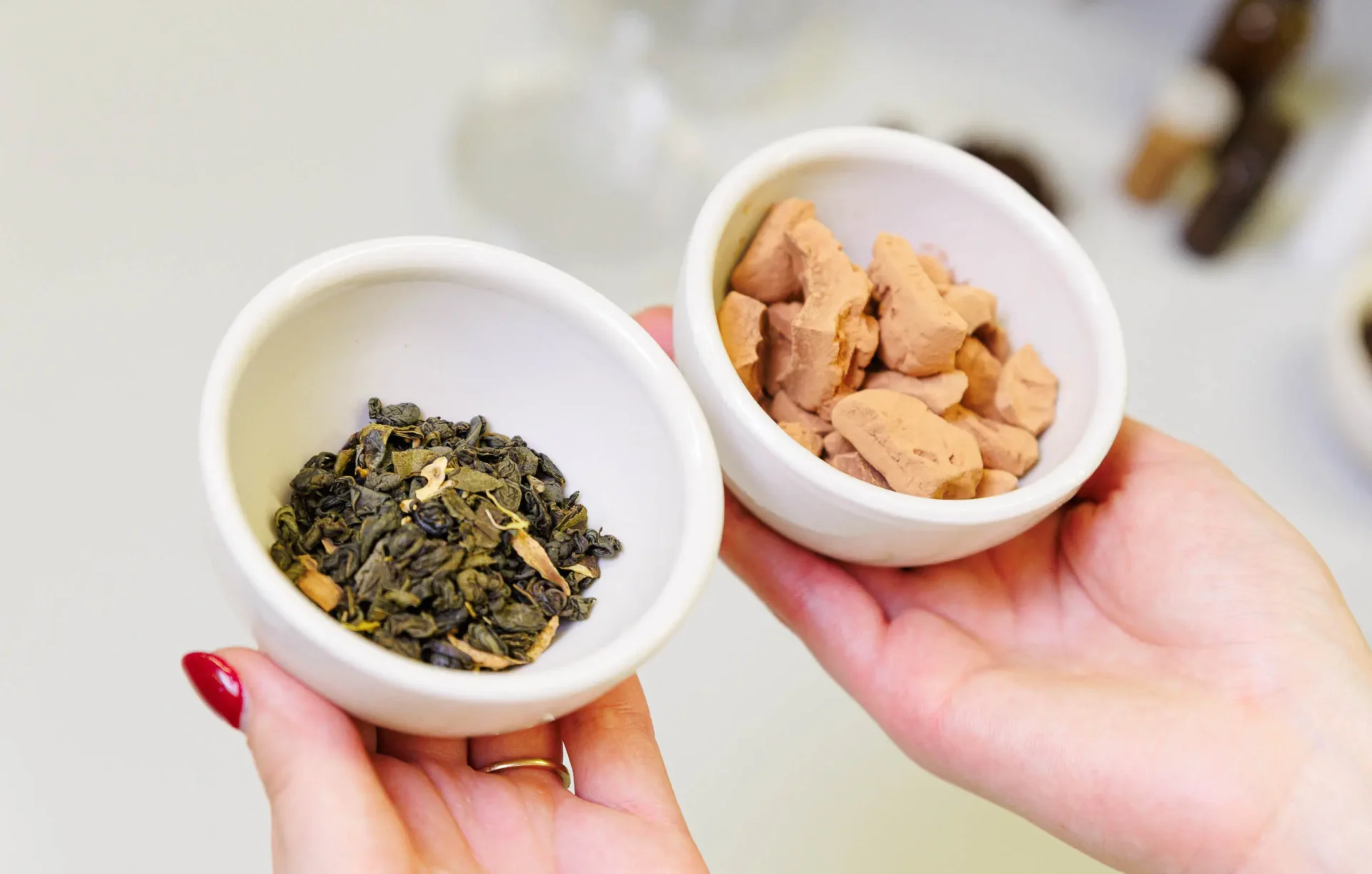
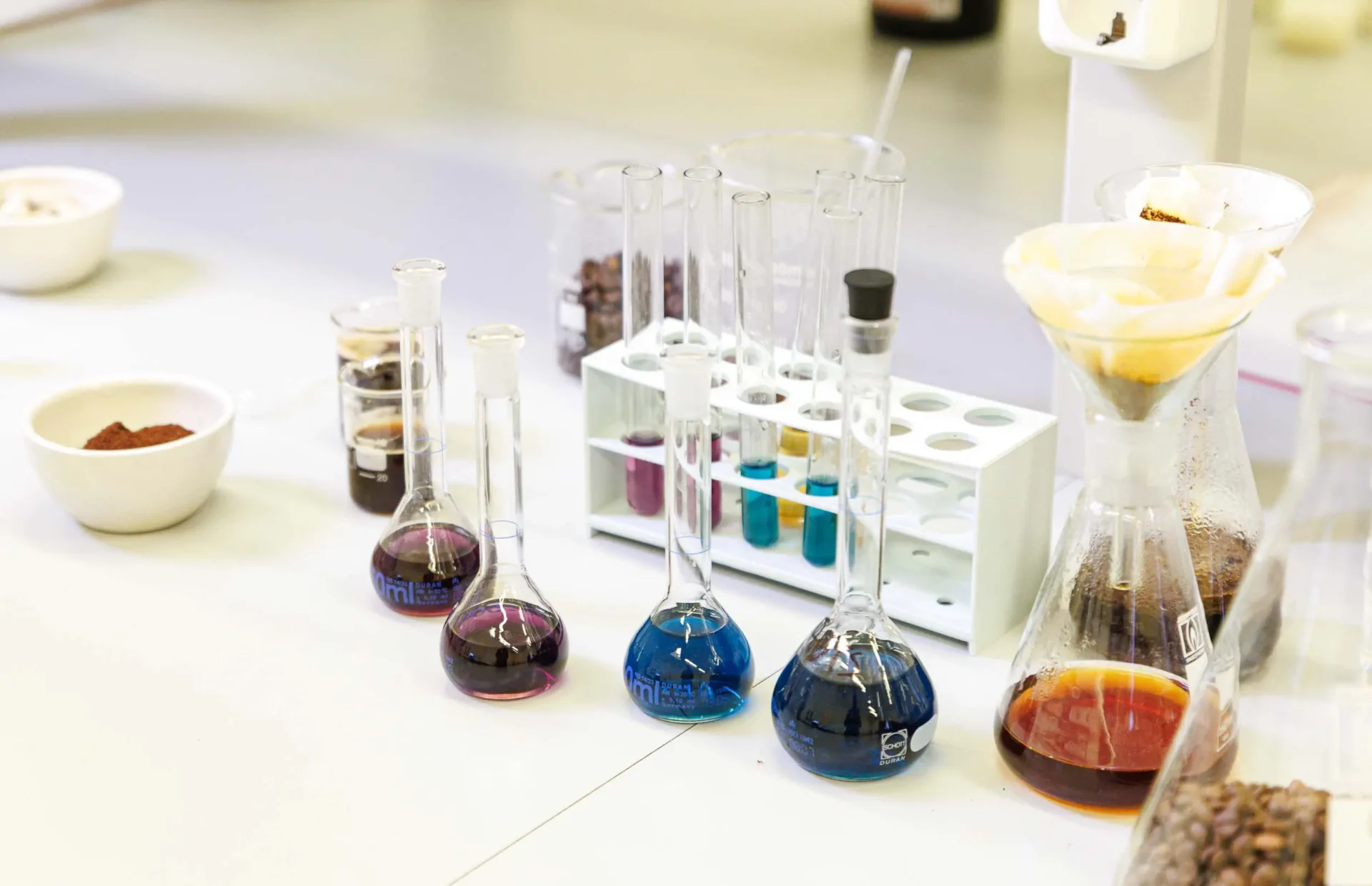
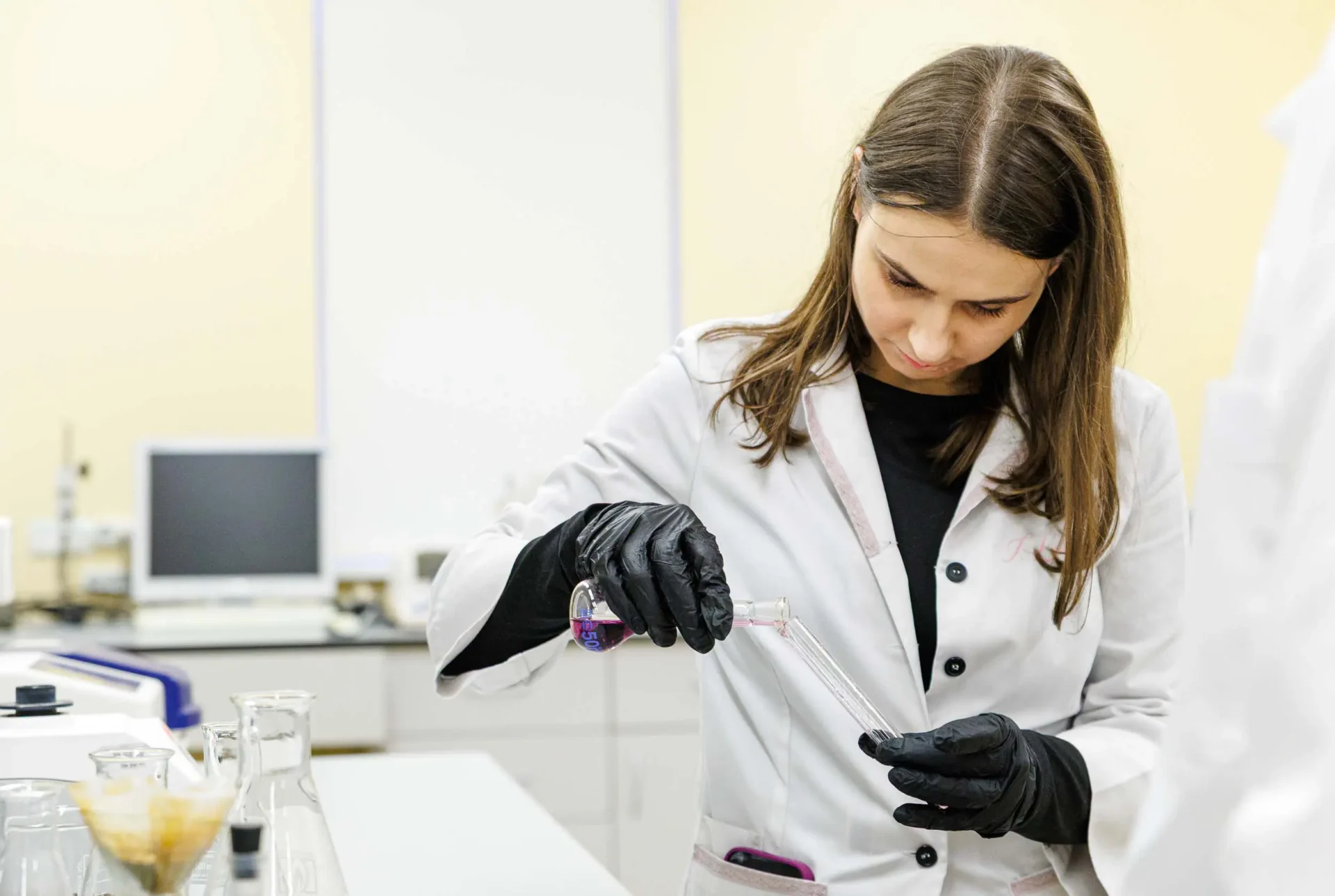
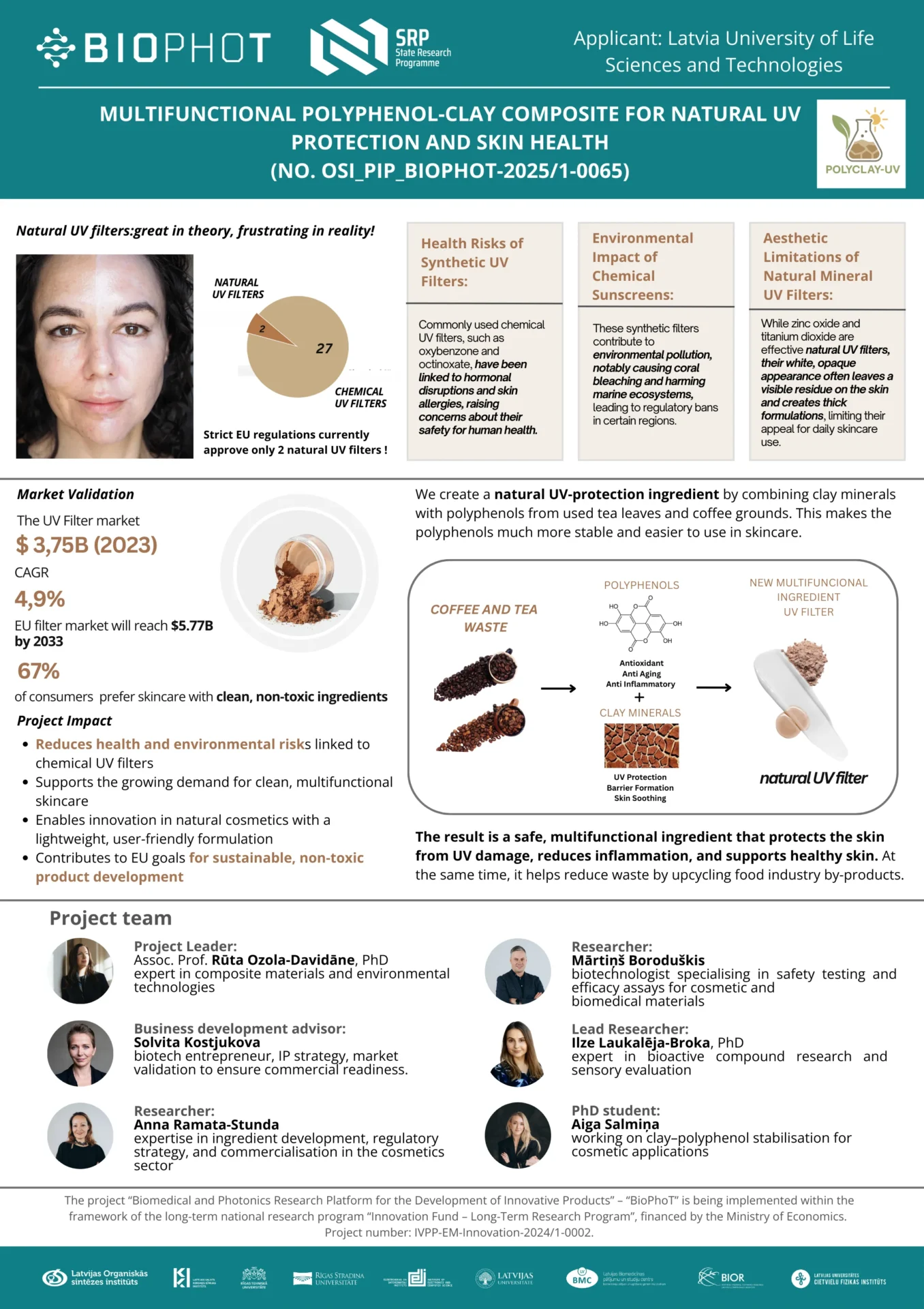
The POLYCLAY-UV project aims to develop a new multifunctional clay-polyphenol composite material that can be used as a naturally-derived UV filter in sunscreen products. The project will use waste from tea and coffee production as a source of valuable polyphenols, thus contributing to the circular economy and waste reduction. The research will optimise stabilisation in clay mineral structures, perform functional tests on the composites, including UV absorption, antioxidant and anti-inflammatory activity, and safety and biological impact assessment on human skin cells. The result will be a safe, stable and effective UV filter of natural origin with additional skin health improving properties, which will be an important contribution to the development of sustainable and environmentally friendly cosmetic solutions.
Achievable results
- A new clay-polyphenol composite material: optimised integration of polyphenols in the clay structure to achieve stable, reproducible and effective UV protection.
- Stability and compatibility with cosmetic formulas tested: the material's resistance to temperature, pH and storage conditions, as well as its effect on the texture and colour of the cream.
- Safety and biological efficacy confirmed: tests in human skin cell models demonstrating the composite's UV-protective, antioxidant, anti-inflammatory and anti-ageing properties.
- Prototypes of cosmetics: first samples of sunscreens with the new active ingredient are produced, demonstrating the material's practical applicability.
- Commercialisation and market deployment strategy developed: market and regulatory analysis, patent research and roadmap for further development of the technology to pilot scale
Benefit
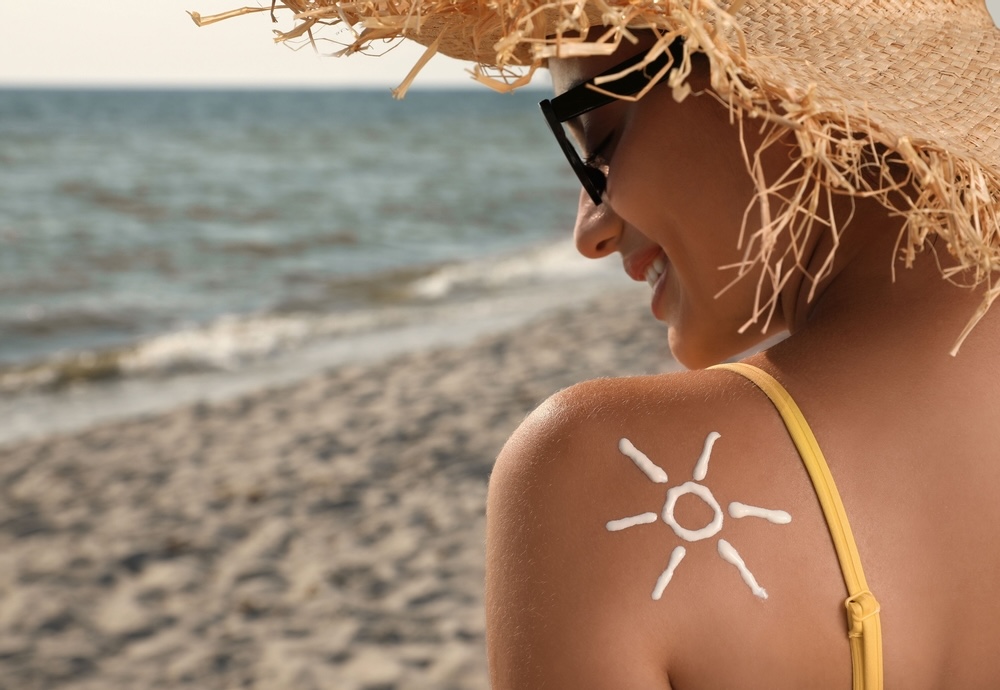
The project has significant public health and environmental benefits. It helps to create safer and more natural sun protection that shields the skin from harmful UV radiation, while raising people's awareness of the importance of sunscreen in their daily routine. The project also tackles a major environmental problem: reducing pollution from synthetic UV filters that end up in seas and rivers, harming aquatic organisms and other ecosystems. By using residues from the tea and coffee industries to produce new active ingredients, the project reduces waste and promotes the re-use of resources, thus strengthening the circular economy. It also contributes to public education on sustainable use of raw materials, responsible consumption and healthy lifestyles, and strengthens Latvia's scientific and innovation capacity to create products that are both efficient and friendly to people and the environment.
Allocated funding
EUR 200 000 from 01.10.2025.
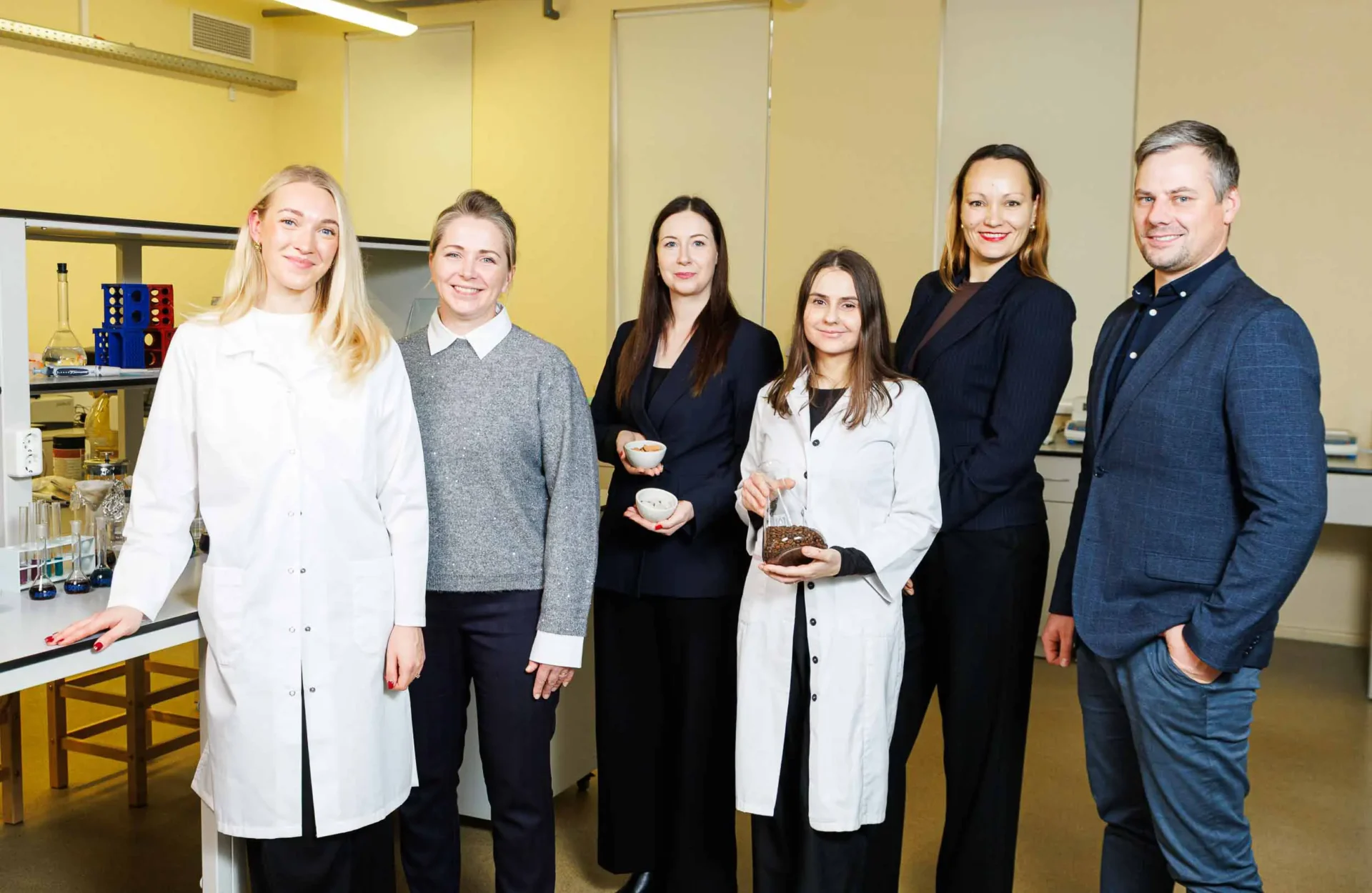
Team
Gallery