Video
Please note that the English version of this text has been prepared with the assistance of AI, and in some instances, it may not have been subsequently reviewed or edited by the authors.
Description
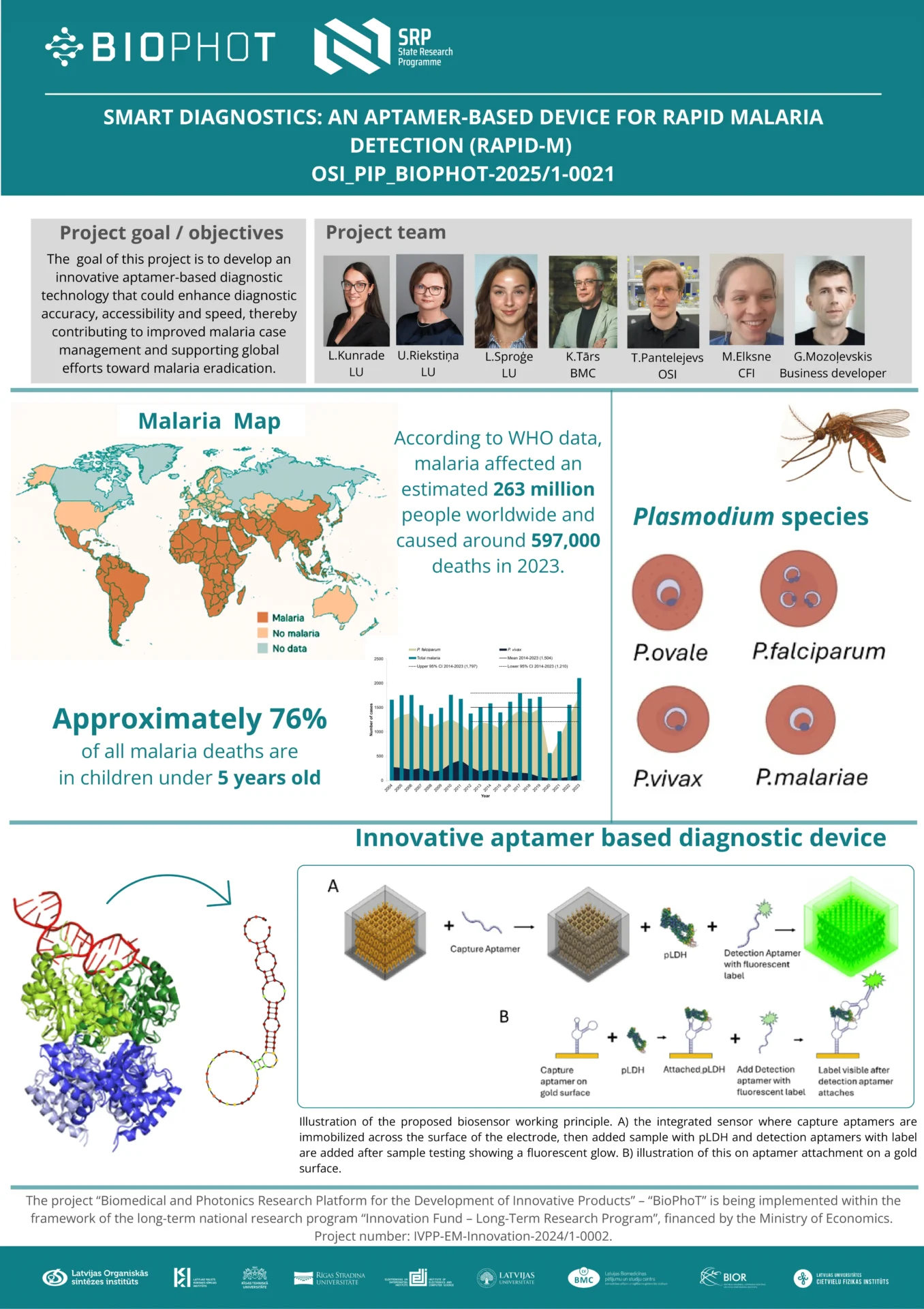
Malaria remains one of the most important global infectious diseases, with significant public health, social and economic impacts. The World Health Organisation reports that in 2023, an estimated 263 million malaria cases and 597 000 deaths were reported in 83 countries. Although widely used due to their low cost and ease of use, rapid diagnostic tests (RDTs) are based on antibodies and serve as an alternative to the gold standard method of malaria diagnosis, microscopy. However, RDTs have several limitations: low species differentiation capacity, low sensitivity at low parasite loads, up to 20% false-positive results and inability to detect mutant Plasmodium falciparum. Aptamers are synthetic oligonucleotides with high binding specificity, which offer several advantages over antibodies: higher stability, sensitivity and lower cost. In a previous EuroNanoMed project, we selected, validated and patented a panel of 11 aptamers that recognise a total of 4 Plasmodium species. The aim of this project is to develop an aptamer-based malaria diagnostic device, which will be achieved by producing recombinant Plasmodium lactate dehydrogenase and identifying aptamer binding sites on LDH, by selecting the optimal aptamer pair for the biosensor, developing and validating a prototype biosensor, conducting market research and developing a commercialisation plan. The project plans to upgrade the technology readiness level from TRL3 to TRL4.
The Achievable Results
Characterise the affinity and specificity of aptamer binding to different LDH of Plasmodium species to identify the most suitable pair of aptamer for the development of malaria biosensor prototype. Plasmodium LDH species to identify the most suitable aptamer pair for prototyping a malaria biosensor.
Prototype and validate an aptamer-based malaria biosensor using recombinants Plasmodium spp. LDH proteins. Plasmodium spp. LDH proteins.
Develop the prototype to TRL4.
Conduct strategic market research.
The Anticipated Benefit
The technology developed will allow more accurate detection of Plasmodium Plasmodium the species causing the malaria infection, and tailor the treatment to the individual patient accordingly. This will help to reduce the inappropriate use of antimalarial drugs, which is one of the important factors Plasmodium in the development of Plasmodium resistance to drugs.
The technology will serve as a platform on which to develop aptamers-based sensors for the diagnosis of other diseases such as cancer.
The project will strengthen Latvia's position in the high-tech, biomedical and photonics sectors by fostering innovation and the creation of new products that will bring economic benefits to society through improved diagnostic methods and national economic growth from the development and commercialisation of high value-added products.
The Allocated Funding
EUR 200,000 as of 10.10.2025.
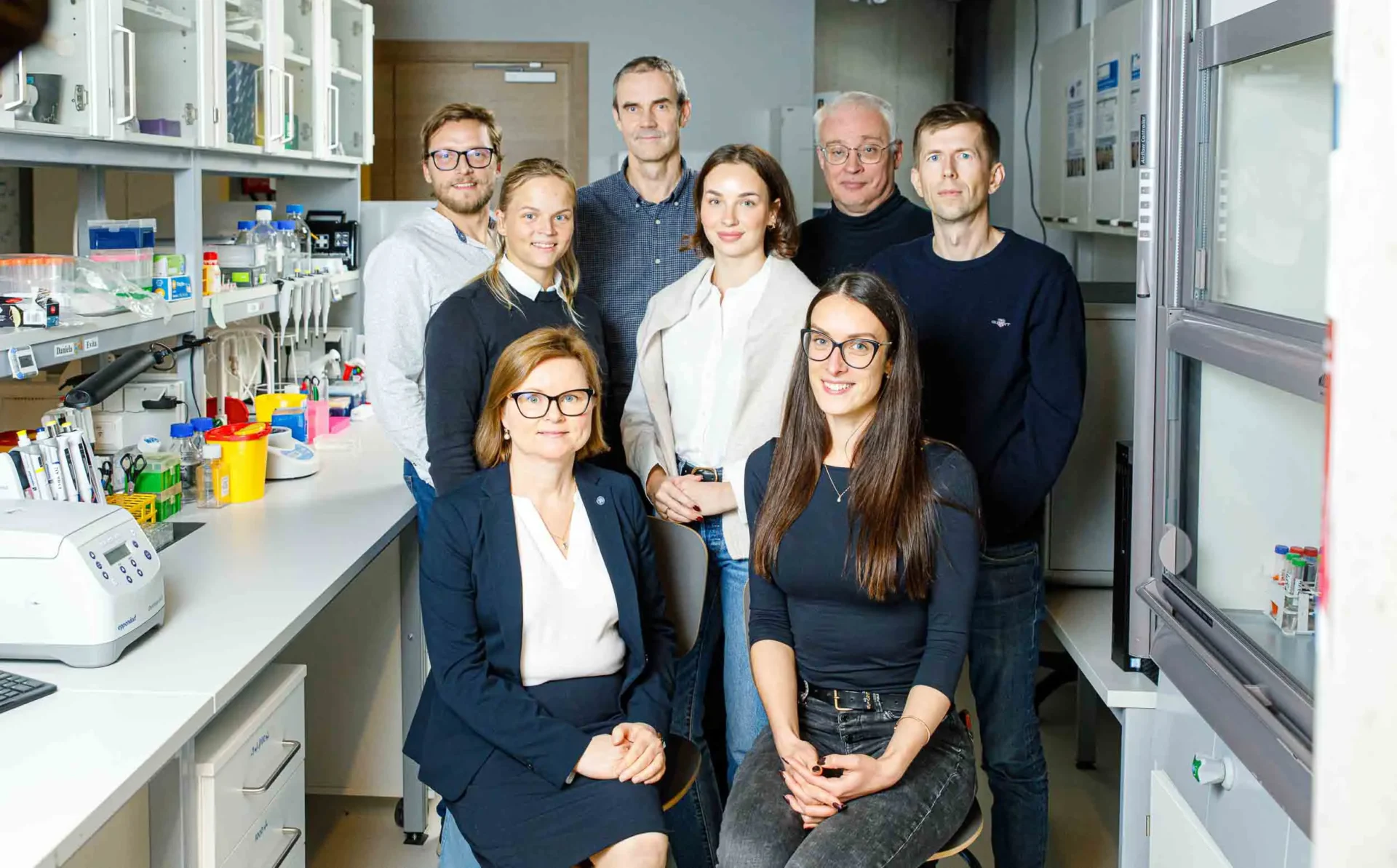
Team








Gallery