Please note that the English version of this text has been prepared with the assistance of AI, and in some instances, it may not have been subsequently reviewed or edited by the authors.
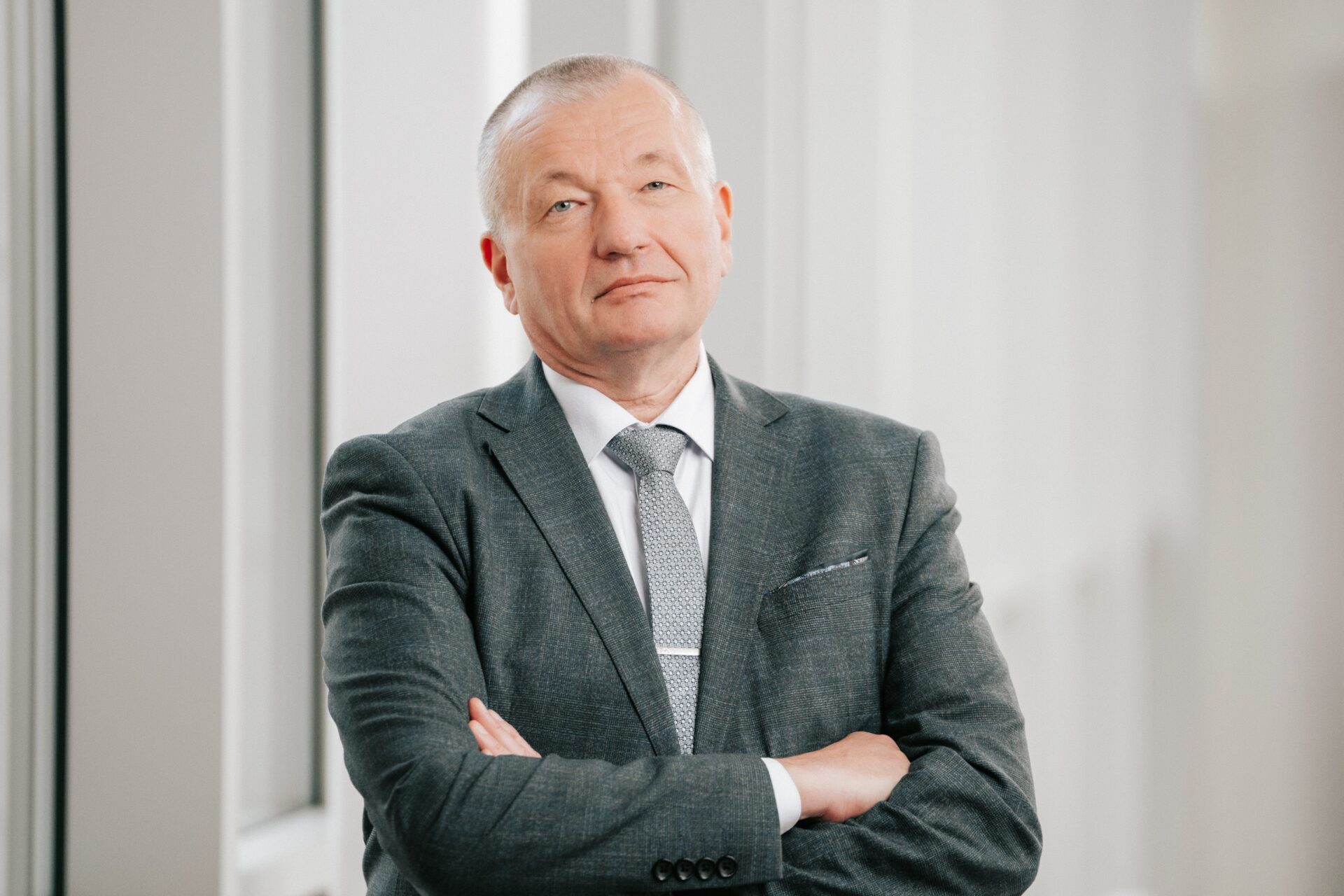
Osvalds Pugovičs, head of the biomedical and photonics research platform “BioPhoT”
Latvia has ambitions to become a country where scientific ideas turn into profitable world-class projects. This is proven by the state support program – the biomedical and photonics research platform “BioPhoT” – in whose development the Ministry of Economics has invested more than 17 million euros over two years. The goal of the platform is to help scientists turn research results into profitable technologies. However, for an idea to make millions, the formula for success requires a handful of patience and a pinch of luck.
In the business world, unicorns are companies whose market value has reached at least one billion US dollars. Behind such companies lie years of research, technological development, investments, and human perseverance. Equally important is the ability to adapt and seize opportunities. Currently, the greatest investor interest and growth potential are shown by startups operating in the fields of artificial intelligence, defense and security technologies, energy and sustainability, biotechnology, health tech, and robotics.
Even a global-scale crisis can become an impetus for rapid growth in innovation and entrepreneurship. This is vividly demonstrated by Moderna example – during the Covid-19 pandemic, demand for the company-developed vaccine boosted its turnover more than 300-fold in two years – from approximately 60 million US dollars in 2019 to 18.5 billion in 2021. Of course, such a breakthrough is extraordinary.
Innovation takes time
Let's look at the Finnish company ICEYE. Its origins trace back to Aalto University, where two students came up with the idea to build small yet powerful radar satellites for Earth observation. Work on the technology began in 2012, the company was founded in 2014, the first satellite reached orbit in 2018, yet it only became a unicorn last year—13 years since the first laboratory prototype.
In 2025, Finland made the decision to purchase ICEYE for the needs of satellite systems protection, investing approximately 158 million euros. These technologies are also used in Ukraine for defense and situational monitoring purposes. With the growing military threat in Europe, the company is strengthening national security with a strategically important technology.
A similar situation occurred with a Romanian company UiPath, which reached unicorn status in 2018 – 13 years after its founding. The company originated in 2005 in a small apartment on the periphery of central Bucharest, when a team of two programmers started developing software for work process automation. Simply put, UiPath created digital robots capable of performing repetitive office and administrative tasks in place of humans – processing invoices, filling out documents, and handling customer requests. Later, the company developed this technology by adding artificial intelligence solutions.
How can the state help?
These examples show that technological development takes time, and major economic success is often the result of many years of research and investment, especially in the field of biomedicine.
State involvement is needed precisely at this stage. Investors are not always ready to finance technology that is still in the laboratory. Meanwhile, scientists often lack the funds to turn their invention into a commercially viable solution. “BioPhoT” helps bridge this gap.
Of course, state funding must be responsible, and citizens have the right to know where the money they pay in taxes goes. However, results must be evaluated according to the stage of innovation development. In one year, it may be a prototype; in another, technology validation; a few years later, the first investor or industrial partner. Continuity of funding is important here. Our intention is to ensure the operation of the platform at least until 2032.
Scientists must know how to promote themselves
It is interesting to observe how the role of scientists in the business environment is changing. Increasingly, they are also becoming ambassadors and salespeople for their ideas – presenting research results, pitching to investors, building partnerships, and seeking opportunities to turn scientific ideas into commercially successful products. In this process, significant support is provided by the “BioPhoT” mentoring program, which helps researchers develop business skills and better understand the path from a scientific concept to the market.
I like to think that Latvia's future unicorn is currently still in some scientist's laboratory – at the stage of an idea, a prototype, or initial experiments. We must help them with funding, knowledge, collaboration, and time. “BioPhoT” is one step in this direction. I hope that in a few years we will be able to look back at the projects supported today and see in them companies whose technologies are known and used far beyond Latvia.