Please note that the English version of this text has been prepared with the assistance of AI, and in some instances, it may not have been subsequently reviewed or edited by the authors.
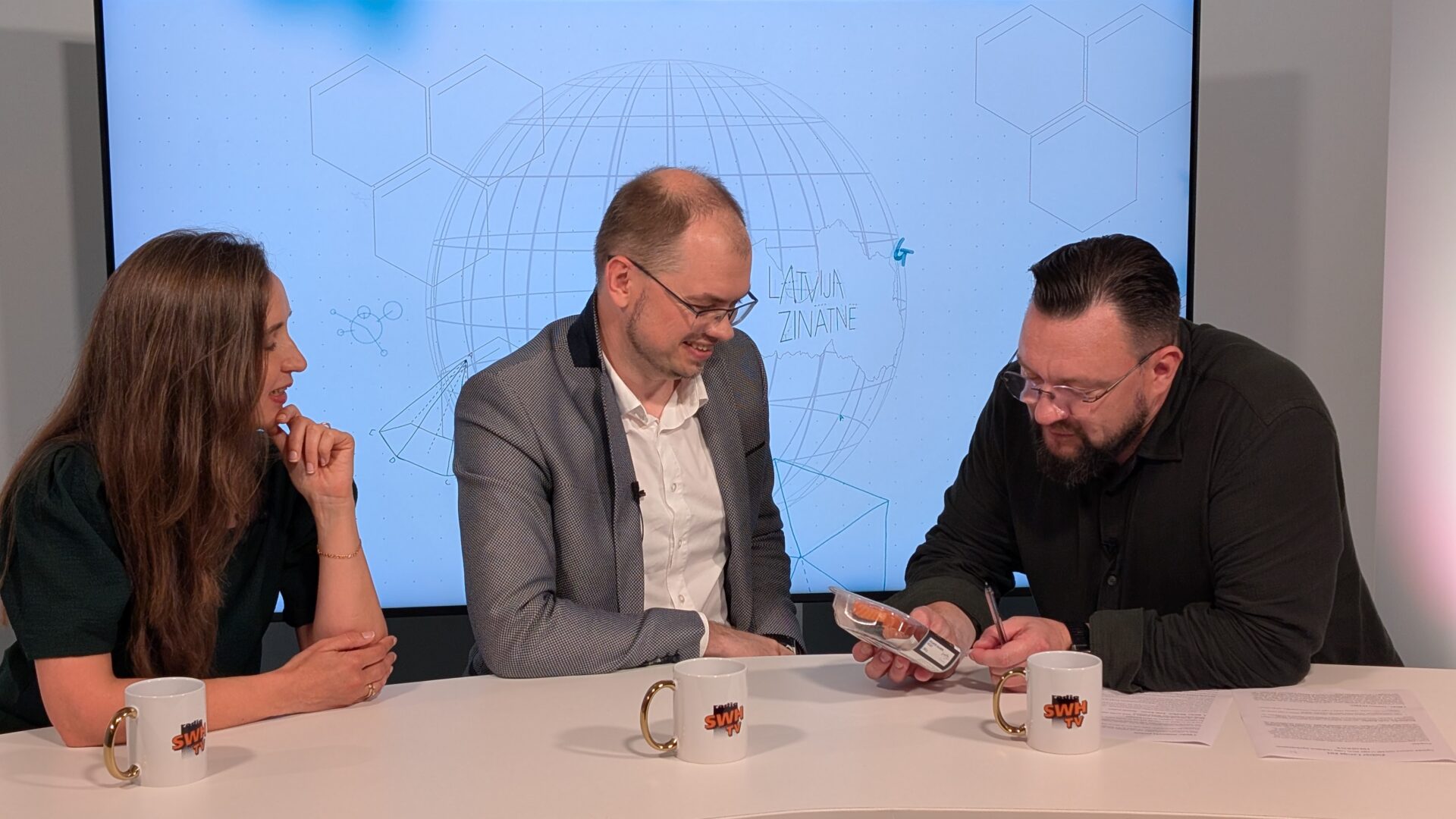
Sometimes the biggest obstacle science The path to achieving success from the laboratory to the market is hampered neither by a lack of funding nor by incomplete technology. Researchers often want to perfect a product before showing it to potential customers or investors. On how to think differently about innovation, research and innovation platform “BioPhoT” mentor Kaija Kurme-Jansone and business developer Jurijs Jastržembskis discuss on Radio SWH TV's program “Latvia in Science.”.
Experts agree that promising ideas are not enough with good laboratory results alone. Sometimes the biggest challenge is finding the right time to stop perfecting a product and start showing it to the world.
Kurme-Jansone has observed that scientists and entrepreneurs often view a new product differently. While researchers focus on developing and refining the technology, one of the most common challenges is researchers' desire to achieve an ideal outcome before sharing their work with others. In the business environment, on the other hand, it is important to understand early on whether a solution will have demand.
“Business and scientists are two very different worlds,” admits Kurme-Jansone, emphasizing that this approach isn't always an advantage in business. It's often much more valuable for researchers to receive feedback from potential customers, partners, or investors early on rather than perfecting a product in isolation from the market for years. Sooner or later, almost every innovator faces this issue. Helping people look at their ideas from a potential customer's perspective is one of the main tasks of a mentor on the “BioPhoT” platform. “Often the most valuable question is - who wants to pay for this? And then you have to think about this value proposition,” the mentor emphasizes.
The program features the “BioPhoT” project “FreshWave,” where a team from the University of Latvia, led by researcher Artis Kinēns, is developing a sensor to determine the freshness of seafood. “The potential of this project was evident from the very first conversations with the research team,” says business developer Jurijs Jastržembskis. In his opinion, a significant advantage is the clearly defined problem for which a practical solution is being sought.
When describing the project idea, he formulates it concisely: “Smart sensor, fresh food.” It is precisely the ability to easily explain the problem and its solution that, according to Jastrzembski, helps innovations reach potential customers more quickly. Just as important as the technology itself is the team that can develop the idea, find partners, and bring it to market.