Please note that the English version of this text has been prepared with the assistance of AI, and in some instances, it may not have been subsequently reviewed or edited by the authors.
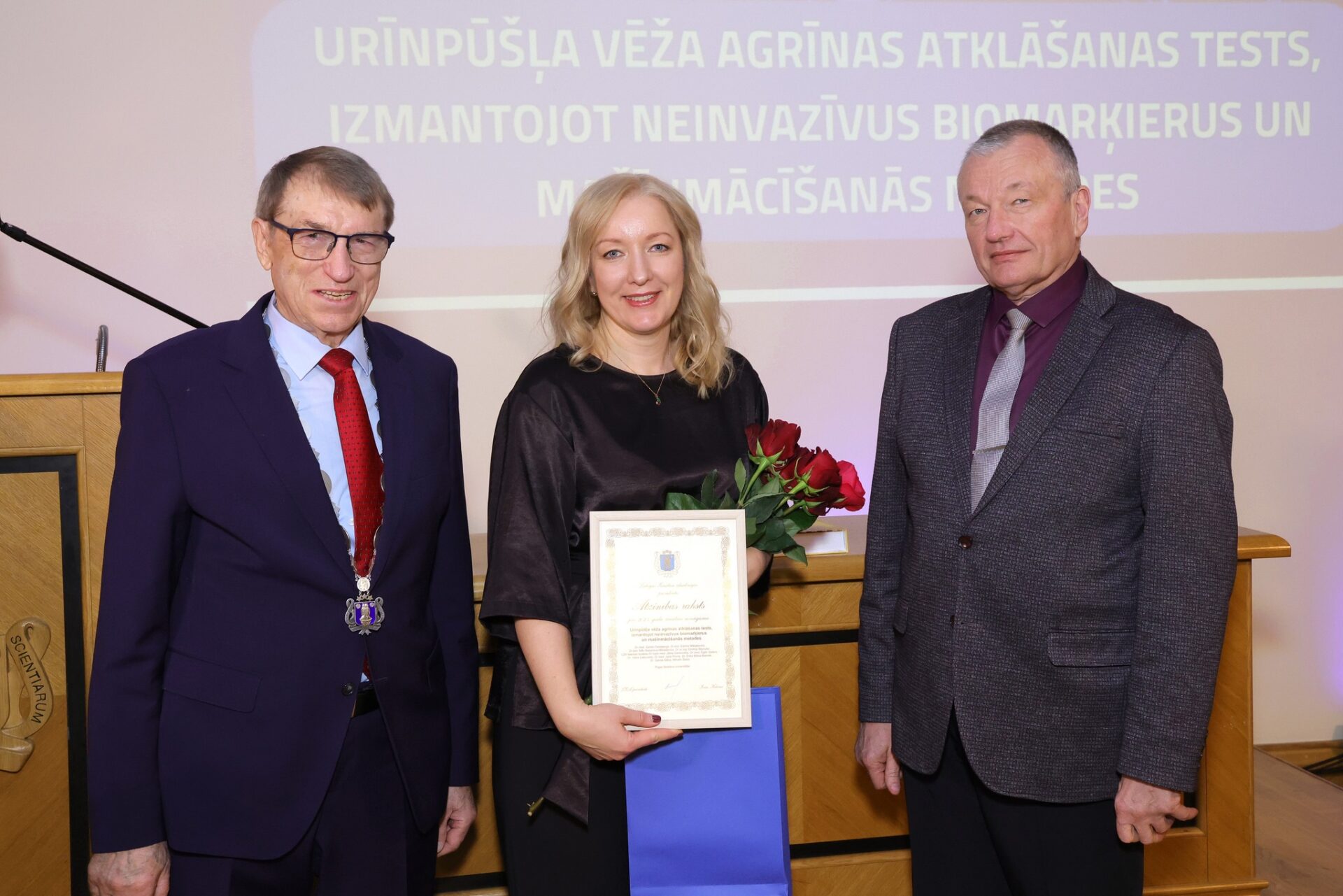
At the end of February, during the award ceremony of the Latvian Academy of Sciences (LAS) for the most significant achievements in science in 2025, the LAS President's Certificate of Appreciation was awarded to the research and innovation project LiqBio-BC of Riga Stradins University (RSU), which develops an early detection test for bladder cancer using non-invasive biomarkers and machine learning methods. The recognition was awarded for a significant contribution to the development of oncology diagnostics by creating an innovative approach for the early detection of bladder cancer.
Bladder cancer is one of the most common urological cancers and invasive methods are still widely used to diagnose it. The aim of the project is to offer an alternative test with high sensitivity and specificity to detect the disease early, improve the quality of life of patients and optimise the use of healthcare resources. The LiqBio-BC team developed a novel, patient-friendly and clinically effective diagnostic method based on the non-invasive detection of biomarkers in urine using molecular biology and bioinformatics approaches, as well as machine learning algorithms to analyse the data and improve diagnostic accuracy.
“Research in bladder cancer diagnostics at RSU started in 2020. Since then, this topic has been developed in various national research programmes, while work is currently ongoing on the BioPhoT platform, where we combine molecular biology, clinical medicine and data analytics competences. During these years, we have not only developed innovative diagnostic approaches, but also nurtured a new generation of scientists who continue to strengthen this field of research in Latvia with their energy and knowledge,“ says Project leader LiqBio-BC prof. Zanda Daneberga.
The solution developed by RSU researchers is an important step towards more personalised, accurate and patient-friendly oncology diagnostics in Latvia and internationally. The project brings together the expertise of clinical specialists, molecular biology experts and data scientists, creating an interdisciplinary collaboration between researchers and clinicians.