Please note that the English version of this text has been prepared with the assistance of AI, and in some instances, it may not have been subsequently reviewed or edited by the authors.
What first comes to mind when you hear about lithium-ion batteries? Most likely, a mobile phone or an electric car. However, nowadays these batteries are becoming increasingly important in energy storage systems, which help ensure the efficient use of solar and wind energy.
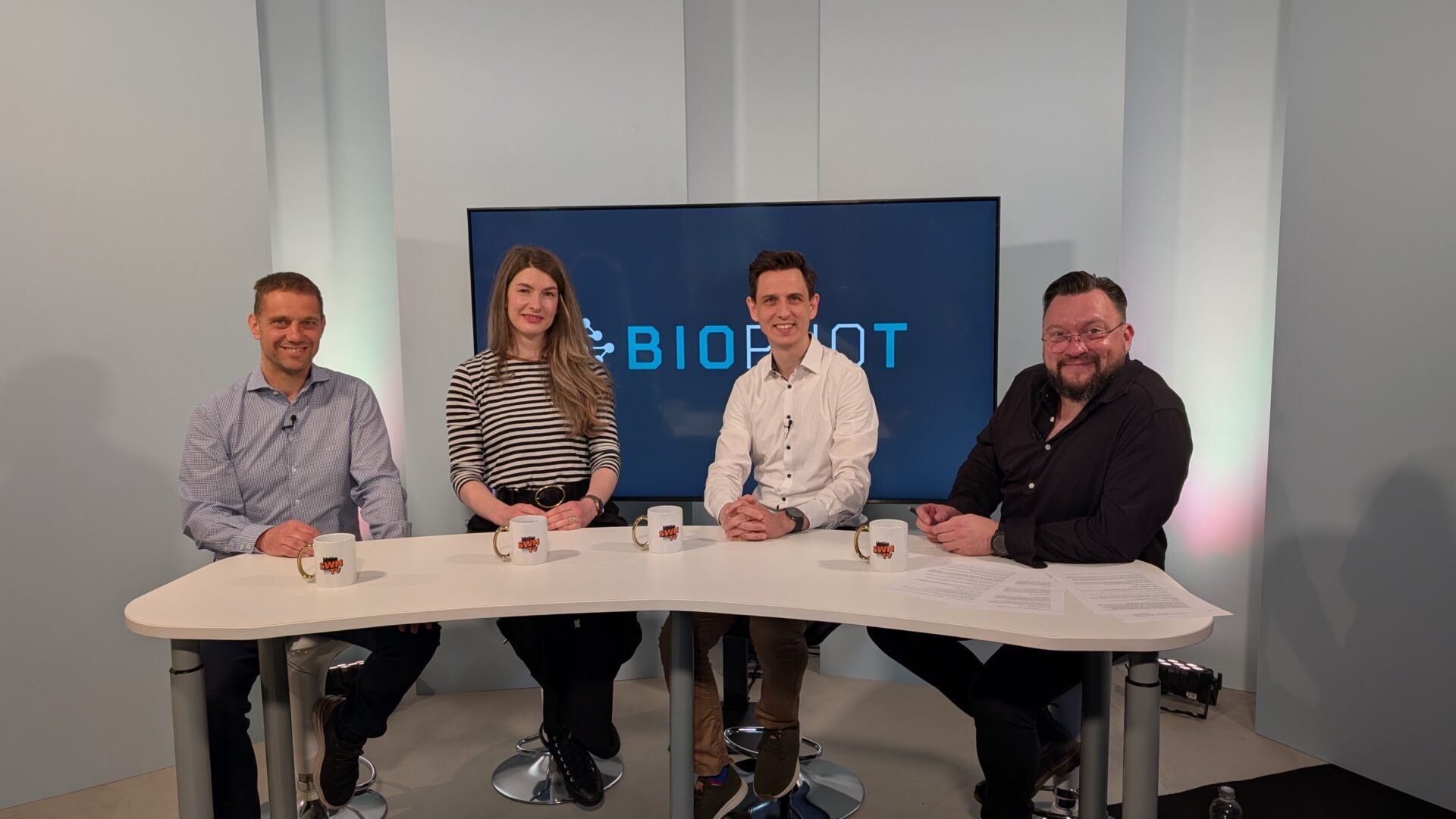
On the show “Latvia in Science,” leading researcher and head of the Energy Materials Laboratory at the University of Latvia's Institute of Solid State Physics, Gints Kučinskis, “BioPhoT” mentor Voldemārs Brēdiķis, and business developer Arta Zitmane discuss why batteries age, how to extend their lifespan, and how to transform a scientific idea into a marketable product.
Why do batteries age?
Kučinskis began researching lithium-ion batteries during his studies. Today, the demand for efficient energy storage systems is rapidly increasing, which in turn is increasing interest in ways to make batteries more durable and cost-effective.
The researcher explains that the main problem is battery aging. Although this is an inevitable process, scientists are trying to determine which factors have the greatest influence on it and how they can be controlled. One of the most significant aspects turns out to be temperature, but usage habits, charging methods, and other operating conditions also play a role.
The Kučinskis-led team is researching how to apply acquired knowledge in practice by developing an algorithm that helps operate battery systems more efficiently and extends their service life. This very insight has become the foundation for the team's future work.
“We understand how batteries age quickly or slowly under various conditions, but hey, we can also adjust those conditions so that batteries last longer.”
From scientific research to a real product
However, a scientific discovery does not yet mean a successful product. It is at this very moment that the “BioPhoT” platform gets involved in the project. As Brēdiķis explains, one of the biggest challenges is to bring two different worlds together – science and business.
Both Brēdiķis and Zitmane emphasize that scientists and entrepreneurs often view the same problem from different perspectives. Researchers have excellent knowledge of technology, while companies have a much better understanding of market needs.
Why is it easier to sell an algorithm than a physical product?
Meanwhile, Zitmane helps translate scientific solutions into business language. She explains that the advantage of an algorithm is that such a solution can be demonstrated to potential clients faster and is easier to adapt to different needs than a physical product.
Zitmane also reminds that behind any company decision there are specific people. In her opinion, the most important thing is to find companies and people for whom this solution provides the greatest value.
Latvia's opportunity in the growing battery industry
Latvia's potential in the global battery industry is also being discussed. While Latvia has no lithium deposits, this doesn't mean the country cannot be a significant player in this field. According to Kučinskis, the main value lies in knowledge, research, and the ability to create new technological solutions.
Currently, the team is paying special attention to large-scale battery energy storage systems used in solar and wind energy projects. In this segment, the battery lifespan directly impacts the return on investment, so any solution that can extend the system's operational life can generate significant economic benefits.
Unlike mobile phones or electric cars, in such systems, each additional year of battery life can mean a significant financial benefit, which is why this segment currently seems particularly promising to the team.