Please note that the English version of this text has been prepared with the assistance of AI, and in some instances, it may not have been subsequently reviewed or edited by the authors.
Article based on the original publication on lsm.lv
A device developed by researchers at the Institute of Solid State Physics (ISSP) of the University of Latvia (UL) helps monitor processes in water desalination plants, while another technology created at the institute with the support of “BioPhoT” is being developed with thoughts on medical use.
Article and video available on the lsm.lv website.
In the Laboratory of Optical Materials at ISSP UL, researchers work with materials and technologies related to optical properties—namely, working with everything that glows, reflects, and alters or detects light flux. The laboratory has created a fully automated underwater optical spectroscopy system that measures water quality with high precision. The device featured in the story makes it possible to forecast when uncontrolled biological growth will occur in the sea. A similar technology also sees application in medicine as a minimally invasive, optical-process-based device for determining perfusion and other blood parameters.
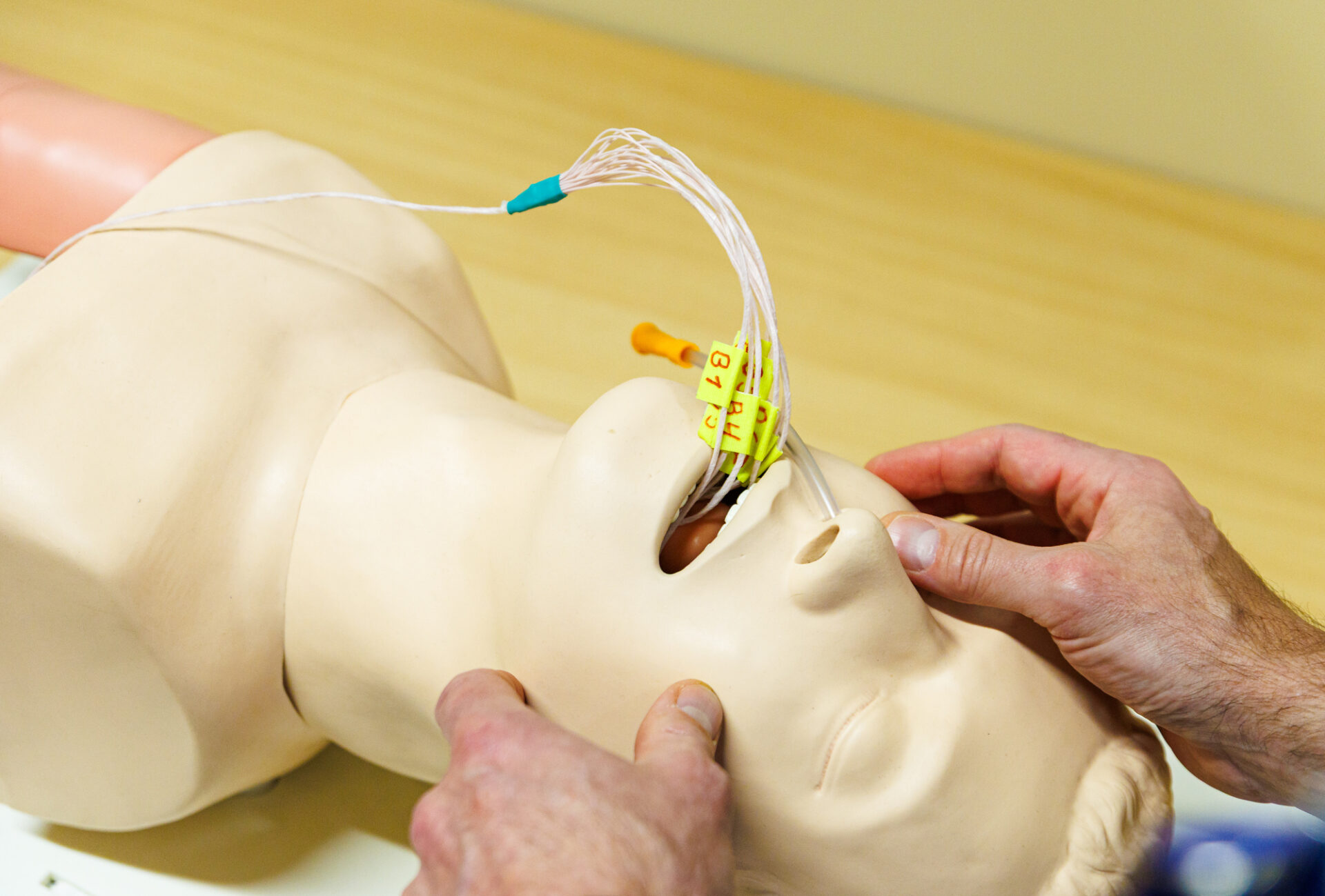
Head of the Laboratory of Optical Materials at the UL ISSP, Aleksejs Zolotarjovs explained: “During surgeries, patients with sepsis have severely restricted blood function and circulation. Standard measurements to assess the blood condition do not work because blood simply does not reach their fingers. However, this information is used directly by anesthesiologists, who administer anesthesia based on heart rate parameters.”
“BioPhoT project “Optical multimodal method for microcirculation assessment at the sublingual and gastric mucosal level in septic shock patients” The device developed within the framework, which is designed to place optical waveguides under the tongue, provides anesthesiologists with much more precise information than previously customary ones. Such research and discoveries stimulate scientists to research and discover more and more. LU ISSP Scientific Assistant Milena Dille-Yemelyanenko stated: “The idea that my work could later be used not only by my children, but most likely by my grandsons and granddaughters, is very interesting. I can leave my mark in history and benefit both society and the whole world.” The new device's first animal tests on its effectiveness will begin very soon, yet it will still take several years before it can be practically applied in everyday medical treatment.