Please note that the English version of this text has been prepared with the assistance of AI, and in some instances, it may not have been subsequently reviewed or edited by the authors.
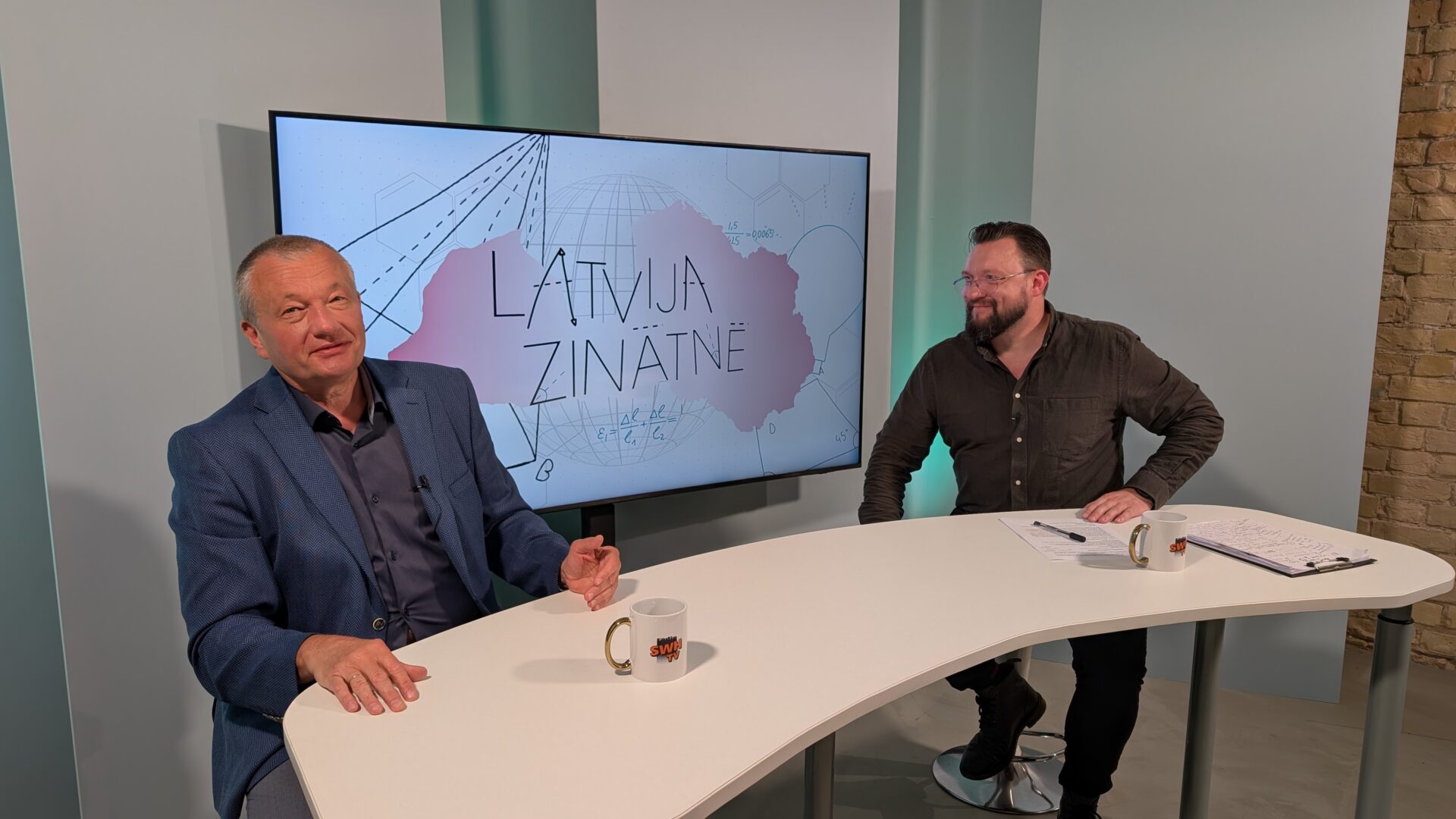
The word “innovation” is heard more and more frequently, but not every scientific discovery automatically becomes an innovation. Why a study alone is not enough to achieve such “status,” and what role science plays in this process is explained on the program “Latvia in Science” by Osvalds Pugovičs, head of the biomedical and photonics research platform “BioPhoT.”.
Latvia's scientific progress towards practical application is currently seeing positive changes, driven by new funding opportunities that are fostering scientists“ interest in the practical application of their research. At the same time, when discussing innovations, Pugovičs urges us not to forget the foundation – fundamental science. He emphasizes that commercialization does not replace science but rather supplements it: ”If there is no scientific basis, we will quickly exhaust the potential of existing ideas. Some inventions may live on, some may be useful, some may be forgotten, but we will not be able to create new ideas."
Pugovičs believes that the thinking of scientists themselves has also changed in recent years. Based on his work experience, comparing researchers“ approaches in the two ”BioPhoT" funding competitions held in the last two years, he has observed significant growth in how researchers think about the practical application of their ideas and the potential end-users of innovation. Currently, 66 Latvian research and innovation projects are being implemented with the platform's support. The plan is that by 2032, nearly half of them will have reached a convincing level of technological readiness and the innovations created will have proven themselves in controlled laboratory conditions or will have already been demonstrated in action in a real environment, with at least four of them reaching the commercialization phase.
One of the central discussion topics is the very concept of innovation. Pugovič admits that the word is heard very often, but it is evident that its meaning is not always clearly understood. Innovation is not the research itself, a scientific publication, or a patent application, but rather the ability to transform knowledge into a solution that can effectively replace or at least complement existing products for users.
In her opinion, the ability for research to eventually turn into innovation is determined precisely by the connection between fundamental science and practical application, where the author's ability to adapt a scientific idea to solve a practical problem plays an important role.
“The study is needed as a foundation. If such a scientific foundation is missing, then the only innovation we could create, for example, would be to repaint a white mug green,” he explains.
“A significant task of the ”BioPhoT“ platform is the involvement of young researchers in the implementation of research and innovation projects. Pugovič believes that it is important for students not only to see the possibilities of an academic career but also the path to transforming their knowledge into practical solutions. However, not everyone will choose this direction, and in his opinion, one should not strive for a situation where all scientists become entrepreneurs: ”We will never achieve, and in fact, we don't even need to achieve a situation where all scientists engage in commerce. Absolutely not. We will always need outstanding academic scientists who are not interested in this field," he points out. However, such an experience helps young researchers understand whether the academic environment is closer to them or if they are also tempted by the desire to use their knowledge outside the laboratory.