Video
Please note that the English version of this text has been prepared with the assistance of AI, and in some instances, it may not have been subsequently reviewed or edited by the authors.
Description
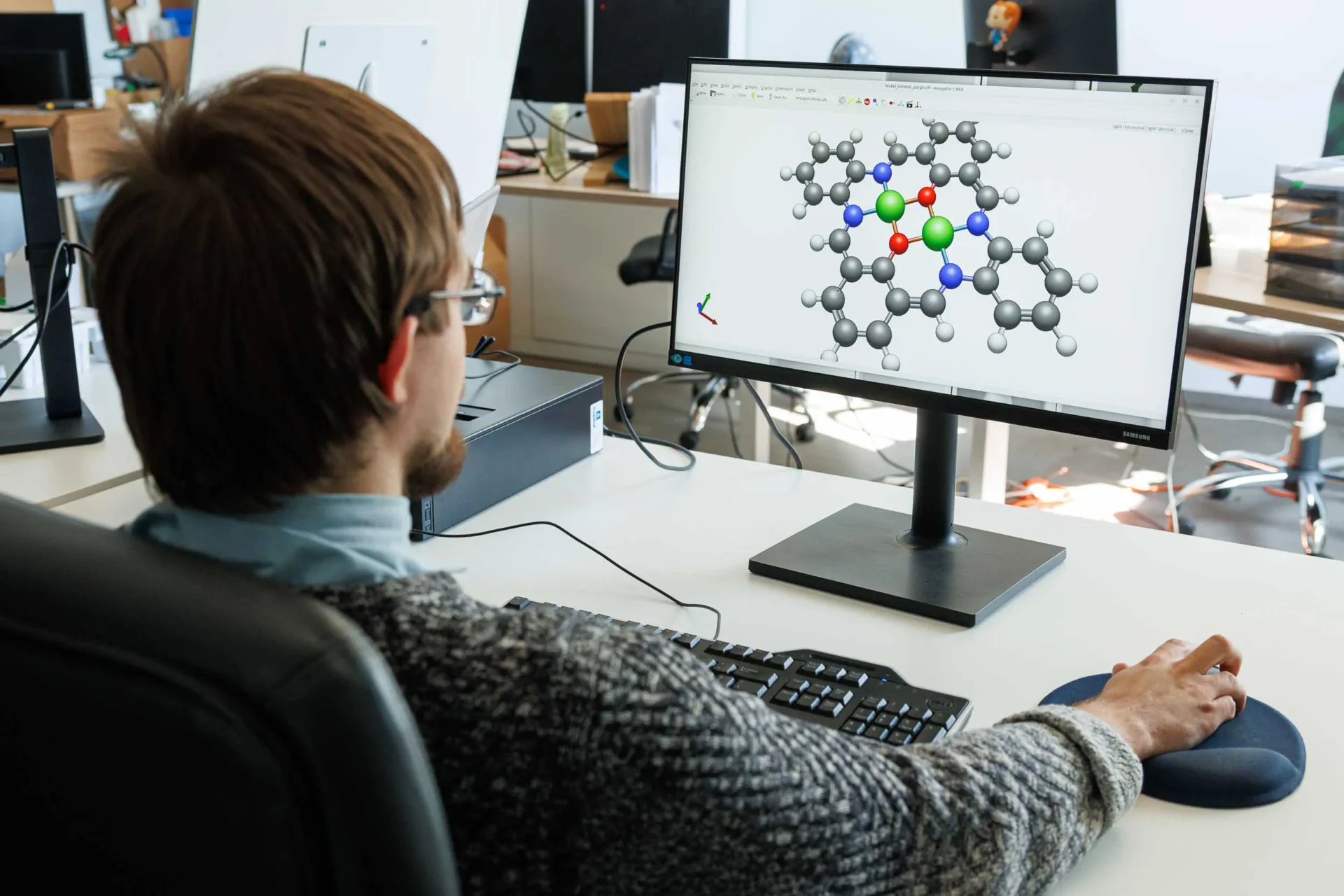
Within the project, next-generation, bio-inspired molecular catalysts with diatomic active sites are being developed that electrochemically convert CO₂ into formic acid—a demanded carbon-neutral chemical that is used in energy storage, agriculture, and manufacturing.
The Achievable Results
The project will investigate the catalytic mechanism of CO₂ reduction, and will demonstrate the feasibility of experimental synthesis, and will evaluate the performance of catalysts in a controlled electrochemical environment, thereby advancing the technology from TRL 2 to TRL 3.
The Anticipated Benefit
MOCADE lays the foundation for scalable and sustainable formic acid production, positioning Latvia as a regional leader in CO₂ utilization and clean technology innovation, creating opportunities for creation of industrial partnerships, patents, and spin-off companies.
The Allocated Funding
143,859 EUR on 03/01/2026.
Team

Gallery