Video
Please note that the English version of this text has been prepared with the assistance of AI, and in some instances, it may not have been subsequently reviewed or edited by the authors.
Description
Ductal adenocarcinoma of the pancreas (DAP) is one of the deadliest forms of malignant diseases. Approximately 140,000 new cases are diagnosed in Europe each year, and the five-year survival rate is <10%. Chemotherapy, such as mFOLFIRINOX, prolongs survival but often causes toxicity and treatment discontinuation (in up to 35% of cases). There is a lack of biomarkers that would allow for predicting treatment efficacy. This leads to overtreatment, economic burden, and limited accuracy in clinical decision-making. Microfluidic drug testing tools are used in <0.5% of precision oncology cases, and in the case of pancreatic cancer, they have no routine application in clinical care.
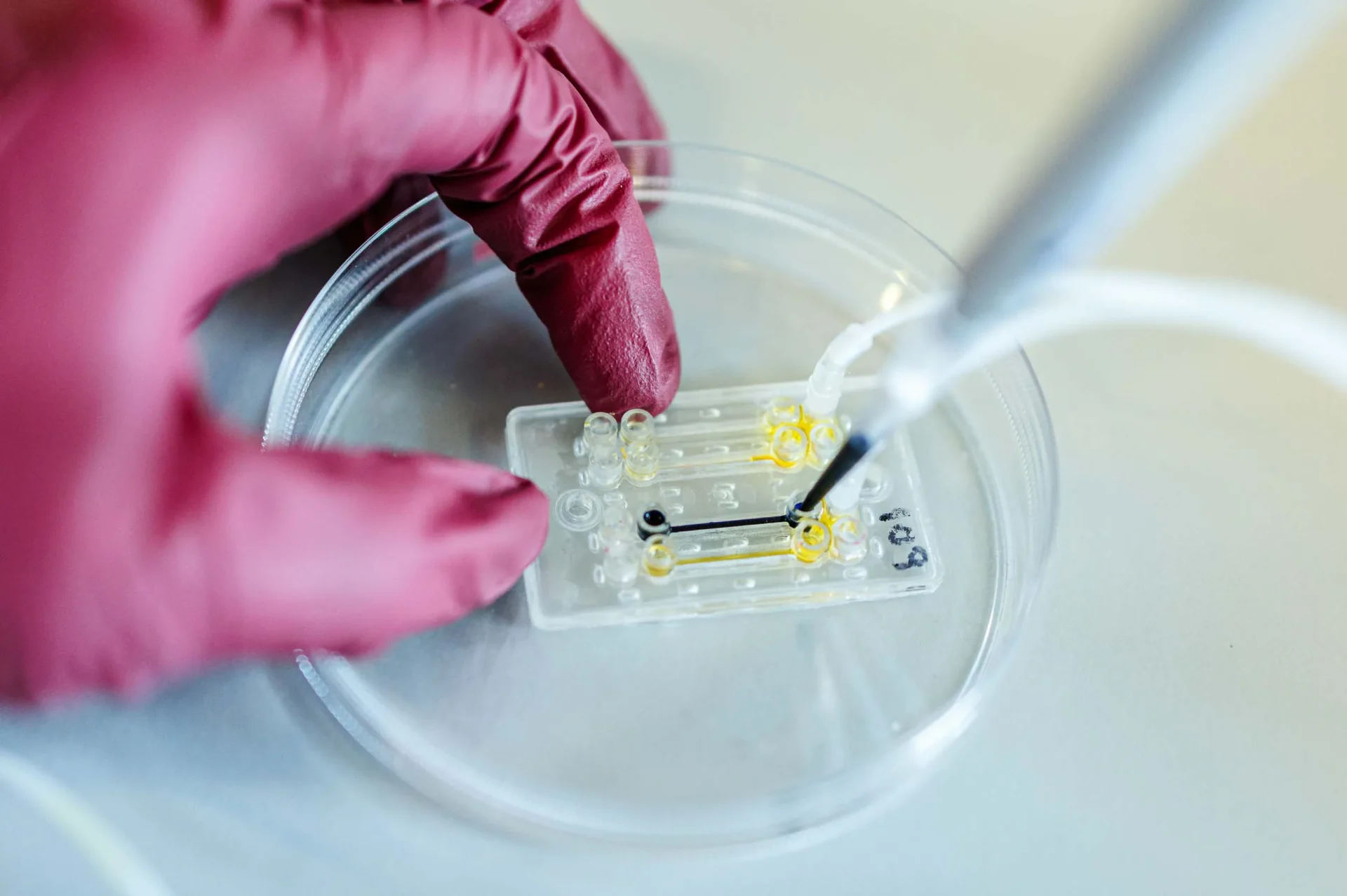
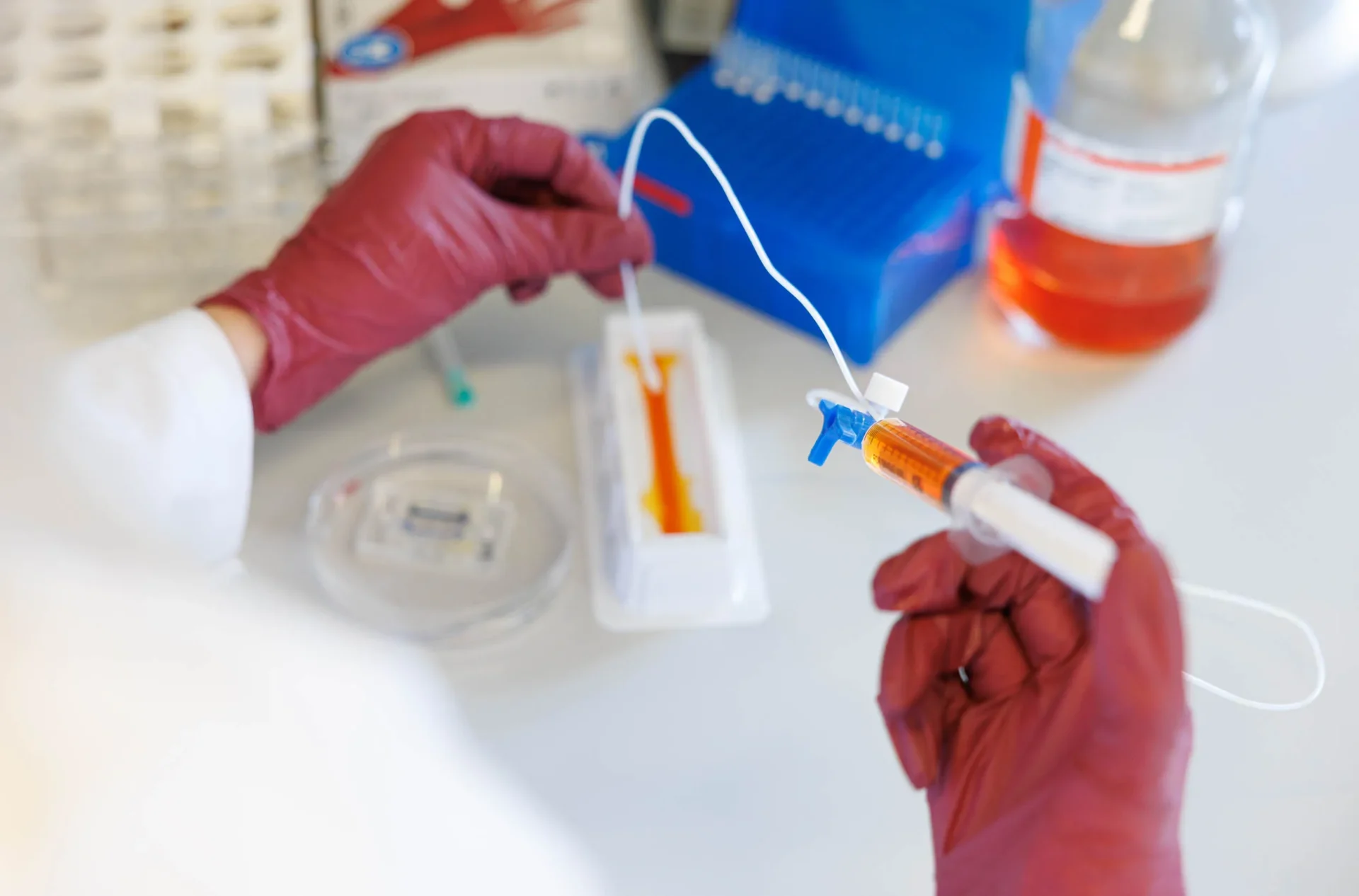
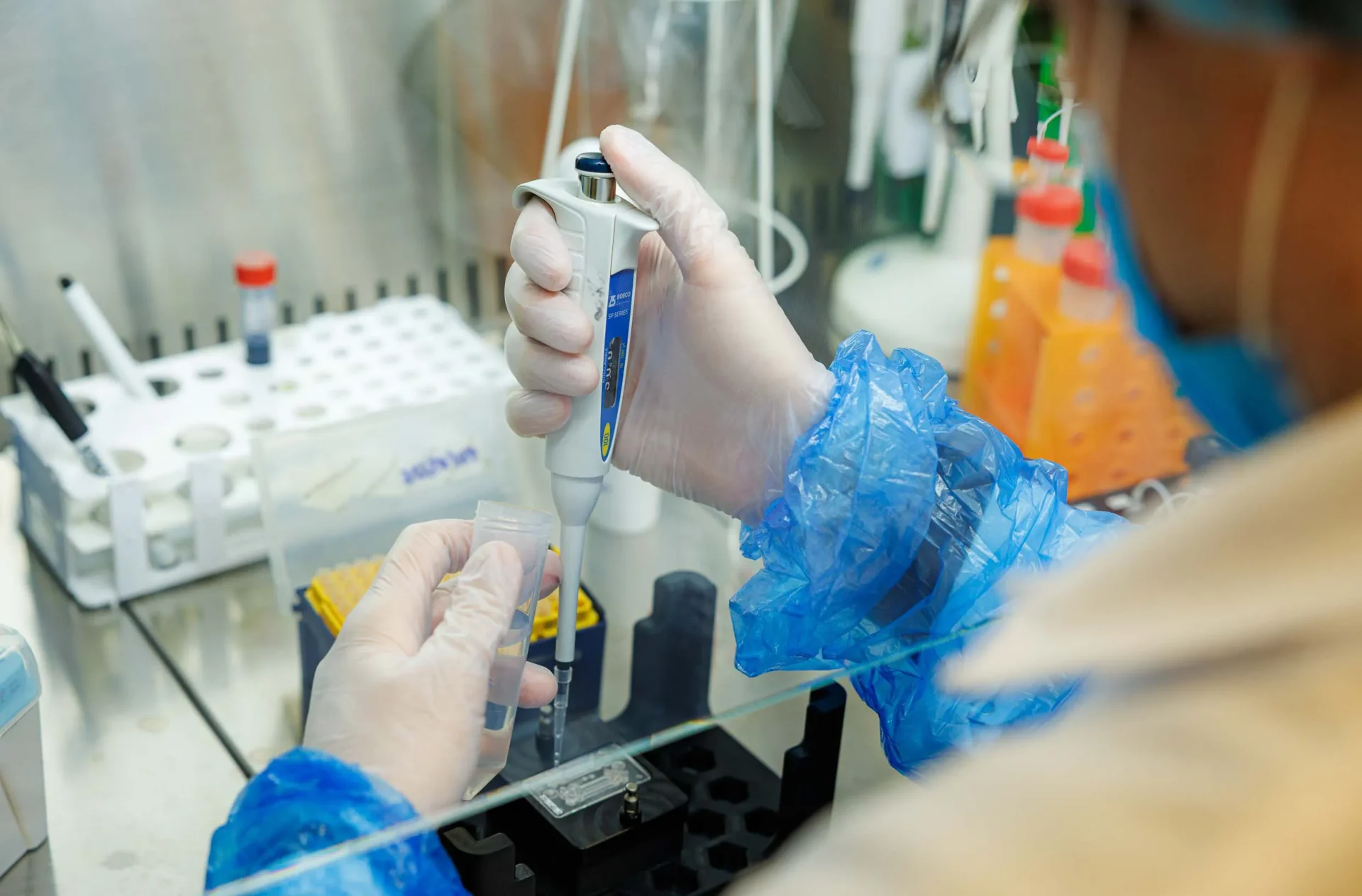
The project's goal is to develop a vascularized ADDA microfluidic chip for functional precision medicine. The technology combines a perfused endothelial barrier, physiologically relevant environmental stiffness (3-9 kPa), and real-time measurements (TEER, LDH, O₂), modeling tumor-vascular interactions and clinically relevant effects of medications.
The project objectives are to improve biological accuracy, select an optimal endothelial source, determine vascular damage thresholds during therapy, analyze therapy responses of tumor subtypes, and create an appropriate business strategy for platform development. Within eight months protocols will be developed, vascular integrity validated, and pharmacokinetic analysis integrated, resulting in a TRL4 prototype. In the long term, the platform is intended to be developed as a service, which will improve therapy selection and reduce toxicity.
The Achievable Results
Develop a microfluidic technology designed for drug sensitivity testing of pancreatic cancer to effectively evaluate the efficacy of various therapies and promote the development of personalized treatment approaches.
The Anticipated Benefit
Using this approach, it would be possible in the laboratory to simultaneously test multiple drug substances and evaluate which of them might be the most effective for a specific patient. This could help in selecting more appropriate therapy, potentially increasing treatment efficacy, reducing unnecessary medication use, and improving patients' quality of life. In the long term, such an approach could also promote more efficient use of healthcare resources and support the development of more precise treatment strategies in oncology.
The Allocated Funding
190,000 EUR due March 18, 2026.
Team





Gallery