News

DEEP TECH SUMMIT 2025 to be held in Warsaw in October

DEEP TECH CEE SUMMIT 2025 - one of the most ambitious and influential deep tech ecosystem activities in Central and Eastern Europe - will take place in Warsaw from 27 to 29 October deep tech Find out more and book your ticket now!

The event will bring together innovative start-ups, scientists, corporate representatives, venture capital funds, corporate venture capitalists and experienced business angels from across the region and beyond.

Participants can look forward to a wide and varied programmewhich includes:

  • Latest news and deep tech presentations on trends, and technological breakthroughs
  • Networking opportunities with investors, industry leaders and entrepreneurs
  • Practical workshops, thematic panels, targeted networking sessions
  • Inspiring stories and examples of successful innovations
  • Opportunities to launch international collaborations and projects with high growth potential

"Don't miss this opportunity to raise funds, build valuable partnerships and take part in the most cutting-edge event of the season!" the organisers invite.

We invite everyone to find out more about this event and take the opportunity to participate!

More information and tickets available: https://deeptechsummit.eu/

RTU invites to join the industrial symbiosis innovation programme SINERGIA

BioPhoT partner Riga Technical University is implementing the SINERGIA: Industrial Symbiosis Innovation Accelerator programme. BioPhoT scientists are invited to familiarise themselves with the programme conditions and to apply for an alternative source of funding in other RIs3 areas. More information on the programme can be found at: https://sinergia.lv/akselerators/ . Application deadline 8 August https://ej.uz/pietekties_SINERGIA!

Latvia's leading dairy processing companies AS Valmieras piens and AS Smiltenes piens are looking for partners who can offer solutions to two major challenges:

Processing of sour milk juice - each year, companies produce more than 20 000 tonnes of rennet, a liquid, chemically aggressive by-product with a complex composition, high chemical oxygen demand (COD) and low pH. This resource is currently under-utilised despite its potential for high value-added products. 

Flotation sludge management - flotation sludge from wastewater treatment contains significant amounts of organic matter, nitrogen, phosphorus and trace elements. However, their use is currently severely limited due to technological, economic and regulatory barriers.

The Accelerator aims to develop solutions that turn these challenges into new resources or products with market potential. To help do this, the programme offers: 

- work on a real industry challenge

- develop your idea with business representatives;

- get financial support to develop your idea;

- receive expert training and mentoring.

    Teams, companies or individuals with relevant knowledge and ideas are welcome to apply. 

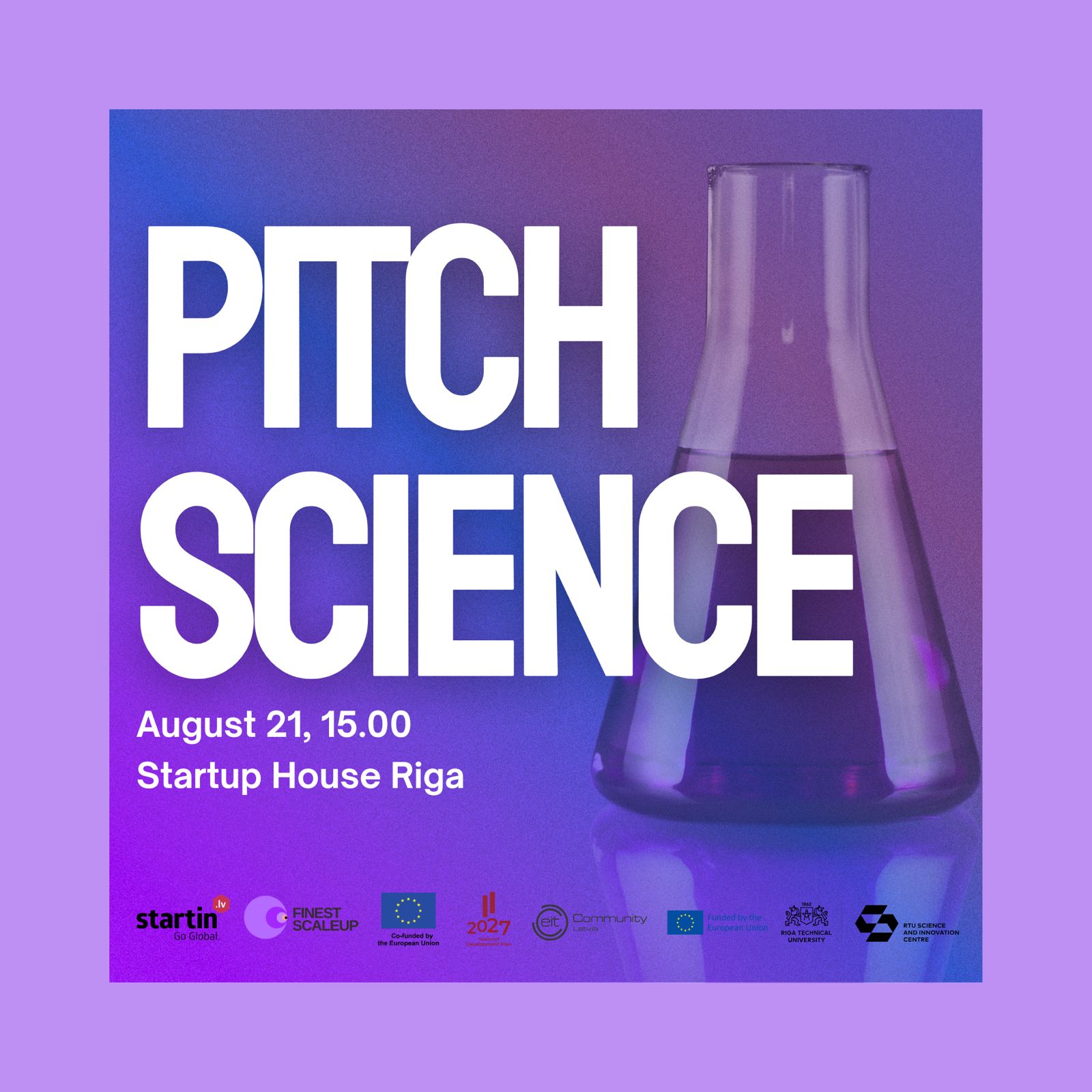
    Pitch Science - an event for researchers

    On 21 August, from 15.00 to 17.00, Startup House will host the Community Forum in Riga, bringing together startups, researchers and innovation ecosystem players.

    As part of the event, we invite researchers to apply to participate in a special deeptech section - "Pitch Science" - where scientists will have the opportunity to present their solutions and receive practical feedback from experienced start-up founders.

    Format:

    • 5-minute idea presentation
    • 10-15 minute comments from startup representatives:
      • potential industrial applications
      • business model options
      • improving presentation and communication

    Scientists are also invited to highlight a specific challenge they face - for example, the need for pilot partners, industry collaboration or scaling issues. The event is free of charge for scientists (limited number of places, participation on a first-come, first-served basis).

    The aim of the event is to foster collaboration between academia and business, to promote the emergence of deep-tech entrepreneurs and the commercialisation of scientific innovations.

    If you have any questions, please contact Alina Dolmati, EIT Community Coordinator in Latvia: alina.dolmate@rtu.lv

    Working language: English.

    Link to the application form.

    Organisers: The event is organised by the Latvian Start-up Association "Startin.LV", EIT Community Hub Latvia and Riga Technical University. The event is supported by FINEST Scaleup and the project is in collaboration with the long-term national research programme project BioPhoT.

    74 applications with high innovation potential are submitted for scientific evaluation

    The Latvian Science Council has completed the administrative evaluation of the second round of research and innovation project applications and 74 applications with high innovation potential have been submitted for scientific evaluation by foreign experts.

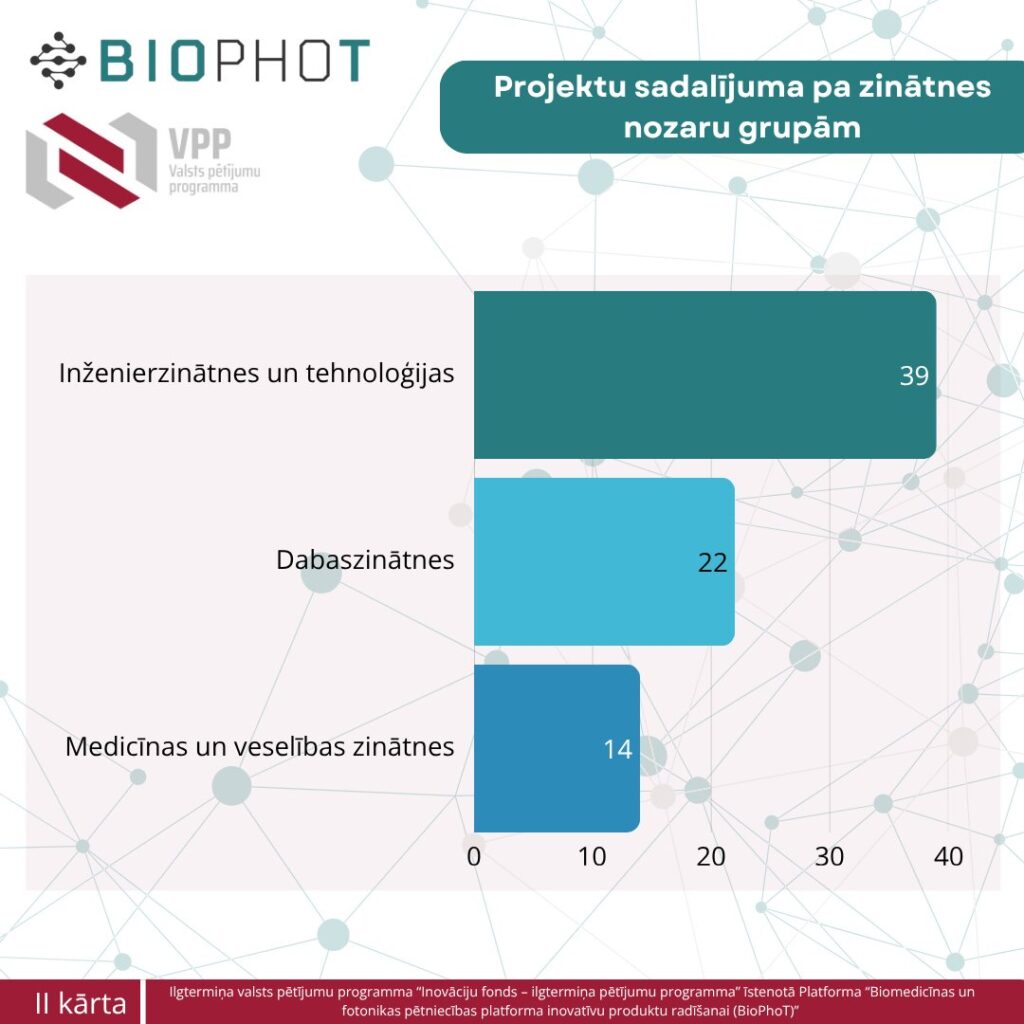
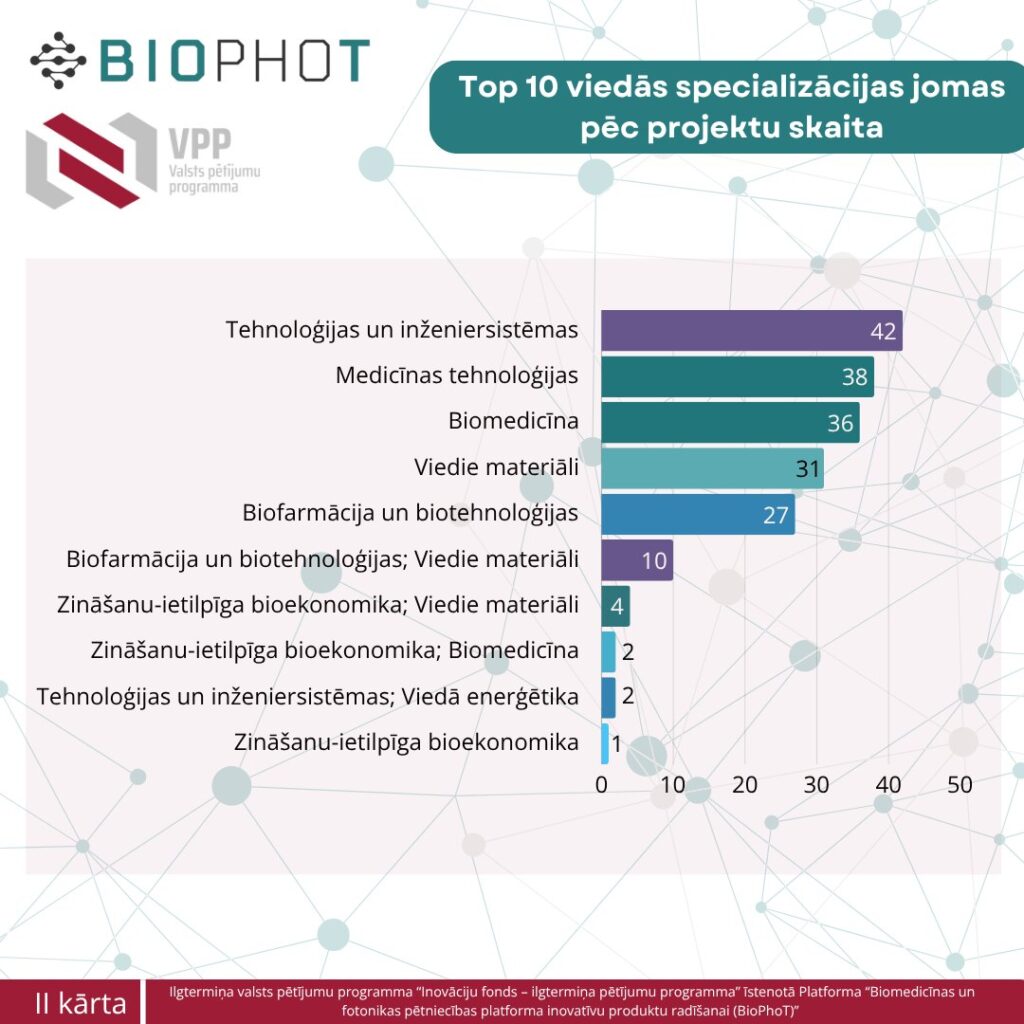
    The projects represent 11 smart specialisation areas and 14 scientific fields, with a strong focus on engineering, life sciences and health research.

    The projects demonstrate a strong focus on translational innovation - from medicine and pharmaceuticals to material sciences and digital technologies.

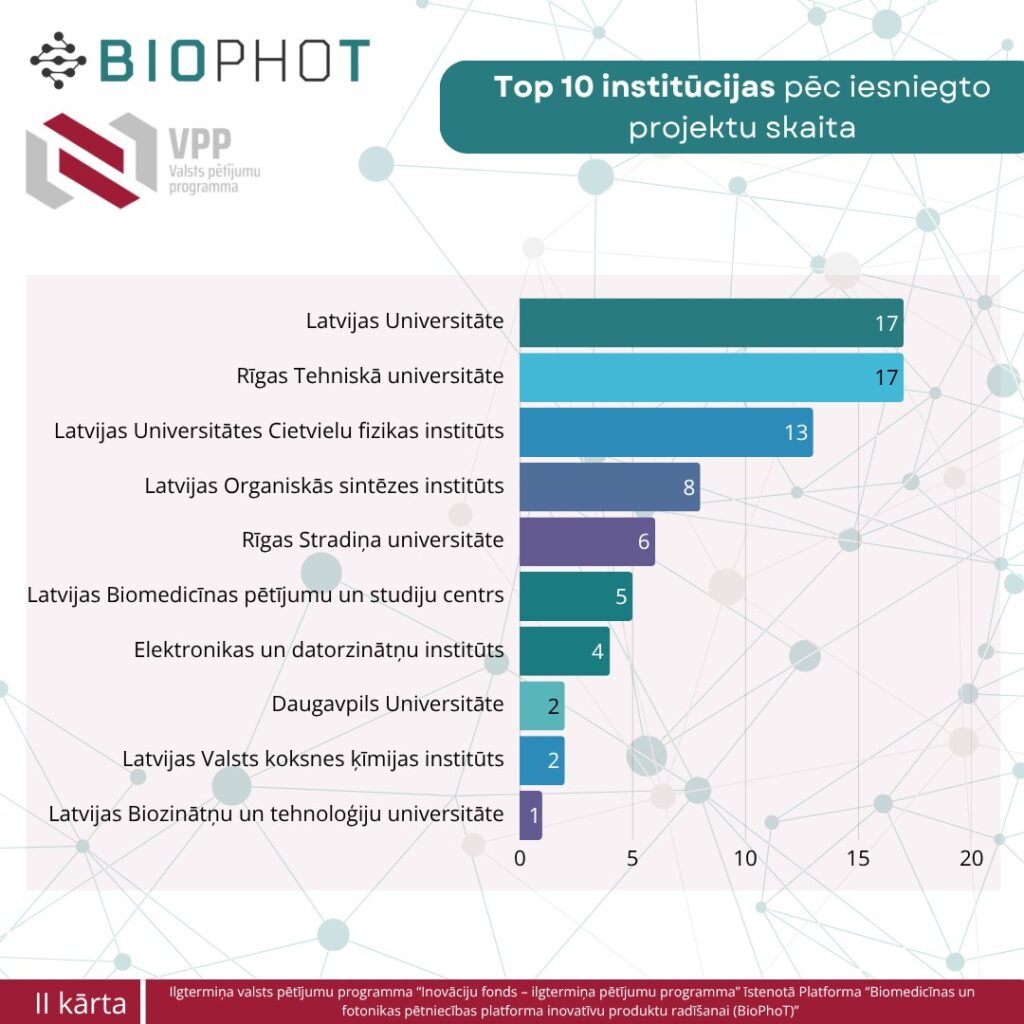
    The University of Latvia, RTU - Riga Technical University and the Institute of Solid State Physics of the University of Latvia have the highest number of applications, with a broad coverage of topics and visible leadership, while providing a high-quality scientific framework.

    Equally important and significant is the participation of the Institute of Organic Synthesis, Riga Stradiņš University, Latvian Biomedical Research and Study Centre, Institute of Electronics and Computer Science, Daugavpils University, LV Institute of Wood Chemistry and Latvian University of Life Sciences and Technologies, which provide specialised competences and high precision approach to specific scientific fields. This allows the development of research projects based on existing infrastructure and accumulated knowledge.

    Thoughtful partnerships and active inter-institutional cooperation are important. Many applications can be implemented jointly between different institutions, thus ensuring more efficient use of resources, knowledge transfer and a multidisciplinary approach to research.

    Industry-defined challenges for researchers

    "The BioPhoT platform has compiled the first challenges defined by industry partners, which you are invited to read by downloading the annexes:

    Pauls Stradins Clinical University Hospital
    EU Innovate Together initiative
    Cellbox Labs

    Contacting the contact details provided will help you to find out about the specific requirements of the sectoral challenges and to decide whether your research experience, infrastructure and partners are suitable to address them in the next call for Research and Innovation.

    VIDEO: Preparing the documents for the 2nd evaluation round of research and innovation project proposals

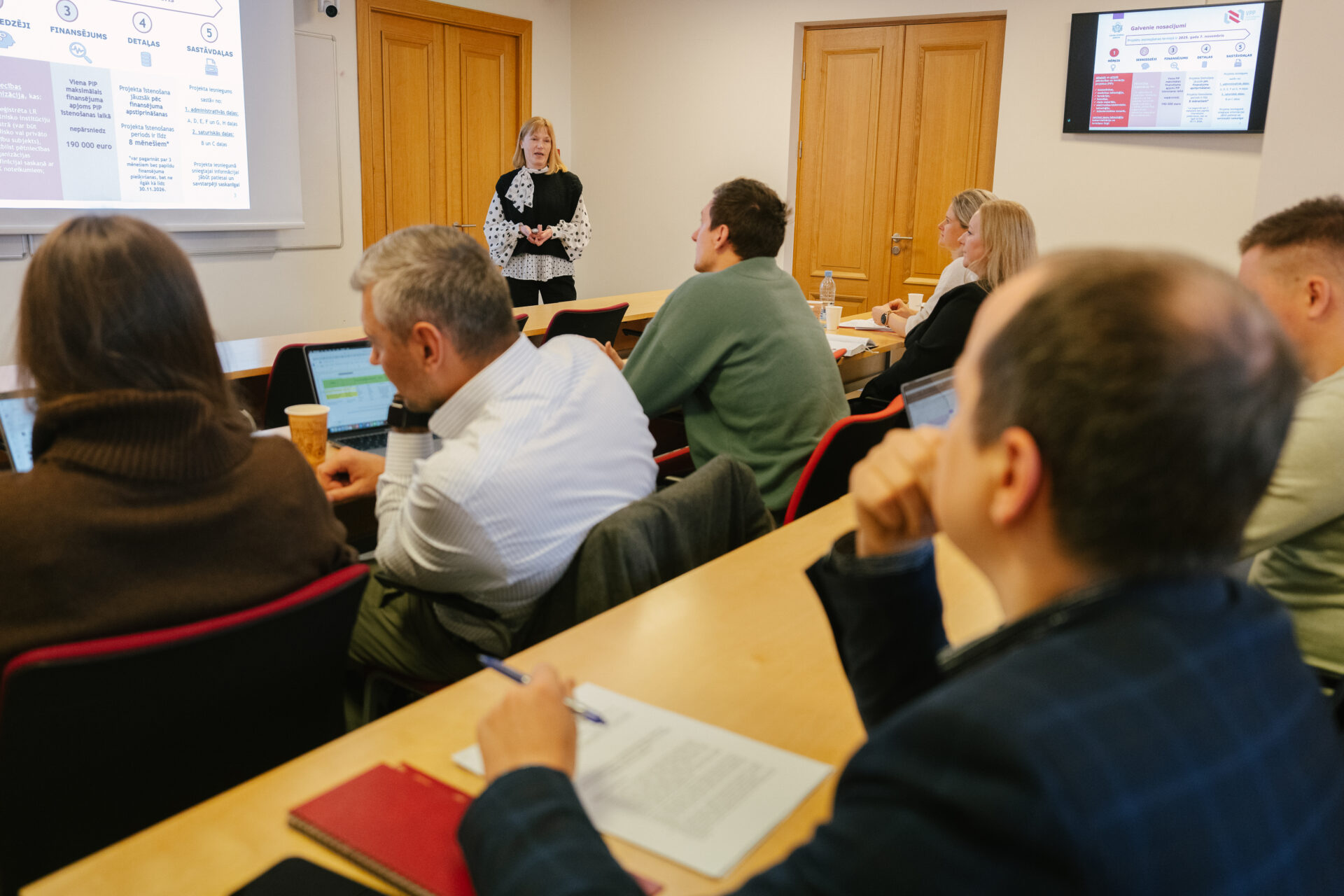
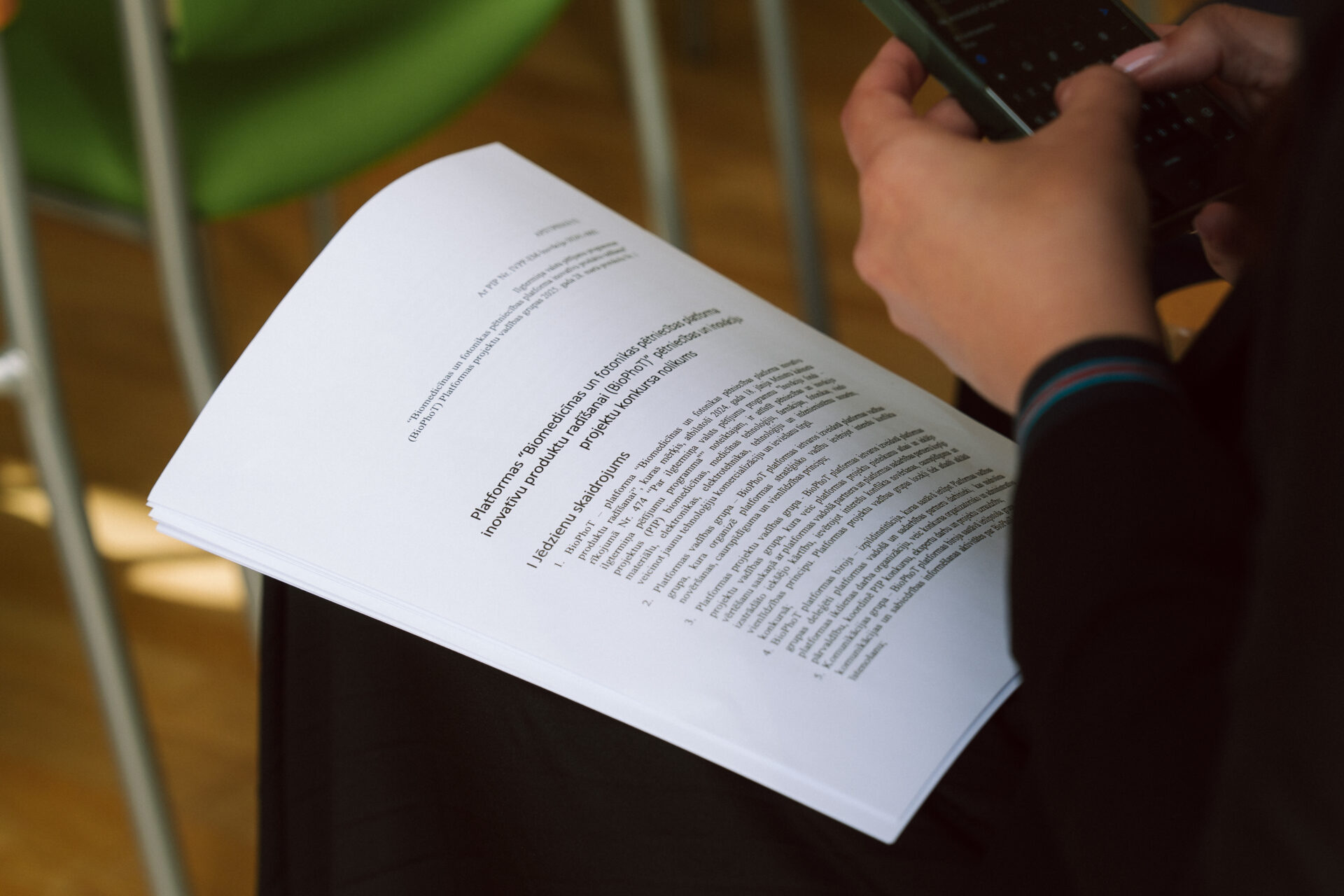
    Workshop on the preparation of the BioPhoT Research and Innovation Projects (RIP) 2nd evaluation round application documents.

    The workshop introduced participants to the requirements for a full application, the evaluation criteria and the procedure for completing the forms in the National Research Activity Information System (NZDIS). It also answered questions sent in advance and provided practical advice on how to present a high-quality project.

    Moderated by Ineta Kurzemniece

    Presentation materials:

    Applications are invited for the free Venture Catalysts training programme

    Applications are now open for Venture Catalysts, a free training programme for budding entrepreneurs and scientists in Latvia to develop their innovative ideas into competitive businesses. The five-week training programme will run from 29 July to 28 August.

    "The Venture Catalysts programme is designed for founders, academic teams and PhD students working at the intersection of science and business. "Venture Catalysts is a hands-on, training programme focusing on commercialisation, innovation strategy, leadership and start-up development. Participants learn step-by-step how to build a viable deep tech from assessing market potential to developing a business model and attracting investors. The programme is free of charge for all selected candidates.

    The programme is organised by the Investment and Development Agency of Latvia (LIAA) and implemented by the BioPhoT platform partner UniLab in cooperation with RTU Riga Business School and RISEBA. It is co-funded by the European Union and is part of a broader initiative to promote sustainable, research-based innovation across Latvia.

    Programme: from 29 July to 28 August, Tuesdays and Thursdays, 17.00-19.00, in English. Format: Interactive online sessions with face-to-face networking opportunities.

    The programme has been developed by UniLab in cooperation with RTU Riga Business School, RISEBA and with the support of the Investment and Development Agency of Latvia (LIAA).

    More information and application: https://www.liaa.gov.lv/lv/notikums/apmacibu-programma-venture-catalysts

    About Venture Catalysts "Venture Catalysts is a national training initiative that supports the development of science-based start-ups in Latvia. The programme is a joint project of LIAA, UniLab, RTU Riga Business School and RISEBA, implemented within the framework of the ERDF project "Support for Innovative SME Entrepreneurship Development" (ID No. 1.2.3.1/1/23/I/001). Its aim is to accelerate the commercialisation of deep tech innovations and foster a more dynamic, internationally competitive start-up ecosystem in Latvia.

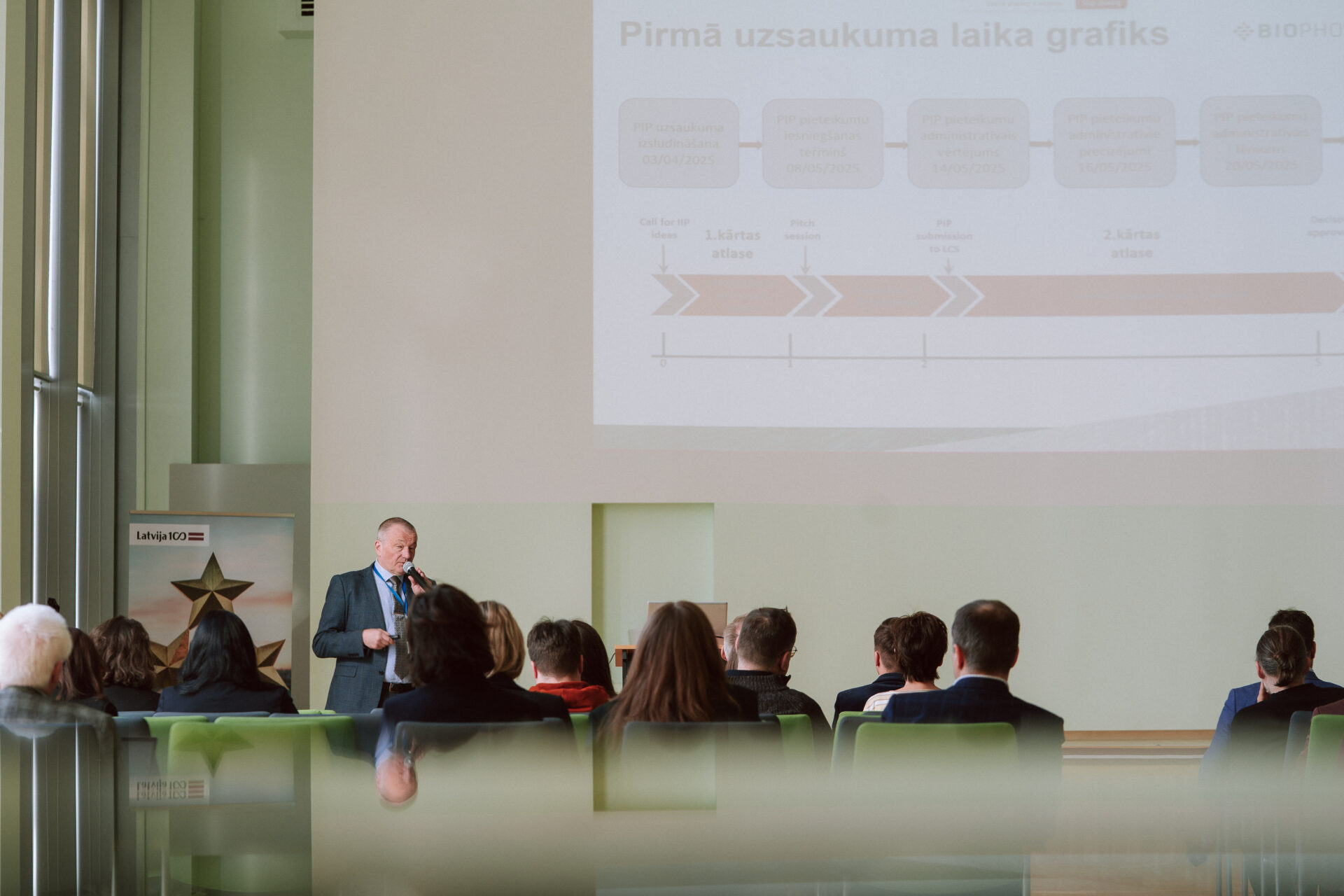
    VIDEO: Seminar to analyse the results of the first round of evaluation of research and innovation proposals

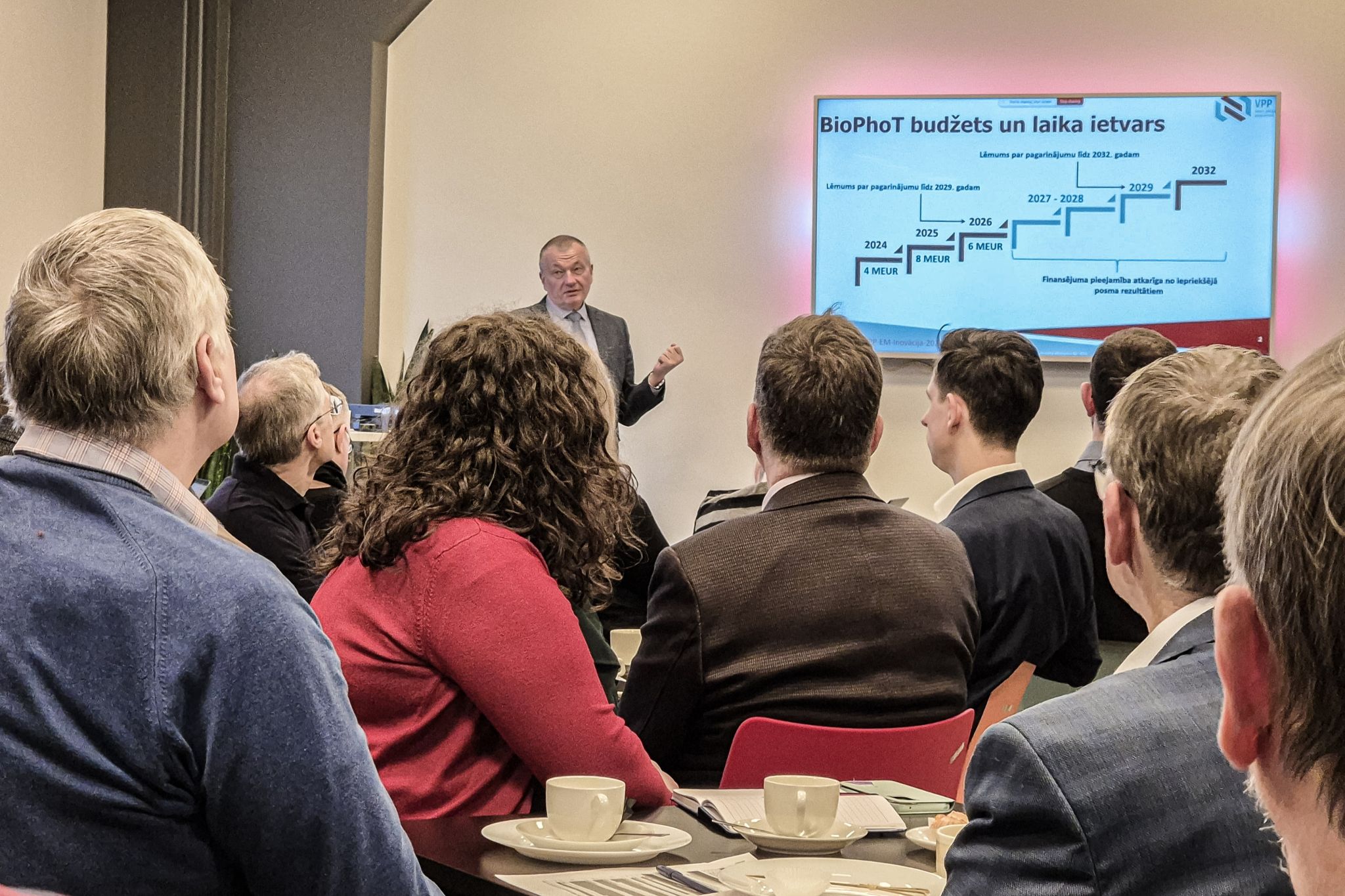
    "The BioPhoT Platform for Research and Innovation Projects (RIPs) attracted 117 applications in the first round of evaluation, of which 79 reached the qualification threshold.

    On 20 June 2025, a workshop was held on the results of the first round of evaluation of the RDP applications. "The BioPhoT industry panel was represented by Matīss Neimanis, Managing Partner of Buildit Latvia Accelerator.

      VIDEO: Seminar "Intellectual property - from idea to patent and beyond"

      The seminar "Intellectual Property - From Idea to Patent and Beyond" aims to provide researchers and IP professionals with in-depth knowledge on IP protection, patenting and commercialisation.

      Today, when innovation is an integral part of science and business, it is essential to understand how to effectively protect your ideas and turn them into commercially successful solutions. The workshop will cover a wide range of topics, from the basics of intellectual property types and authorship issues to a detailed analysis of the patenting process and how it links to commercial opportunities.

      Workshop leader:
      European Patent Attorney, Dr.sc.ing. Artis Kromanis - an expert with many years of experience in patenting inventions and technology transfer.

      Part 1:

      1. Introduction
      2. Who is an inventor? How is the inventor connected to his/her workplace and/or co-inventors?
      3. What laws govern an inventor's activities in scientific institutions?
      4. What is intellectual property? Copyright, industrial property (patents, trademarks, designs, semiconductor topographies).
      5. What is know-how?
      6. What is a trade secret?
      7. What does licensing and transfer/alienation mean?

      Part 2:

      1. Patents for invention - type of right; owner vs inventors; territory; term; patentable inventions vs unpatentable inventions; patentability criteria
      2. Utility model registrations - type of right and its features; owner vs inventors; territory; term; inventions to be registered
      3. Designs - type of right; owner vs designer; territory; term; grace period
      4. Trade marks - nature and division of rights; registrability; territory; term
      5. Semiconductor topographies - type of right; registrability; territory; term
      6. Plant varieties - type of right; registrability; territory; term

      Part 3

      • Drafting and filing a patent application
      • Conducting a patent examination, including defining the subject matter of the invention for patent examination
      • What are claims? Why the claims of a patent application are the most important part of a patent application. Why does a patent application need a description and, in some cases, drawings? Who needs a summary of the patent application?

      Part 4

      • Patent protection for the invention created, i.e. patenting strategy and plan
      • Preparation and filing of a priority patent application; priority period; filing and maintenance of the international application; significance and effect of the publication of the patent application; filing of national and/or regional patent applications based on the international patent application; maintenance of patents abroad

      Part 5:

      • European patent system, including the European unitary patent and the European Patent Court

      Andris Anspoks: science in Latvia is growing - let the involvement of society and politicians grow too

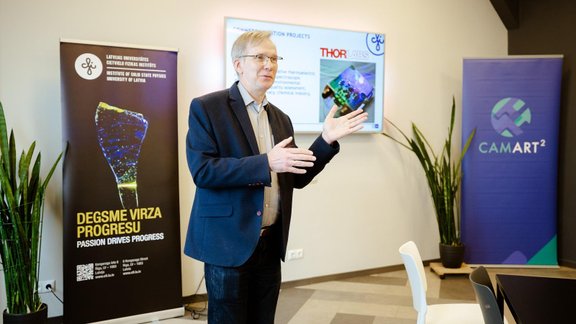
      Andris Anspoks, Director, Institute of Solid State Physics, University of Latvia

      Science cannot remain within the walls of laboratories. Outstanding achievements are not enough if they go unnoticed and unheard. Today's science needs clear, persuasive and impactful communication - the kind that can reach not only colleagues at conferences, but also politicians, business and every member of society. Because only when the public and decision-makers truly understand the impact of science can we make progress that brings real change to Latvia.

      Solid State University of Latvia Physics The Institute (LU CFI) has experienced rapid growth in the last 8 years, with a tripling of financial turnover, a quintupling of international project funding and the birth of five start-ups. Today, the CFI is a world-class science centre with state-of-the-art infrastructure and a national nanotechnology centre. We are not only creating new knowledge, which is the source of all new ideas, but we are a development partner for a range of industries around the world. We are creating new technologies and using the power of science to tackle global challenges in new materials, innovative technologies and applications: electronics and photonics, energy harvesting and storage, and biomedicine. All of this is in the service of better displays, faster internet, more efficient batteries and better medicines, for example.

      One might wonder what photonics is, which is what our institute does so much of. It is everything to do with light. From creating it - from shiny pixels on screens to lasers - to transforming it, for example by making invisible radiation visible, to detecting it - from a pixel in a camera to a detector in a medical CT scanner, or the smart lenses that many spectacle owners dream of.

      But one thing is clear: science is not enough. We, as scientists, can no longer just work in the lab and communicate in a primarily research environment. The public needs to understand what we do and how it affects their lives. More importantly, business and policy makers need to understand this too. They need to know what is being decided, for example in the national budget. Why should basic science be supported? Because that is where big ideas are born! At the same time, scientists need to be taught to talk to business, and business needs to be taught to talk to science, because that is what drives growth. That's why we organise regular meetings with industry, building mutual understanding and looking for challenges that we can solve with our ideas.

      It is through this dialogue that solutions have emerged that have already gone global: the fastest infrared light sensor, manufactured by Thorlabs in Germany; our own start-up CellBox Labs, which is creating a whole new industry in Latvia, changing the way new medicines are developed. Our deep knowledge of spectroscopy has led to a new device that can monitor water quality in fish farms, desalination plants or the environment. The start-ups that have grown out of our Institute are already attracting millions in investment and collaborating with global companies.

      Latvia's outstanding technology companies are also our long-term clients. To mention a few examples, Groglass, which makes 2 x 3 metre invisible glass; Lightguide International and CeramOptec, which make fibre optic products for industrial and medical applications such as venous laser surgery; Baltic Scientific Instruments, which develops radiation detectors and systems. Latvia has a serious world-class industry that we are on a mission to support. All these companies not only export, but are world market leaders in their field.

      When the President of Latvia visits the Institute, it is much more than just another visit. When the President looks at the prototype "organ-on-a-chip" created by Latvian researchers and hears how this technology can help treat cancer or other diseases, a clear message about the importance of science can travel further, even to government and society. The President's presence here lends legitimacy, visibility and credibility to our work, not only in the scientific community, but also in the eyes of business, investors and the wider public. The President, as the highest representative of the State, is also a guarantor of credibility - if he sees value in science, then so does the businessman, the student, the teacher.

      Such visits are a megaphone for what science does on a daily basis - and that is what we need more of. It is a signal that Latvia is moving towards an economy based on innovation, underpinned by long-term scientific development. Because only such a country, regardless of its priority sectors, will be globally competitive, independent in its growth and able to develop almost any major field of activity.

      Science - not a closed laboratory, but an open platform for society

      The development of the CFI is not an accident - it is a purposeful and systematic effort, based on the passion of scientists, international collaboration, expertise and the courage to always move forward. Our development is based on a clear vision to be a world-class research centre based on innovation and applications, and in recent years we have created an attractive working environment so that young and future scientists from Latvia and the best universities abroad want to work here. This is the transformation of Latvia's science ecosystem in practice. Innovation development is also a systematic process, where we discuss with each research group those ideas that have practical application. Then we test them against market requirements, and take the most promising ones forward. Collaboration is power - that's what we believe, because only by bringing together the best minds across Europe can we meet today's challenges. Industry is an essential partner in this process, knowing the practicalities and real requirements of all these challenges.

      But for such developments to become the norm, not only at the UL CFI but also at other research centres in Latvia, systematic political attention, science communication as a priority and long-term investment programmes are needed. I am very pleased that a long-term programme for the commercialisation of scientific results has been established in cooperation with the Ministry of Economy. Only systematic work can produce results. All the examples I mentioned before would not have been possible without LIAA programmes that allowed ideas to be developed to the point where they were taken up by companies or investors. This is not possible with science projects because it is no longer science. We have such a programme now, where, on my initiative, we have joined forces with the Institute of Organic Synthesis in one platform - BioPhoT. All our major universities and institutes are working together. The first steps already show that we have great ideas in Latvia. Now we just need to go further, build strategic partnerships with Latvian and European industry and focus on ideas with big impact. Our task is to involve Latvian industry in this process, with all its challenges.

      What can we do today?

      Latvian science has already proved its worth. Now is the time to see it, trust it and support it. Because it is only when politics and society stand on the side of science that true excellence emerges - the kind that not only changes a country's economy, but also improves the quality of life for each and every one of us. And it's not just software, apps or robots, but new materials, technologies and devices. It is material-based innovation that has a deeper impact on the economy because it has wider value chains.

      Recently, we have seen intensive efforts to develop the defence industry. Here again, I think BioPhoT is a good platform to develop the competences and generate new ideas needed for this sector. I invite the Ministry of Defence to join in and develop this area. Without long-term programmes, we will not have serious products based on our ideas.

      Policies should position science as a driver of development, not a cost burden. Science is not just about academic publications - it's about competitive economies, smart people, a smart environment, sustainability and public health.

      Science needs to be talked about in a clear way. We need to explain what "nanotechnology" or "photonics" means in everyday life. How does it help the patient, the entrepreneur, the student? This is how we engage the wider public in science, from motivating young people to study physics, chemistry or biology, to trusting solutions in climate, health or innovation.

      Science must be supported financially in the long term. The new discoveries we enjoy today had their beginnings as new scientific ideas a decade or more ago. For this reason, we need to remember the importance of basic research: it is where ideas that change the world are born. That is why the Latvian Research Council's basic and applied project grants are so important. And we must continue to fully support the BioPhoT innovation development programme, which brings together the entire Latvian science ecosystem.

      Source: https://www.delfi.lv/898102/versijas/120075823/andris-anspoks-zinatne-latvija-aug-lai-aug-ari-sabiedribas-un-politiku-iesaiste

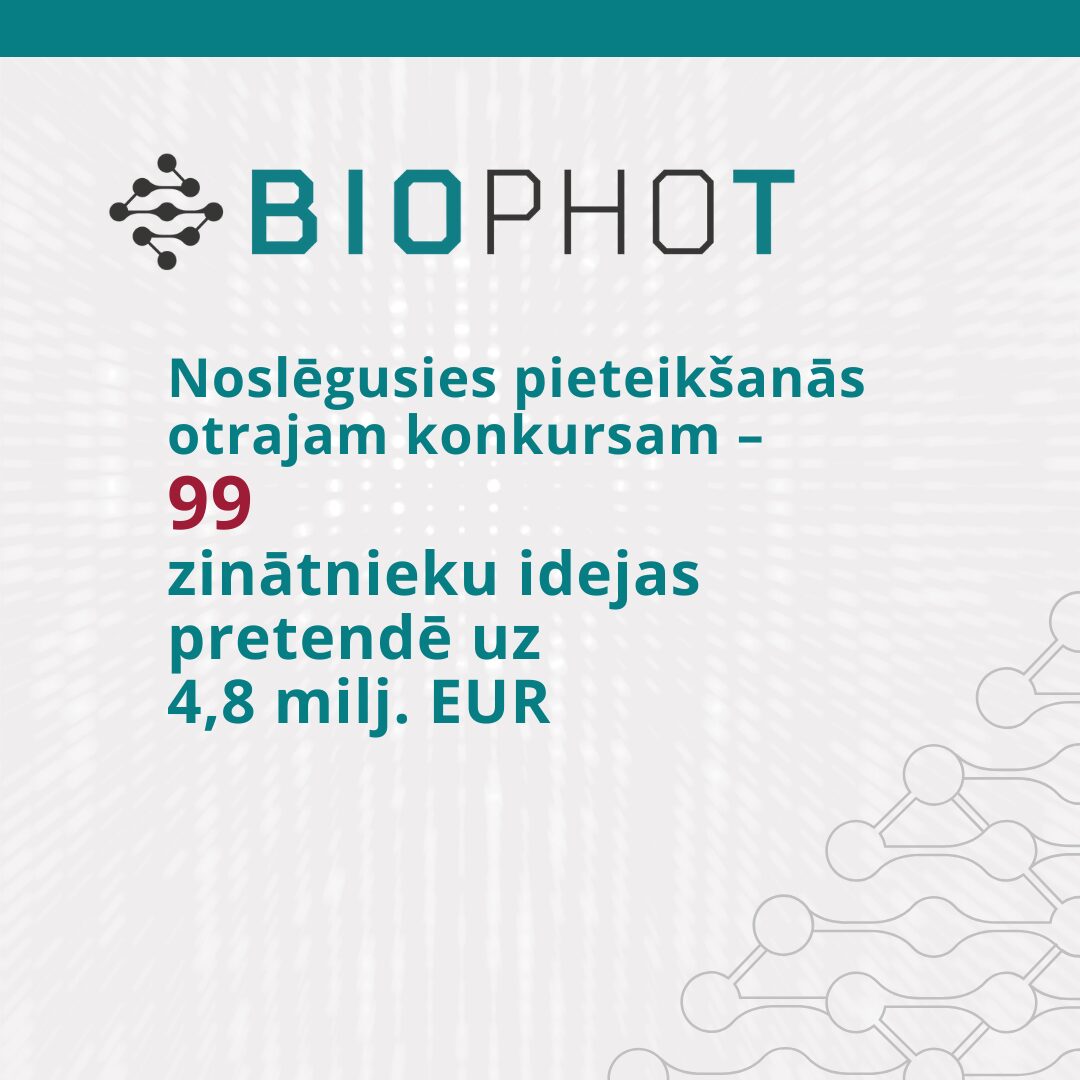
      BioPhoT Research and Innovation Call for proposals - Round 2

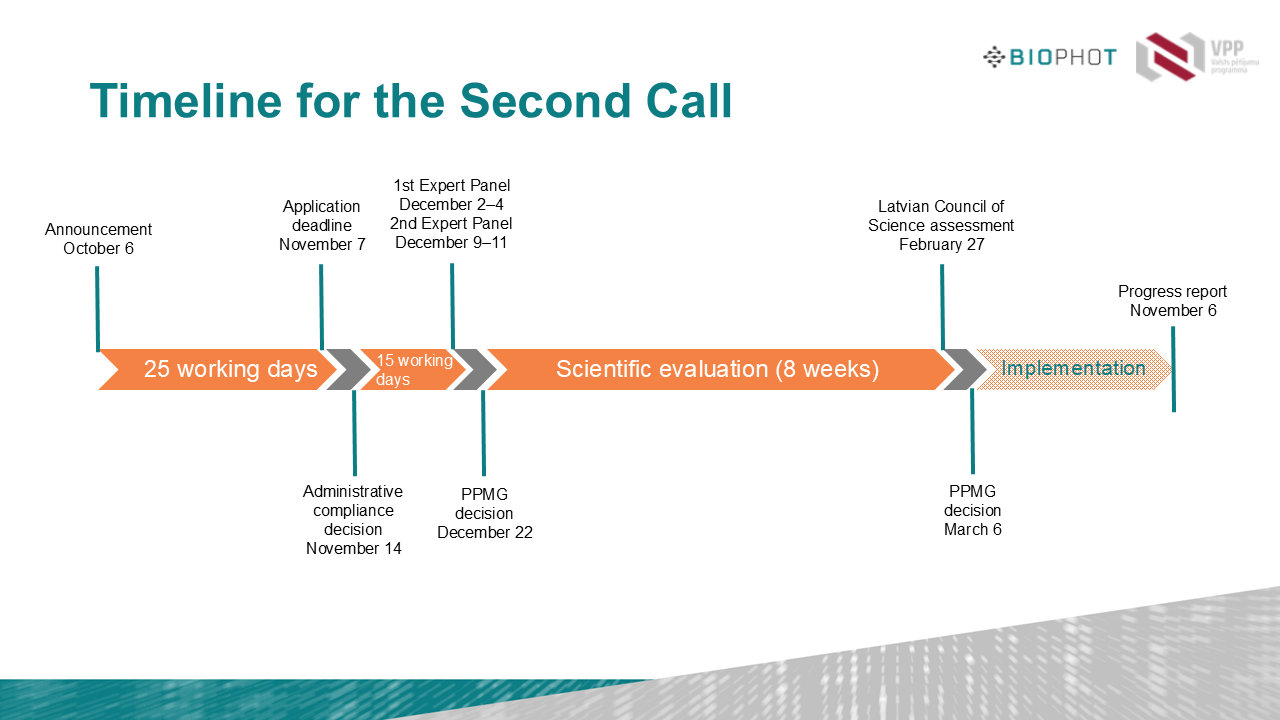
      Applications are now open for the second evaluation round of the Research and Innovation Projects (RIPs) call. The authors of the 79 PIP applications that have reached the qualification threshold in the first round of evaluation are invited to submit their full project applications for scientific evaluation by the expert panel of the Latvian Science Council.

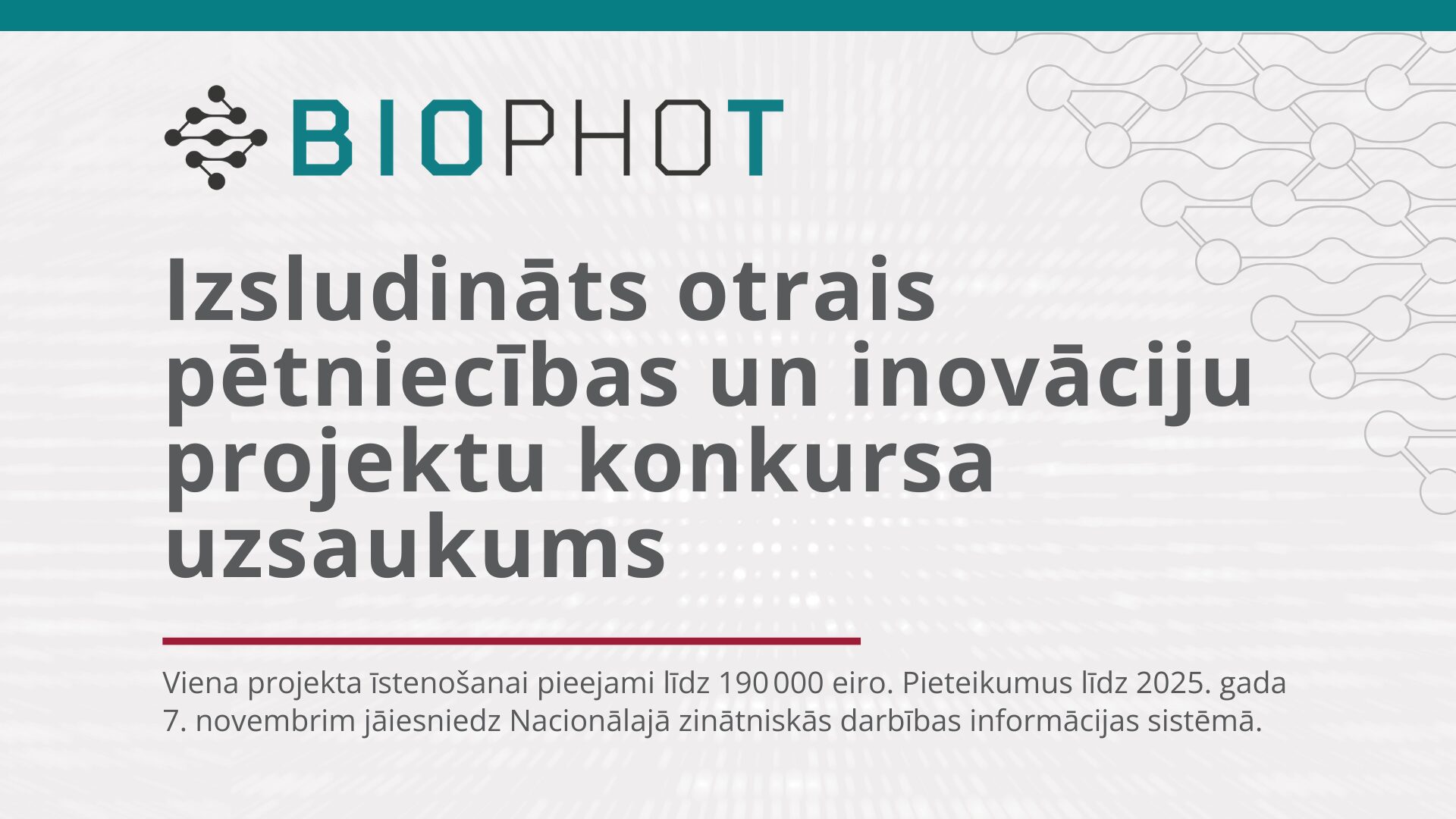
      Applications must be submitted by 11 July 2025 in the section "Open call for research and innovation projects 2025 of the Platform "Biomedical and Photonics Research Platform for Innovative Products" (BioPhoT)", (No IVPP-EM-Innovation-2024/1-0002) of the National Information System for Scientific Activities.

      The second round of the call for proposals offers up to €200 000 per PIP. The duration of the projects is 12 months, with the possibility to extend the duration for a further 3 months without additional funding. Total funding of €6 million. In the event of a significant number of highly rated applications, the BioPhoT Platform Project Steering Group may decide to award additional funding of up to €2 million.

      The competition rules are available on the BioPhoT website: https://biophot.lv/zinatniekiem/#nolikums

      BioPhoT is coordinated by the Latvian Institute of Organic Synthesis, implemented by the Institute of Electronics and Computer Science, the Latvian Biomedical Research and Study Centre, the University of Latvia, the Institute of Solid State Physics, the Latvian State Institute of Wood Chemistry, the Scientific Institute of Food Safety, Animal Health and Environment "BIOR", Riga Stradins University and Riga Technical University. 

      The project "Biomedical and Photonics Research Platform for Innovative Products" or "BioPhoT" is implemented under the National Research Programme "Innovation Fund - Long-term Research Programme". Platform number: IVPP-EM-Innovation-2024/1-0002. 
      PHOTOS: Industry panel presentations of Round 1 (26 - 28.05.2025)

      The first BioPhoT call for Research and Innovation Projects (RIPs) received more than 120 RIP applications: scientists and industry from the biomedical, medical technology, pharmaceutical, photonics, smart materials and engineering areas of the Smart Specialisation Strategy or RIS3 had the opportunity to apply for a share of the total €6 million national funding. In the first round, which took place from 26 to 28 May, an independent panel of experts analysed the innovative potential and market relevance of the ideas submitted.

      The experts highlighted that the technological diversity and thematic coverage of the applications reflect Latvia's scientific potential and are in line with the BioPhoT programme's aim to support early-stage technologies with high commercialisation potential in different scientific and economic sectors.

      In the second round of PIP evaluation, 79 projects will be able to continue the competition for funding, followed by a scientific evaluation of the project applications by a panel of experts from the Latvian Science Council. The PIPs that will receive public funding in the first BioPhoT call will be announced in September.

      Photo by Reinis Lindards Rozītis, RTU

      79 research teams qualify for the second round of the BioPhoT competition

      The first round of the BioPhoT Research and Innovation Projects (RIPs) call is now closed and 79 projects will be able to compete for funding. The projects that will receive a grant of up to €200,000 for their innovative ideas, out of a total of €6 million in public funding available for the competition, will be announced in September.  

      "Health technology and diagnostic solutions, biomaterials and regenerative medicine, smart sensor systems, sustainable chemistry and circular economy approaches dominate the top-ranked applications. The technological diversity of the submitted projects demonstrates Latvia's research and innovation potential," commented Osvalds Pugovičs, BioPhoT Platform Manager

      The first BioPhoT RIP competition evaluated more than 120 applications in the areas of biomedicine, medical technologies, pharmaceuticals, photonics, smart materials and engineering systems for the Smart Specialisation Strategy or RIS3. Projects with 10 or more points and at least one point in each evaluation criterion are promoted to the second round.  

      For three days, from 26 to 28 May, five independent industry and commercialisation experts from different countries -Irit Yaniv, M.D., MBA, healthcare business executive, investor and entrepreneur, Matīss Neimanis, Managing Partner and CEO of the venture capital fund and accelerator "Buildit Latvia",Barak Azmon, physician and founder and CEO of several medical start-ups,Peter Birk, life sciences executive, investor and adviser, andMartin Askne, a start-up coach, an innovation manager and a business angel - analysed the innovative potential and market relevance of the submitted ideas. 

      "The teams were well prepared - they were able to fit in a 5-minute presentation and answer the questions concisely and accurately. The organisation was also excellent - everything went smoothly, even better than planned. All we experts had to do was focus on the presentation, the materials and make a decision. I believe that the platform will contribute to an excellent outcome!" commented panellist M. Neimanis. 

      The experts highlighted that the technological diversity and thematic coverage of the applications reflect Latvia's scientific potential and are in line with the BioPhoT programme's aim to support early-stage technologies with high commercialisation potential in different scientific and economic sectors. A significant part of the Platform's funding is dedicated to developing the innovation skills of scientists. On 9 and 10 June, the Latvian State Institute of Wood Chemistry will host a two-day seminar "Intellectual Property - From Idea to Patent and Beyond", which aims to provide researchers and IP professionals with in-depth knowledge on IP protection, patenting and commercialisation. All interested parties are welcome to attend the training organised by BioPhoT free of charge. 

      "The BioPhoT programme aims to foster a shift from academic science to applied thinking - researchers need to be able to clearly identify the market potential for products or services at an early stage. This focus is essential to take innovations from the lab to the market. Despite the unusual presentation format, we saw that the RIP applicants demonstrated a high level of preparation and presented the market potential of their ideas in a convincing way. This was also particularly highlighted by the experts. After the first round of the RIP selection, it is already evident that Latvian research teams are able to demonstrate the innovative potential of their ideas and are aware of their applications or market niches," said O. Pugovičs. 

      The second round of RIP evaluation will be followed by a scientific evaluation of the project applications by the expert panel of the Latvian Council for Science and the RIPs that will receive public funding for their implementation in the first BioPhoT call will be announced in September.  

      The first call is part of a broader programme of BioPhoT platform activities, which will include two more calls for proposals by 2026. The total funding for innovation projects will exceed €12 million, while almost €5 million will be dedicated to improving scientists' innovation skills, including training on technology transfer, commercialisation and intellectual property protection. 

      At least 35 new technologies are expected to be developed by 2032, some of which will reach the market demonstration or commercialisation stage. The long-term goal of the Platform is to strengthen Latvia's science and innovation system and promote technology-intensive entrepreneurship. 

      BioPhoT is coordinated by the Latvian Institute of Organic Synthesis, implemented by the Institute of Electronics and Computer Science, the Latvian Biomedical Research and Study Centre, the University of Latvia, the Institute of Solid State Physics, the Latvian State Institute of Wood Chemistry, the Scientific Institute of Food Safety, Animal Health and Environment "BIOR", Riga Stradins University and Riga Technical University. 

      The project "Biomedical and Photonics Research Platform for Innovative Products" or "BioPhoT" is implemented under the National Research Programme "Innovation Fund - Long-term Research Programme". Platform number: IVPP-EM-Innovation-2024/1-0002. 
      "Results of the first round of the BioPhoT competition

      The first round of the BioPhoT Research and Innovation Project (RIP) call has been completed and 79 RIP applications will be submitted to the second round of the Latvian Science Council's expert review.

      For three days, from 26 to 28 May, 117 BioPhoT Research and Innovation Project (RIP) applications were evaluated by a panel of industry and commercialisation experts. Today, 30 May pthe results of the evaluation were approved by the latformas Project Management Group.

      In order to qualify for the second evaluation round, according to the Tender Rules, a PIP application had to have a consolidated score of 10 points or more and could not have scored less than 1 point in any of the evaluation criteria.

      The average score for PIP applications is 12.4 points, with the highest score of 17.6 points and the lowest score of 6.2 points. Of the PIP applications received, 25 did not reach the required 10 points. 13 RIP applications did not score 1 point in any of the evaluation criteria, although the total score exceeded 10 points.

      In accordance with the competition rules, each PIP leader will receive an evaluation of his/her application by email to the email address provided in the application. Information on the deadline for the second round of PIP applications will be available on the BioPhoT homepage and on the platform's Linkedin profile.

      First round PIP assessment

      #PIP IDOverall rating, pandQualified for Round 2, Yes/No
      13517,6 Yes
      23917,2Yes
      35317,2Yes
      45917,2Yes
      55416,6Yes
      68216,6Yes
      711316,6Yes
      83116,4Yes
      93216,2 Yes
      102616,0Yes
      119216,0Yes
      1210216,0 Yes
      1310916,0Yes
      144015,8 Yes
      154715,8Yes
      162115,6Yes
      17215,4Yes
      189515,4 Yes
      196515,2Yes
      201615,2Yes
      214515,2Yes
      2210715,2Yes
      23414,8Yes
      24514,8Yes
      257314,8Yes
      266314,8Yes
      2711914,6 Yes
      28114,4 Yes
      297814,4Yes
      305814,2Yes
      316214,2Yes
      327414,2 Yes
      332014,0Yes
      347114,0 Yes
      359714,0Yes
      3610614,0Yes
      376613,8 Yes
      384313,6Yes
      396913,6Yes
      406013,6Yes
      417713,6Yes
      423713,4Yes
      436413,4Yes
      4411013,4Yes
      458013,2 Yes
      467213,0Yes
      474813,0Yes
      489913,0 Yes
      4910013,0Yes
      503013,0Yes
      512212,8Yes
      5212112,8Yes
      531312,8Yes
      549012,8 Yes
      551412,6Yes
      56312,6Yes
      572812,4Yes
      587512,4 Yes
      5910512,4 Yes
      601912,2 Yes
      615012,2Yes
      629412,2From
      632312,0Yes
      641711,8Yes
      655611,8 Yes
      668111,8From
      673311,6From
      687011,6Yes
      698511,4 Yes
      701111,2Yes
      711511,2Yes
      721811,2From
      732411,2 Yes
      748411,2 Yes
      758611,2From
      7612011,2Yes
      77711,0Yes
      78811,0Yes
      794911,0Yes
      806711,0 Yes
      819111,0Yes
      823411,0 Yes
      8311410,8Yes
      8410110,6From
      858710,6From
      8610310,6Yes
      876810,4From
      887610,4From
      8911110,4From
      904210,2From
      918910,2From
      928310,0From
      93449,8From
      94519,8From
      95559,8 From
      96799,8From
      97889,8From
      98939,8From
      991089,8From
      1001159,8From
      1011189,8From
      1021049,6 From
      10369,4From
      104469,4 From
      105579,4 From
      106419,4 From
      1071169,4From
      1081229,4 From
      109389,2 From
      110259,0From
      111279,0From
      112299,0 From
      1131179,0From
      114988,6From
      115528,2From
      11697,6From
      1171126,2From

      Industry panel evaluates project applicants' presentations in Round 1

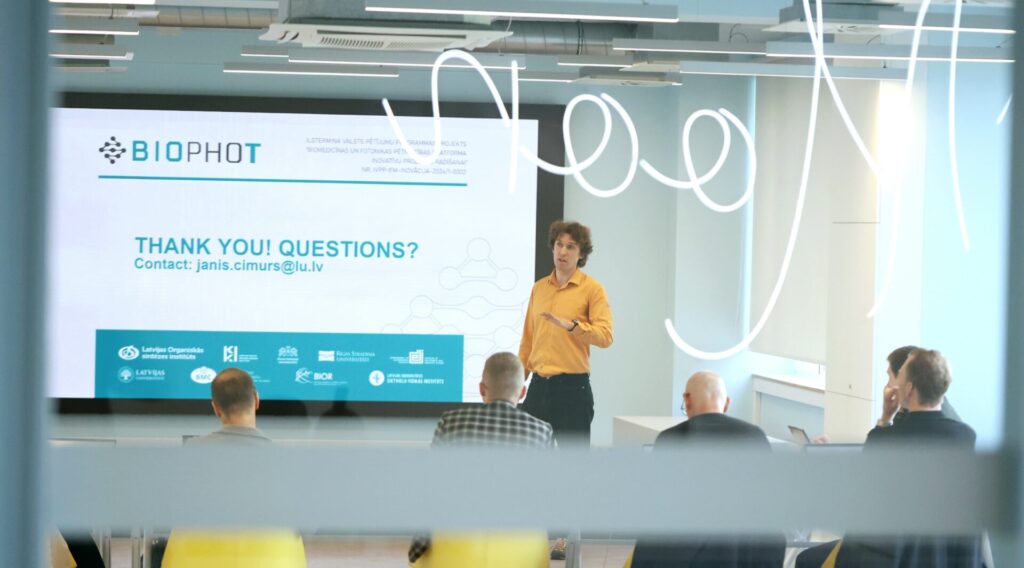
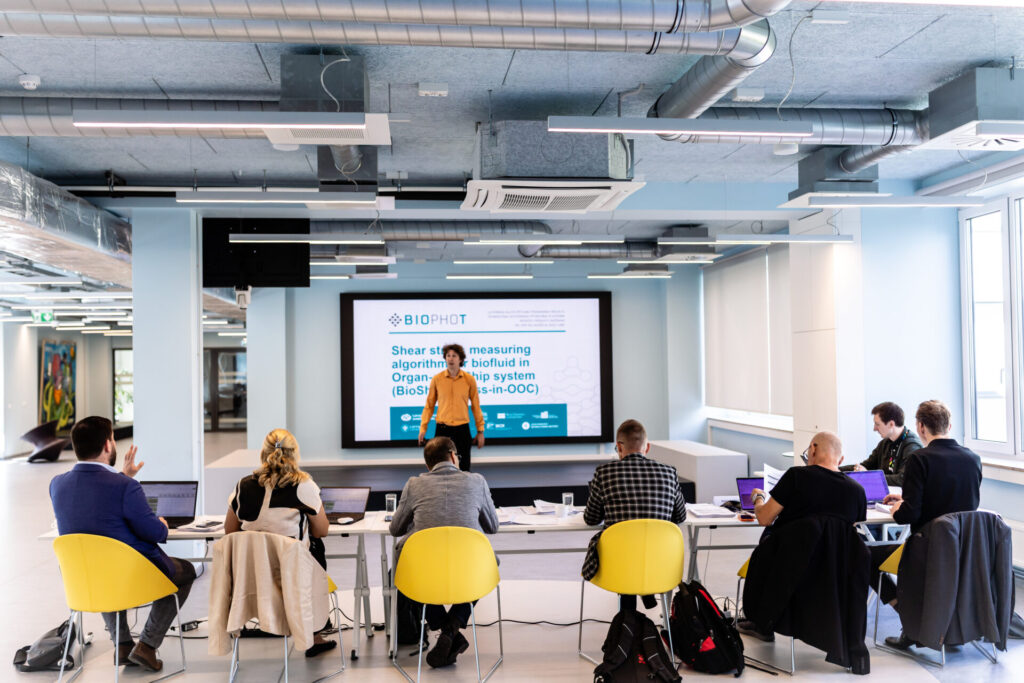
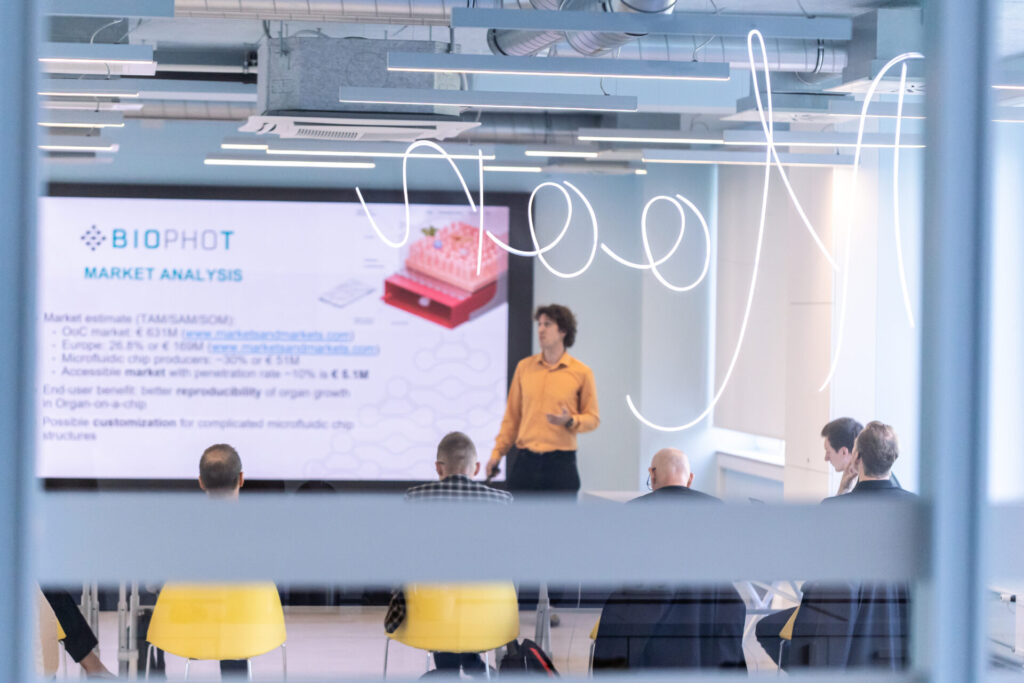
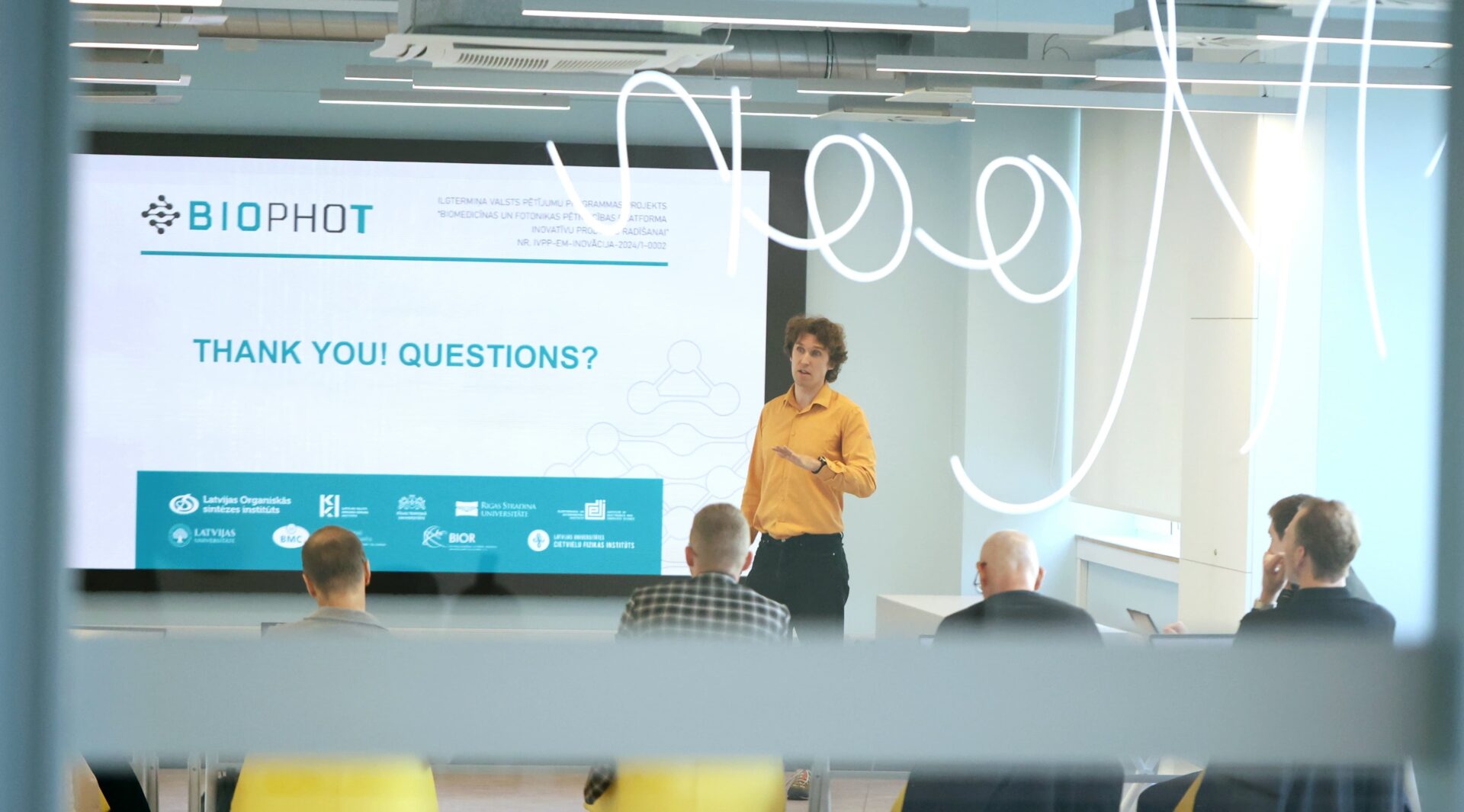
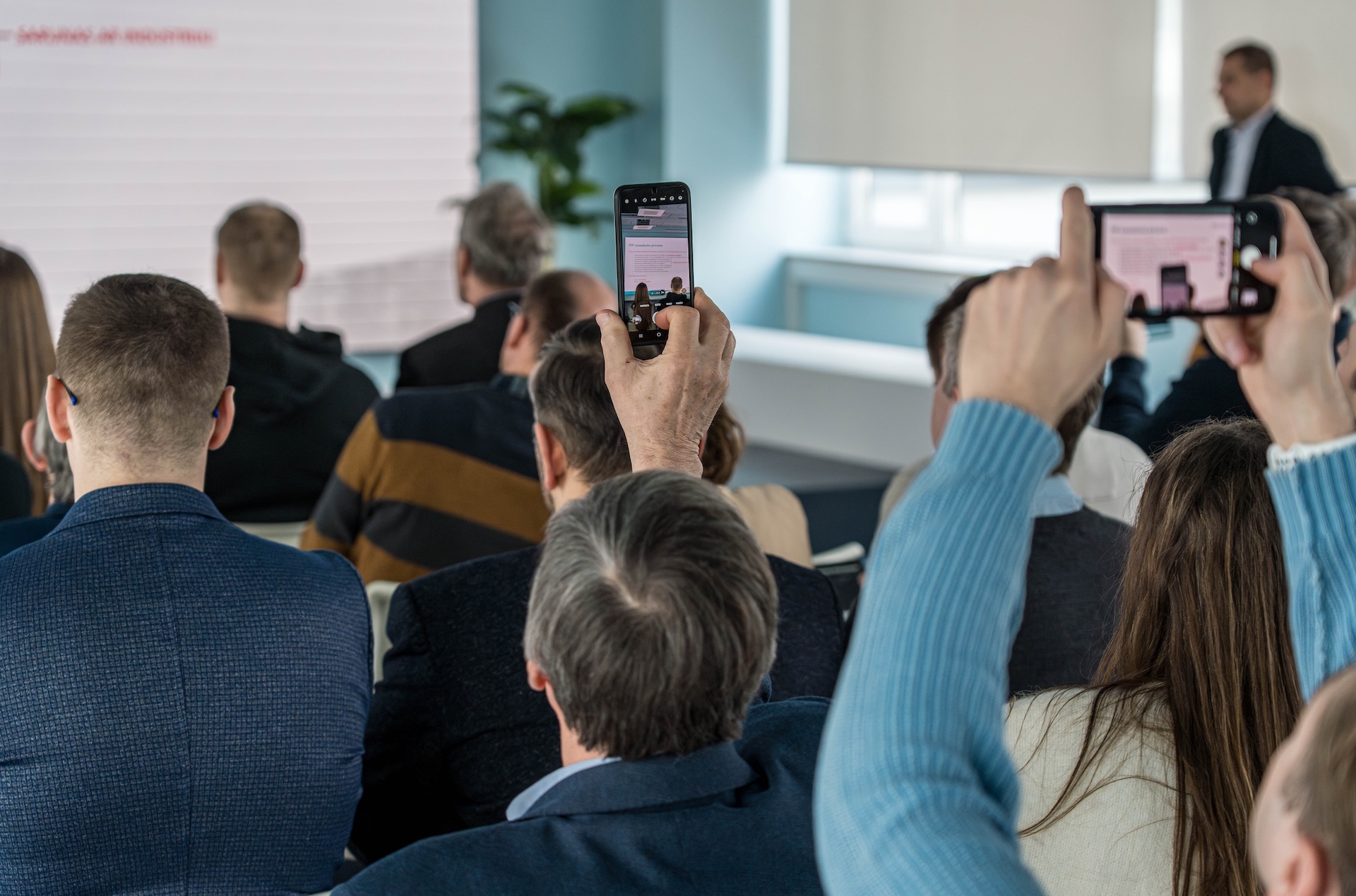
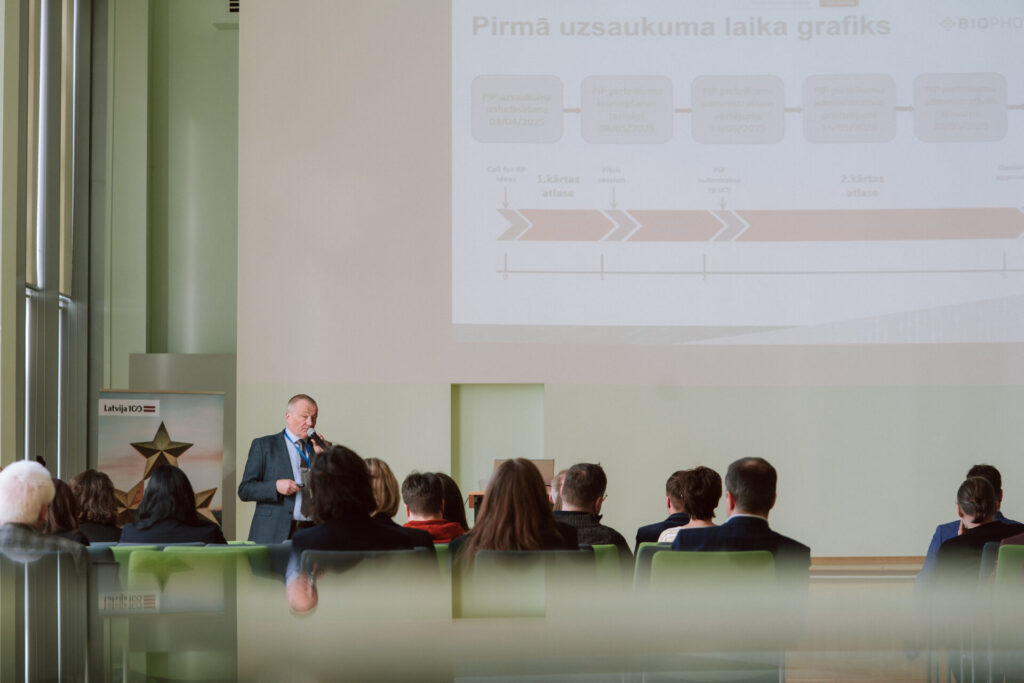
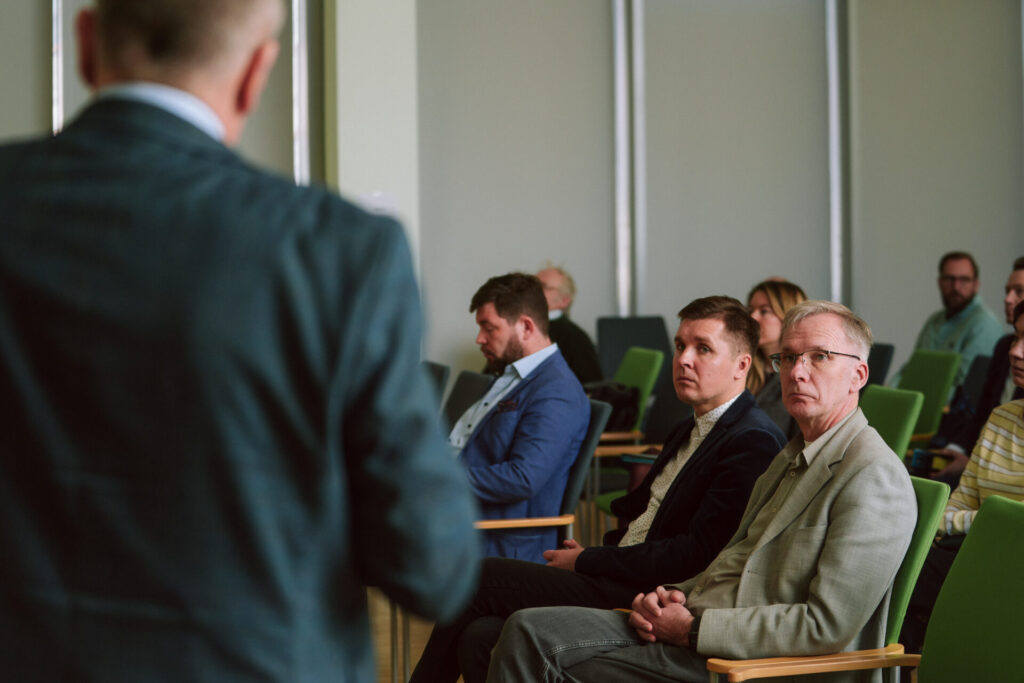
      On 26 May, the Riga Technical University Science and Innovation Centre hosted the industry panel presentations of the projects submitted for the first BioPhoT call. Over three days, more than a hundred project representatives will stand in front of industry experts to present more about their innovations and answer questions.

      The first BioPhoT call for Research and Innovation Projects (RIPs) received more than 120 RIP applications: scientists and industry from the biomedical, medical technology, pharmaceutical, photonics, smart materials and engineering areas of the Smart Specialisation Strategy or RIS3 had the opportunity to apply for a share of the total €6 million national funding. In the first round, which runs from 26-28 May, an independent panel of experts analyses the innovative potential and market relevance of the ideas submitted.

      "The projects submitted, and of course the presentations, cover a wide range of topics. Overall, I would say that what we see here is in line with what the mentors and the organisers of the presentations expected - namely that the guidance given to the applicants has been valuable and has been taken into account. Let's see how the experts judge it!" on the first day of the presentations Osvalds Pugovičs, BioPhoT Platform Manager.

      The first round of RIP applications is evaluated by five industry and commercialisation experts: Irit Janiva, M.D., MBA, healthcare business executive, investor and entrepreneur, Matīss Neimanis, Managing Partner and CEO of Buildit Latvia, a venture capital fund and accelerator, Barak Azmon, doctor and founder and CEO of several medical start-ups, Peter Birk, life sciences executive, investor and advisor, and Martin Askne, startup coach, innovation manager and business angel. Project presentations are moderated by Andris Baumanis.

      "This is the first round of project selection, which will be followed by a second, more in-depth evaluation. Based on this short period of time alone, it is not yet possible to make a very concrete and unambiguous assessment of the projects. Overall, there have been a few projects that are a little unconvincing, but of course there are also very good applications. Our panel of experts is a complete team to evaluate projects, as each of us is experienced and specialised in our respective fields - usually the more you know about a subject, the more aspects and problems you can spot," said the panel members at the end of the first day.

      The competition offers up to €200 000 per approved project, with a 12-month implementation period, extendable by three months. In the second round of applications, experts selected by the Latvian Science Council will carry out scientific expertise and the results are expected in October this year.

      Research ideas towards commercialisation - "Research Translation: Deep Tech & Lab Open Doors"

      On 14 May, Riga Technical University Science and Innovation Centre hosted one of the Deep Tech Atelier 2025 events - "Research Translation: Deep Tech & Lab Open Doors". The event was organized by EIT Community Hub in Latvia in partnership with Biocatalyst Foundation and BioPhoT platform partners, bringing together researchers, start-up founders, innovation ecosystem representatives and investors.

      During the event, the BoPhoT platform was highlighted as an example of best practice in targeted collaboration between research and industry. Anna Stikāne from the platform presented the support available - funding opportunities, mentoring network and practical tools to help researchers develop their ideas, build solutions for industry and get to the commercialisation stage. Some of the bravest BioPhoT candidates had the opportunity to try their hand at presenting their idea and received valuable feedback from the event participants.

      Guest speaker Haim Piratinskiy (FESTO, Germany) shared his experience on the most common reasons why early stage science-intensive technologies (deep tech) teams fail to reach the market. Jakub Jasiczak, CEO of the Polish Association for University Technology Transfer, also took part in the discussion, analysing together the strengths and weaknesses of the ecosystem.

      After the main programme, the participants went on excursions to the Baltic Biomaterials Centre of Excellence (BBCE), led by Professor Jānis Ločs, and to the Aeronautics Research Laboratory of Riga Technical University, Space Engineering laboratory (headed by Viktors Gutakovskis) and SkyLab/Design Factory (hosted by Elīna Miķelsone), where they had the opportunity to get to know the research and innovation infrastructure first-hand, as well as to strengthen mutual contacts for future cooperation in an informal atmosphere.

      Photos from the event see in the photo gallery.

      PHOTO: Deep Tech Atelier 2025: Industry's challenges for science (16.05.2025.)

      On 16 May, a panel took place at a side event organised by Deep Tech Atelier 2025 "BioPhoT" "Industry's challenges for science" (Industry Challenges for Science).

      Industry professionals were invited to share real challenges that require interdisciplinary thinking and new collaborations. Representatives from the life sciences, biomedical, medical technology and pharmaceutical sectors were invited to present technical challenges and a "wish list" for their fields, to receive informal feedback and new ideas from researchers, experts and other professionals, and to make contacts that can lead to collaborations, research projects or co-developed innovations.

      Presenters on issues in their fields TBD PharmaTech (Estonia), Lithuania BIO (Lithuania), Molport, PMNet Forum, Cellbox Labs and Roche Latvia representatives.

      Photo by Jānis Spurdziņš

      PHOTO: Deep Tech Atelier 2025: lecture and panel discussion on the future of innovation by Prof. Anders Karlén (15.05.2025.)

      15 May with lectureScaling science into impact: the role of research platforms and public-private partnership) by Uppsala University Professor Anders Karlén will take place on the festivals' Deep Tech Stage. Professor Anders Karlén from Uppsala University took to the stage.

      His research focuses on the identification of starting materials and the development of potential drugs for antimicrobial drug discovery. Between 2014 and 2021, Prof. Karlén was the head of the lead unit and co-coordinator of the Innovative Medicines Initiative (IMI) project ENABLE. He is currently the coordinator of the national project ENABLE-2, the follow-up to ENABLE. Since 2019, he is leading the six-year IMI-2 project COMBINE, part of the IMI Antimicrobial Resistance (AMR) Accelerator Initiative.

      Prof. Karlén outlined the contribution of the ENABLE platform to addressing the needs of the pharmaceutical industry and public health.

      This was followed by Panel discussionThe future of innovation: industry collaboration and sustainable science funding at 15.50.).

      Experts - Jurģis Miezainis, Parliamentary Secretary, Ministry of Economics of the Republic of Latvia, Vitālijs Skrīvelis, PharmIdea SIA Board Member and Co-Owner, Osvalds Pugovičs, Deputy Director of the Latvian Institute of Organic Synthesis and BioPhoT Platform Manager, Joanna Lipner, Picralida co-founder and Executive Director - moderated by Sandra Kropa, will discuss how long-term financial support fosters scientific discovery and accelerates technology commercialisation.

      Photo by publicity and Lauris Viksne.

      PHOTO: Deep Tech Atelier 2025: commercialising research: deep tech and open labs (14.05.2025.)

      Deep Tech Atelier 2025 was launched on 14 May at the Riga Technical University (RTU) Science and Innovation Centre with an event organised by the European Institute of Technology (EIT) "Commercialising Research: Deep Tech and Open Labs".

      The event aimed to strengthen the link between science and business, while fostering the development of the next generation of deep tech leaders. The BioPhoT platform was presented at the event as an example of successful collaboration between science and industry.

      Photo by Gints Ivuškāns

      Seminar on successfully pitching ideas to the market and investors

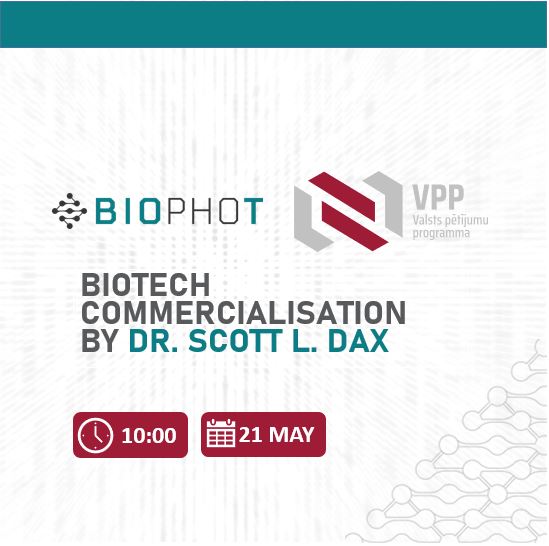
      On 21 May, Scott Dax, PhD in Chemistry (USA), presented his biotechnology commercialisation experience at the Organic Synthesis Institute (OSI). He is an expert in the discovery and development of new drugs with more than 25 years of experience in drug development and commercialisation of ideas.

      The lecture took place at a time when BioPhoT participants are preparing to present their ideas to a panel of experts who will assess both the market potential of the scientists' ideas and the ability of the author to present a convincing solution.

      Sharing his professional experience in drug development, Scott Dax went through each step of this complex process and gave practical advice on what data sets are needed at each stage of development and how scientists can present their idea to attract the interest of investors and big pharma companies.

      Scott Dax imaginatively compared a scientist who wants to sell his drug to the big players to an astronaut seeking funding for three expeditions to the Moon, not knowing for sure whether any of them will be successful. With this analogy, he drew attention to the cost of developing a single drug and the likelihood of it reaching the shelves of pharmacies. The cost of developing a single medicine through each phase of testing ranges from several hundred million to several billion euros. The process can take up to 20 years. The stakes are therefore very high for chemists and biologists to get market players interested.

      Scott Dax stressed that one of the cornerstones for the success of any research project is the development of a team - a broad, interdisciplinary team, including financiers, lawyers and other specialists where appropriate. He also stressed the importance of anticipating mistakes early and having a plan in place to deal with them. Another universal recommendation is that scientists should have frequent and extensive dialogue with the potential end-user of the product when developing their project. In the case of Scott Dax, he spoke frequently with the patients for whom his team was developing drugs. "Be open to uncomfortable questions - being able to take them on board and deal with them will be the key to your strength," says Scott Dax.

      The speaker pointed out that when preparing to pitch your scientific idea to investors, it is important to think about the way and the language in which to talk to business players. For this audience, it is crucial to hear that a scientist's idea not only solves a pressing problem, but that the solution will be profitable. Scott Dax summed up his talk by saying, "Remember, investors' desire to make money is always greater than their fear of losing money!"

      Dr Scott Dax Areas of activity include organic chemistry, drug discovery, pharmacology, manufacturing technology and intellectual property protection. He currently heads DRx Pharma Consulting & Services. Clients include pharmaceutical companies, accelerators and incubators, venture capitalists, non-profit organisations, contract research companies, start-ups and legal service providers. Scott Dax has secured over USD 100 million in investments to date.

      Seminar "Intellectual property - from idea to patent and beyond"

      On 9 and 10 June, the Latvian State Institute of Wood Chemistry, Dzērbenes iela 27, Riga, will host a two-day seminar "Intellectual Property - From Idea to Patent and Beyond", which aims to provide researchers and IP professionals with in-depth knowledge on intellectual property protection, patenting and commercialisation.

      Today, when innovation is an integral part of science and business, it is essential to understand how to effectively protect your ideas and turn them into commercially successful solutions. The workshop will cover a wide range of topics, from the basics of intellectual property types and authorship issues to a detailed analysis of the patenting process and how it links to commercial opportunities.

      Seminar programme:

      Day 1: Basics of intellectual property, aspects of authorship and employment relations, basics of patenting strategies.

      Day 2: Patent application preparation and prosecution, patent maintenance, discretion analysis, licensing and commercialisation of intellectual property.

      The seminar will be moderated by:
      European Patent Attorney, Dr.sc.ing. Artis Kromanis - an expert with many years of experience in patenting inventions and technology transfer.

      The workshop is particularly suitable for researchers, technology transfer specialists and anyone working on the protection and development of new ideas.

      Free membership, but pre-registration required by 5 June: https://lu.ma/kmdl15ve

      "BioPhoT Round 1 Research and Innovation Project (RIP) submission deadline: 21 May, 23.59

      PIP applicants who have received a positive decision on their compliance with the qualitative evaluation criteria should send their presentations to the Industry Panel by 21 May at 23.59 in .ppt or .pptx format to the email address biophot@osi.lv.

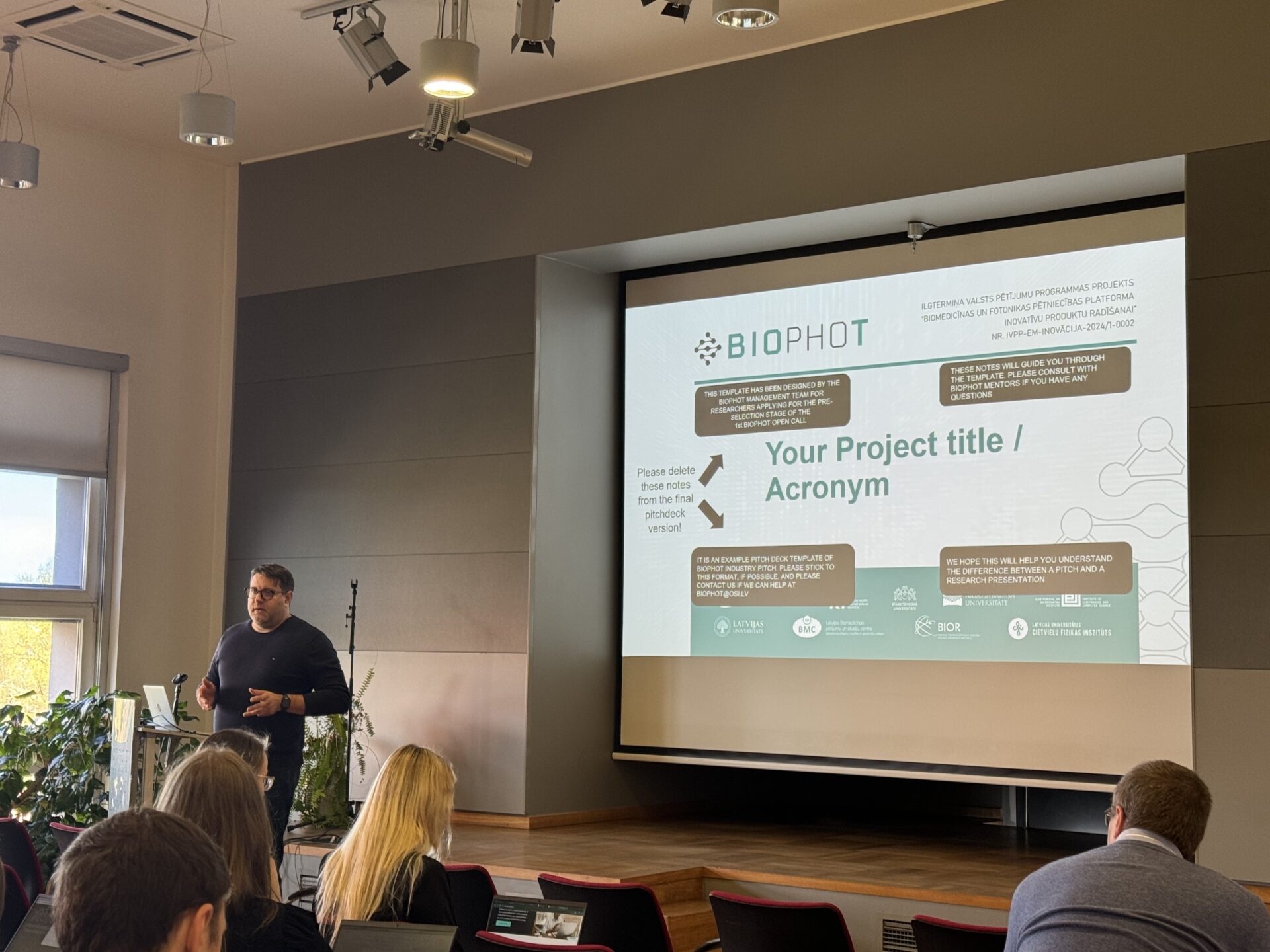
      As a reminder, the Round 1 Industry Panel must use the BioPhoT presentation template, which can be found on the platform's website.

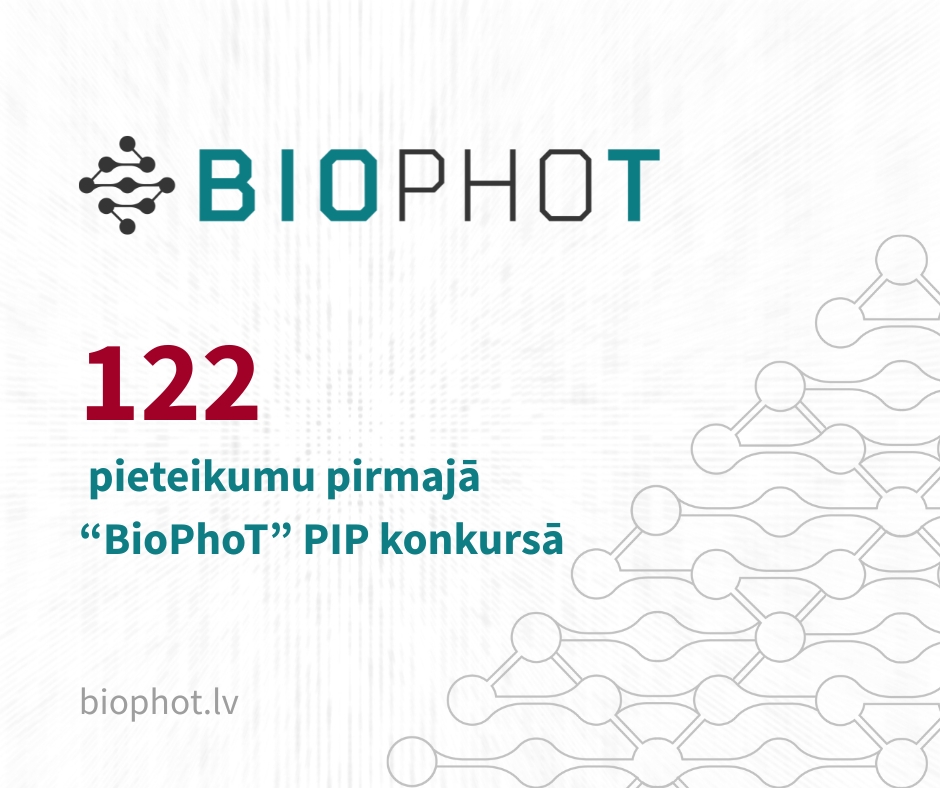
      First BioPhoT Research and Innovation Call receives 122 applications

      On 8 May, the first BioPhoT call for Research and Innovation Projects (RIPs) closed. Over 122 RIP applications were received. The first round of evaluations has started, with short presentations to a panel of experts in late May and the final results of the second round expected in early October.

      "The number of applications we have received shows the relevance and importance of such a funding platform. 77 applications came from university researchers, 45 from research institutes. Most of the applications were submitted by BioPhoT platform members, but applications were also received from Daugavpils University and Latvian University of Life Sciences and Technologies research groups," says the platform's leader, Osvalds Pugovičs, Deputy Director of the Latvian Organic Synthesis Institute (OSI).

      This call gave scientists and industry in the fields of biomedicine, medical technology, pharmaceuticals, photonics, smart materials and the Smart Specialisation Strategy for Engineering Systems, or RIS3, the opportunity to apply for a share of a total €6 million in funding from the national budget.

      In accordance with the Rules of Procedure, the applications received will be evaluated in accordance with the administrative criteria. The evaluation of administratively eligible RIP applications will take place in two rounds. In the first round, an independent panel of experts will analyse the innovative potential of the submitted ideas and their compliance with market requirements, while in the second round, experts selected by the Latvian Council of Science will carry out scientific expertise.

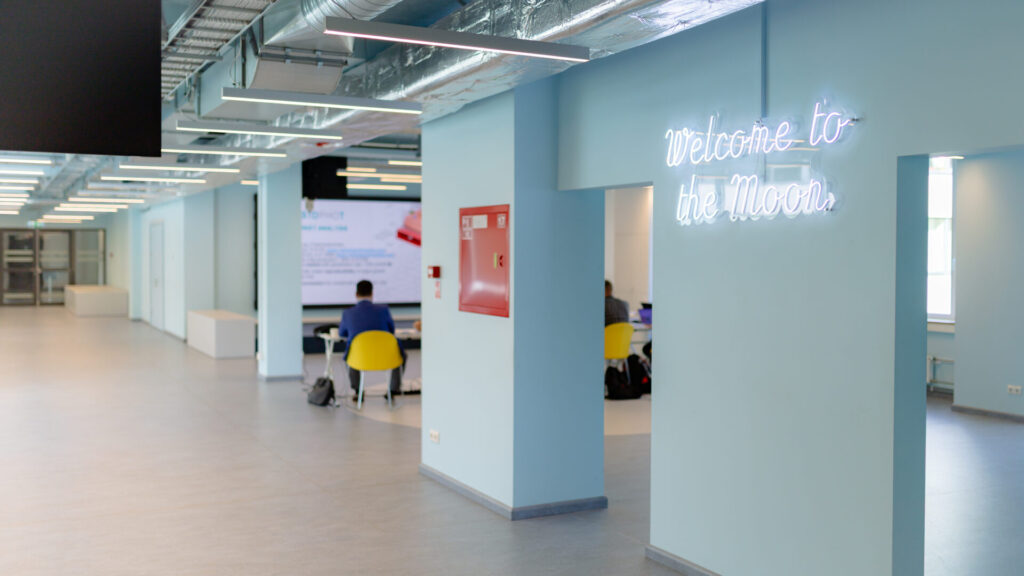
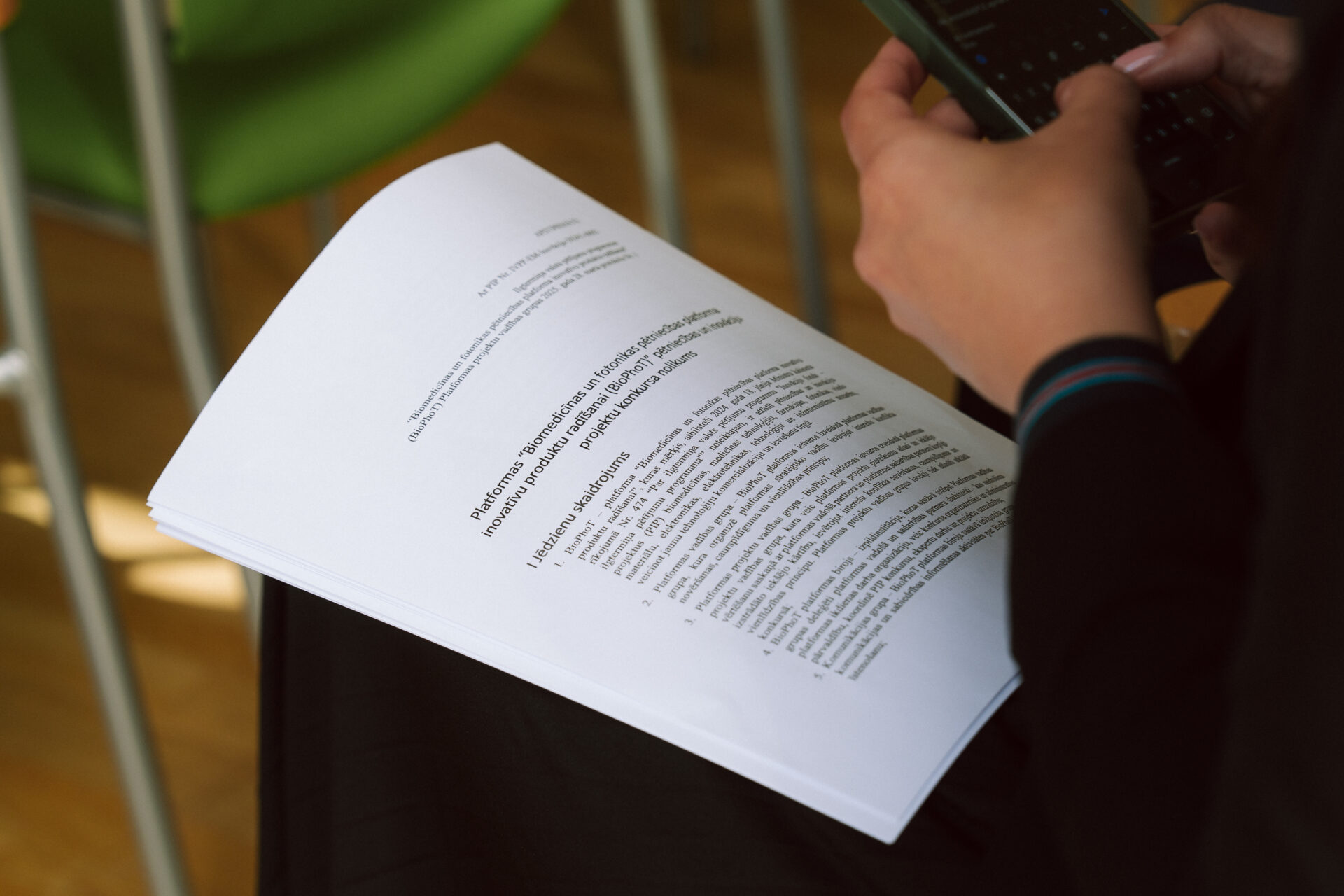
      Short presentations of the RIPs submitted to the first call for proposals will take place from 26 to 28 May at the Moon hall of Science and Innovation Centre of Riga Technical University, Kipsalas iela 6A. The list of the order of presentations will be available on 21 May. All applicants should send their presentations by 21 May inclusive.

      The first round of RIP applications will be evaluated by five industry and commercialisation experts. The competition offers up to €200,000 per approved project, with a 12-month implementation period, extendable by three months.

      The first call is part of a broader programme of BioPhoT platform activities, which will include two more calls for proposals by 2026. The total funding for innovation projects will exceed €12 million, while almost €5 million will be dedicated to improving scientists' innovation skills, including training on technology transfer, commercialisation and intellectual property protection.

      At least 35 new technologies are expected to be developed by 2032, some of which will reach the market demonstration or commercialisation stage. The long-term goal of the Platform is to strengthen Latvia's science and innovation system and promote technology-intensive entrepreneurship.

      BioPhoT is coordinated by OSI and implemented by the Institute of Electronics and Computer Science, the Latvian Biomedical Research and Study Centre, the University of Latvia, the Institute of Solid State Physics, the Latvian State Institute of Wood Chemistry, the Food Safety, Animal Health and Environment Research Institute "BIOR", Riga Stradins University and Riga Technical University.

      The project "Biomedical and Photonics Research Platform for Innovative Products" or "BioPhoT" is implemented under the National Research Programme "Innovation Fund - Long-term Research Programme". Platform number: IVPP-EM-Innovation-2024/1-0002.
      BioPhoT platform partners invite to a series of Deep Tech Atelier 2025 events

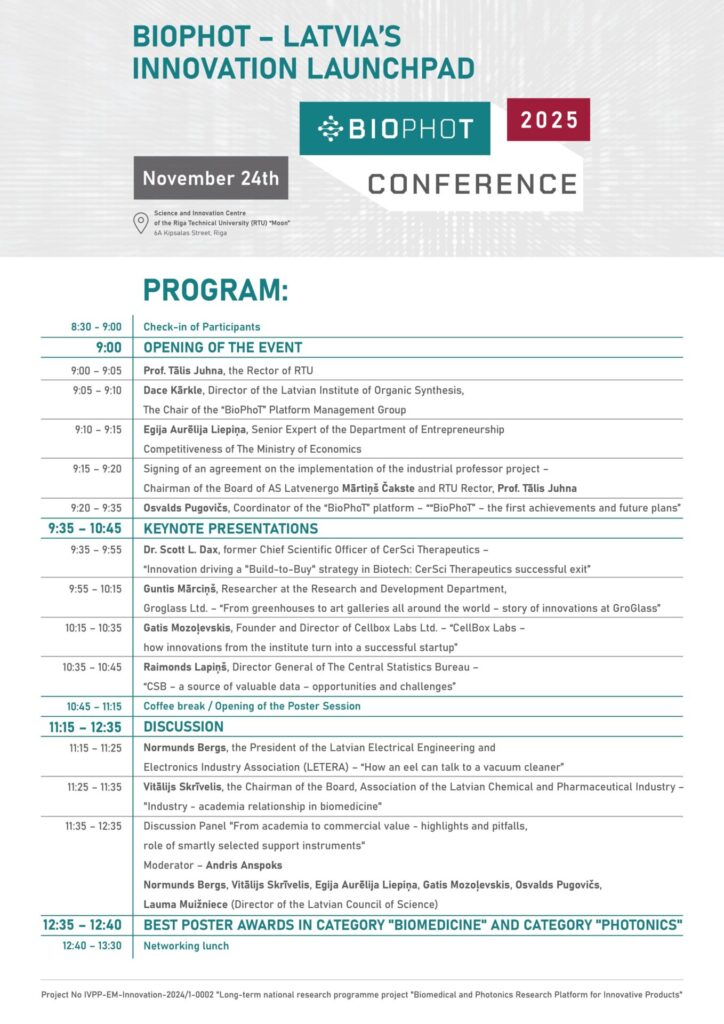
      On 15 and 16 May, Riga will host the largest deep tech event in the Baltics Deep Tech Atelier 2025, a two-day event bringing together entrepreneurs, scientists, investors and industry leaders, with presentations by internationally renowned experts, idea presentations (pitch sessions), hands-on workshops and an exhibition with the latest technological solutions. The BioPhoT platform partners are also especially inviting everyone to a number of events during the festival.

      Deep Tech Atelier 2025 key topics will include artificial intelligence, quantum technologies, defence and space, as well as future developments and funding opportunities. The event will include B2B zone, networking events and ample opportunities to make new contacts. The festival will host a series of discussions, presentations and panel discussions that will be of value to anyone looking to collaborate and develop new technologies. The Expo or exhibition area will provide an opportunity to explore practical deep technology solutions in MI, space, defence and other fields, including the work of BioPhoT partners.

      On 14 May, just in time for Deep Tech Atelier 2025, the European Institute of Technology (EIT) will host a conference organised at the Riga Technical University (RTU) Science and Innovation Centre at Kipsalas iela 6A from 16.00 "Commercialising Research: Deep Tech and Open Labs". The event aims to strengthen the link between science and business, while fostering the development of the next generation of deep tech leaders. The BioPhoT platform will be presented at the event as an example of successful collaboration between science and industry. The event is free to attend, but places are limited, so pre-registration. The language of the event is English.

      On 15 May at 15.30, lectureScaling science into impact: the role of research platforms and public-private partnership) by Uppsala University Professor Anders Karlén will take place on the festivals' Deep Tech Stage. His research focuses on the identification of starting materials and the development of potential drugs for antimicrobial drug discovery. Between 2014 and 2021, prof. Karlén was Head of Unit and co-coordinator of the Innovative Medicines Initiative (IMI) project ENABLE. He is currently the coordinator of the national project ENABLE-2, the follow-up to ENABLE. Since 2019, he is leading the six-year IMI-2 project COMBINE, part of the IMI Antimicrobial Resistance (AMR) Accelerator Initiative. In this lecture, prof. Karlén will describe how the ENABLE platform has contributed to addressing the needs of the pharmaceutical industry and public health.

      The lecture will be followed by Panel discussionThe future of innovation: industry collaboration and sustainable science funding at 15.50.). Experts - Jurģis Miezainis, Parliamentary Secretary, Ministry of Economics of the Republic of Latvia, Vitālijs Skrīvelis, PharmIdea SIA Board Member and Co-Owner, Osvalds Pugovičs, Deputy Director of the Latvian Institute of Organic Synthesis and BioPhoT Platform Manager, Joanna Lipner, Picralida co-founder and Executive Director - moderated by Sandra Kropa, will discuss how long-term financial support fosters scientific discovery and accelerates technology commercialisation.

      On 16 May, a panel "Industry's challenges for science" (Industry Challenges for Science)will take place at 10.00. Industry professionals are invited to share real challenges that require interdisciplinary thinking and new collaborations. Life sciences, biomedical, medical technology and pharmaceutical professionals are invited to briefly present technical challenges and a "wish list" for their fields, for receiving informal feedback and new ideas from researchers, experts and other professionals, and make contacts that can lead to collaborations, research projects or co-developed innovations. Presentations on issues in their fields will be presented by TBD PharmaTech (Estonia), Lithuania BIO (Lithuania), Molport, PMNet Forum, Cellbox Labs and Roche Latvia representatives.

      Registration for all Deep Tech Atelier 2025 events are free!

      Online seminar "Reading patent information" 17.04.2025.

      It is important for every researcher to understand how to protect their intellectual property and to be aware of how to assess the patentability of an invention, which can be an important step towards commercialising an idea. Researchers are invited to watch the recording of the Patent Information Reading webinar, which provides basic knowledge and practical information on the patenting process.

      The webinar is moderated by Artis Kromanis, a European patent attorney with many years of experience in the field of intellectual property.

      The seminar covers three key aspects:

      the purpose of the patent information search, including the discretion analysis and the assessment of the patentability of the invention;

      an introduction to patent databases, demonstrating how to carry out patent searches;

      Analysis of patent documents to understand their validity and scope of protection.

      Additional mentor meeting times available for BioPhoT participants

      Additional meeting times are available for BioPhoT participants who have registered for the mentoring talks by 25 April. These one-to-one calls are intended to discuss the pitch presentations prepared and to receive feedback from the mentors after the submission of the project application on 8 May.

      Please note: The additional meeting times are only open to participants who have registered for the mentoring talks by 25 April. Bookings can be made using the link to the booking page sent in the email.

      Kristaps Pētersons presentation masterclass has been held

      An intensive hands-on training event was held at the Latvian Institute of Organic Synthesis with great interest and a large attendance of more than 50 participants, where participants learned the basic principles of presentation structuring, content creation and public speaking. The event was moderated by Kristaps Pētersons, an experienced presentation master.

      At the beginning of the training, the lecturer introduced the BioPhoT short presentation template, highlighting the essential elements to pay attention to, as well as the common mistakes in presenting. The theoretical part of the workshop provided a clear structure and direction for the practical work to follow.

      In the practical part of the workshop, participants developed and presented their draft presentations, receiving detailed and valuable feedback from the lecturer.

      Kristaps Petersons, a presentation skills specialist with more than 30 years of experience in journalism and thousands of presentations, inspired with his professional approach, clear examples and individual approach to each participant.

      The first call for BioPhoT research and innovation projects is open until 8 May. Applications will be evaluated in two rounds. In the first round, a panel of independent science, industry and innovation experts will assess the innovative potential of the R&I project idea and its relevance to market and/or end-user needs. Applicants will be required to prepare a five-minute presentation and after their presentation in front of the panel, a 10-minute question and answer session. The second round will consist of a full project submission and scientific peer review by experts selected by the Latvian Science Council.

      Workshop on commercialisation of biotechnology to be held

      On 21 May at 10.00 a seminar will take place at the Latvian Organic Synthesis Institute (OSI), Aizkraukles iela 21, Riga (From Hit Compound to Clinical Trials). The event focuses on the commercialisation of biotechnology and the drug development pathway from laboratory discovery to clinical trials.

      The seminar will be chaired by DrScott Dax- an internationally renowned expert with more than 25 years of experience in R&D management in both large pharmaceutical companies and innovative biotechnology firms. His professional activities span chemistry, drug discovery, pharmacology, technology and intellectual property.

      Seminar programme:

      09:50 - Registration

      10:00 - Introduction

      10:05 - Lecture by Dr. Dax

      10:50 - Q&A session

      11:25 - Networking


      Working language: english

      The workshop is aimed at researchers, students and others interested in the development and commercialisation of medicine. Researchers planning to submit projects under the BioPhoT platform - "Biomedical and Photonics Research Platform for Innovative Products" - are particularly invited to attend.

      Registration is required for the seminar: https://lu.ma/uvhdn7em

      The event is funded by the Long-term National Research Programme project "BioPhoT" or "Biomedical and Photonics Research Platform for Innovative Products" (project No IVPP-EM-Innovation-2024/1-0002).

      Applications for Mentoring assistance extended until 25 April

      The first call for BioPhoT Research and Innovation Projects (RIPs), with a total funding of €6 million, is open until 8 May. Up to €200,000 per project is available in smart specialisation areas: biomedicine, pharmaceuticals, medical technologies, photonics, etc. Mentoring is available during the RIP application process. The deadline for applying for mentoring is 25 April.

      The evaluation of RIP applications will take place in two rounds. In the first round, a panel of independent scientific, industry and innovation experts will assess the innovative potential of the RIP idea and its relevance to market and/or end-user needs. Applicants will be required to prepare a five-minute presentation and after the presentation in front of the panel, a 10-minute question and answer session. The second round will consist of a full project submission and scientific peer review by experts selected by the Latvian Science Council.

      To apply for a consultation, please fill in application form and send it to the following email address biophot@osi.lv.

      BioPhoT Info-day 10.04.2025.

      BioPhoT Research and Innovation Project (RIP) applications will be evaluated in two rounds. In the first round, a panel of independent scientific, industry and innovation experts will assess the innovative potential of the RIP idea and its relevance to market and/or end-user needs. Applicants will be required to prepare a five-minute presentation and after the presentation in front of the panel, a 10-minute question and answer session. The second round will consist of a full project submission and scientific peer review by experts selected by the Latvian Science Council.  

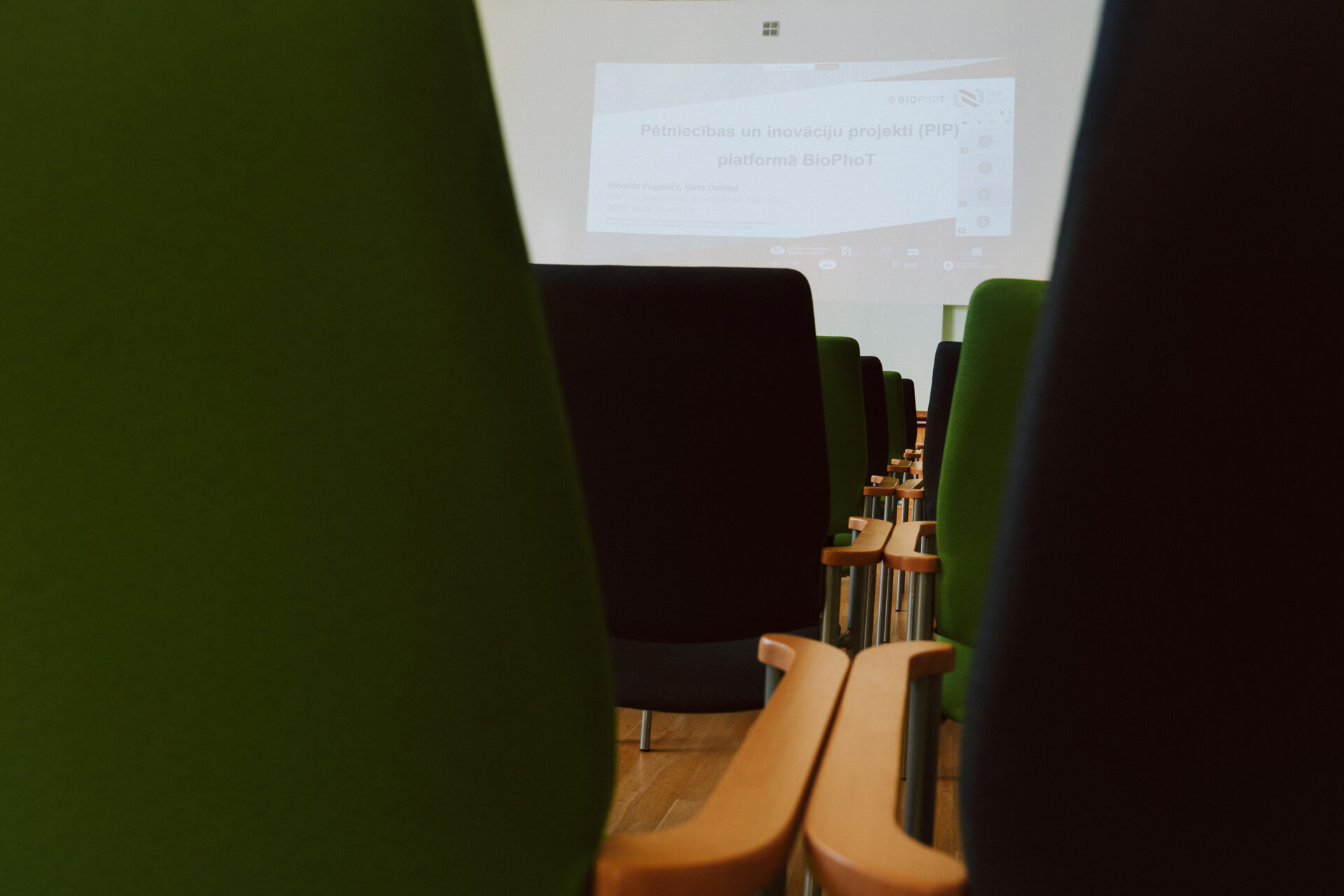
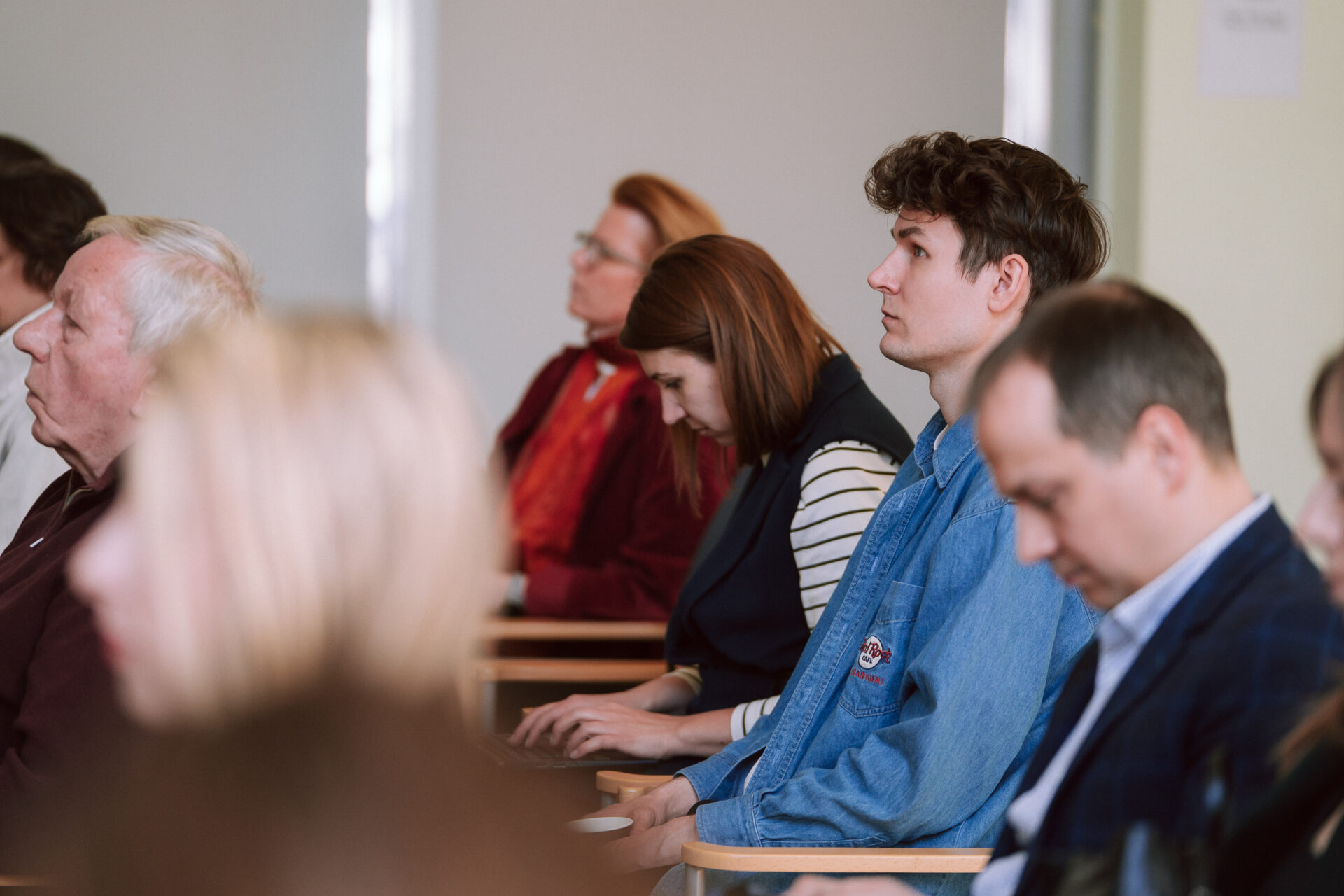
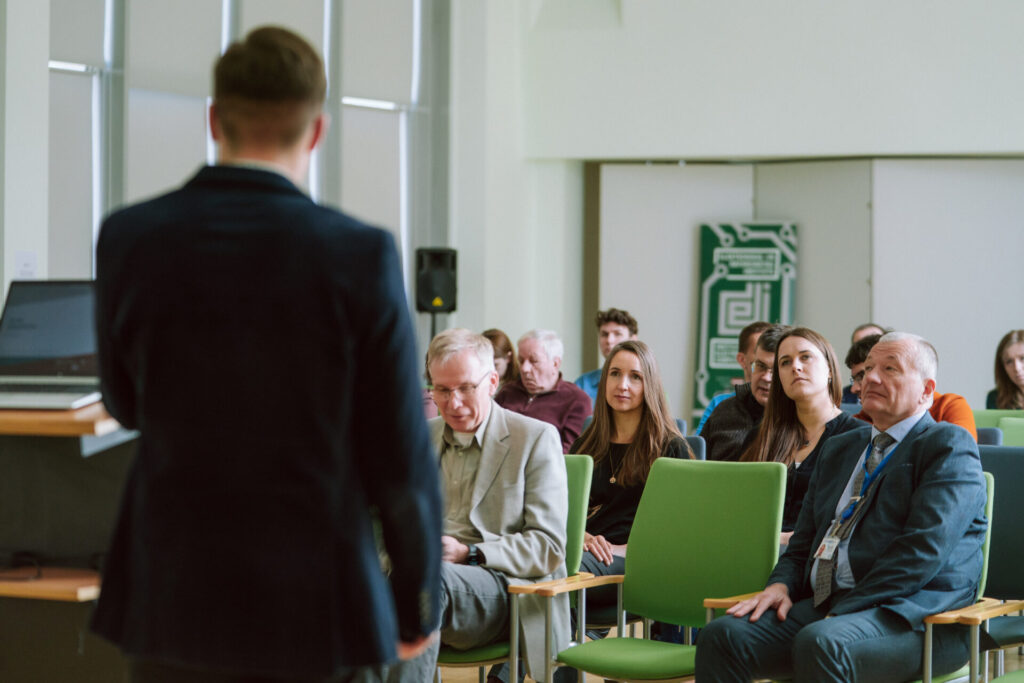
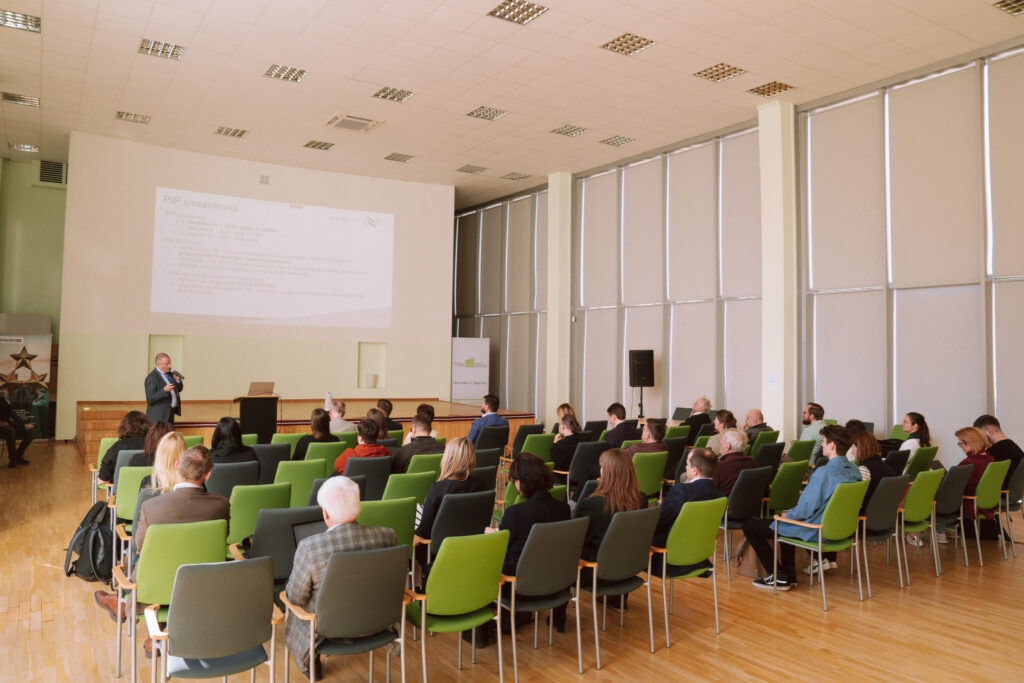
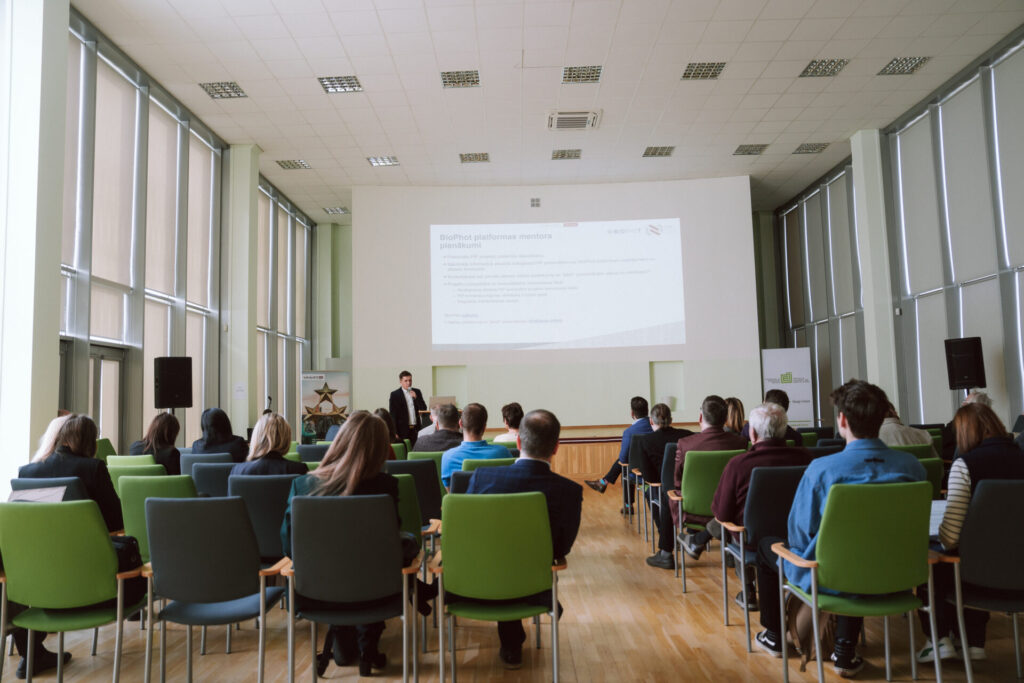
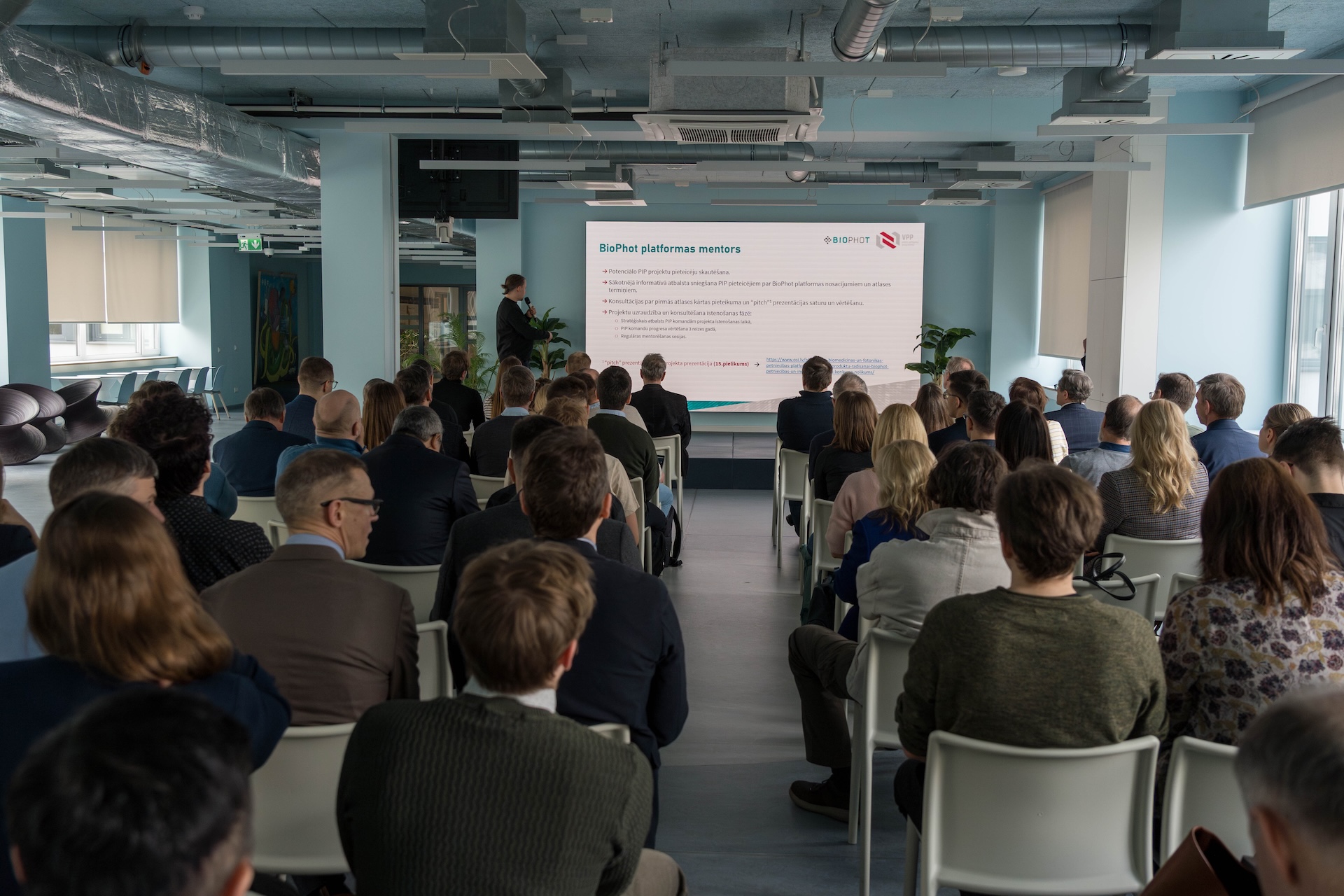
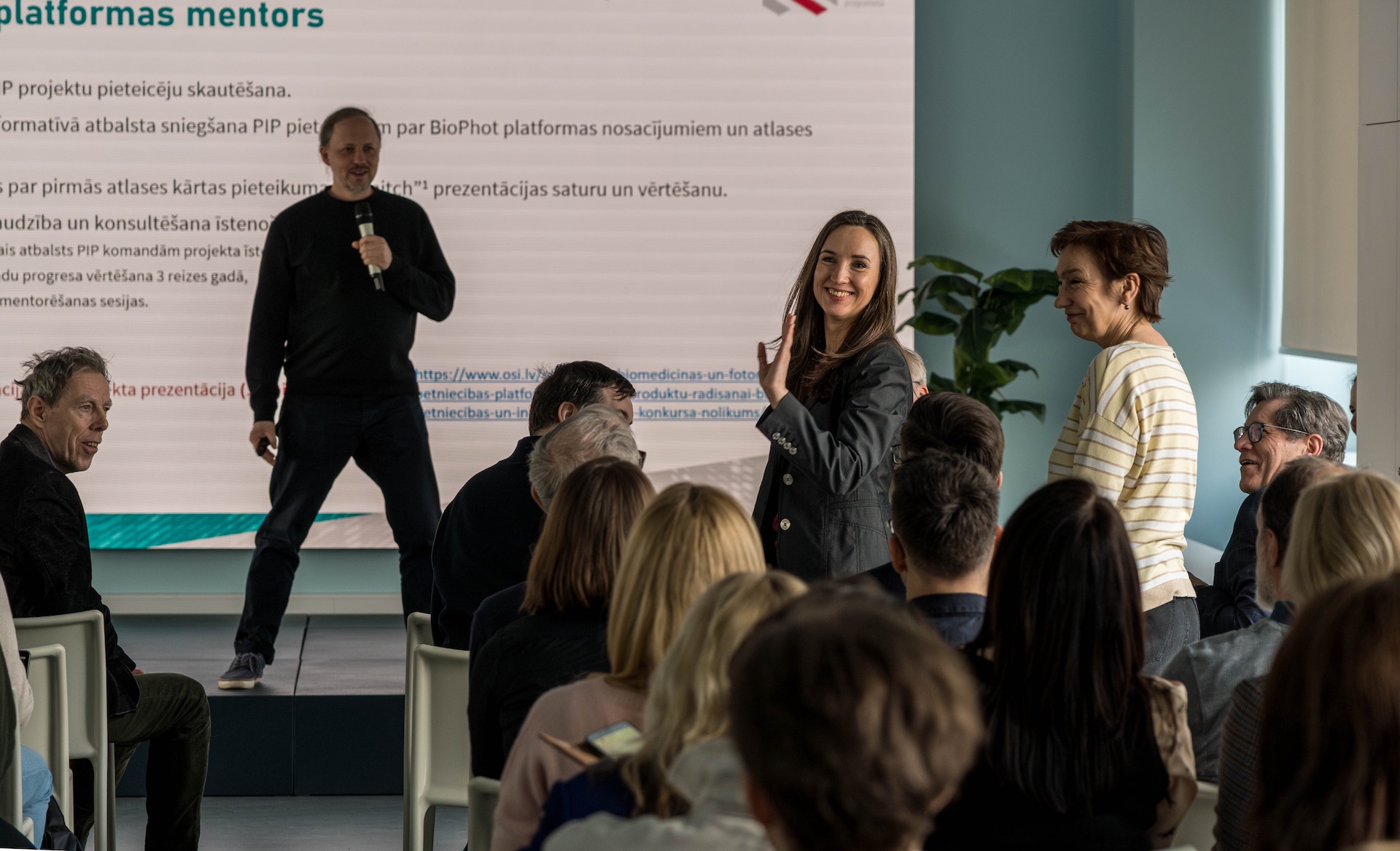
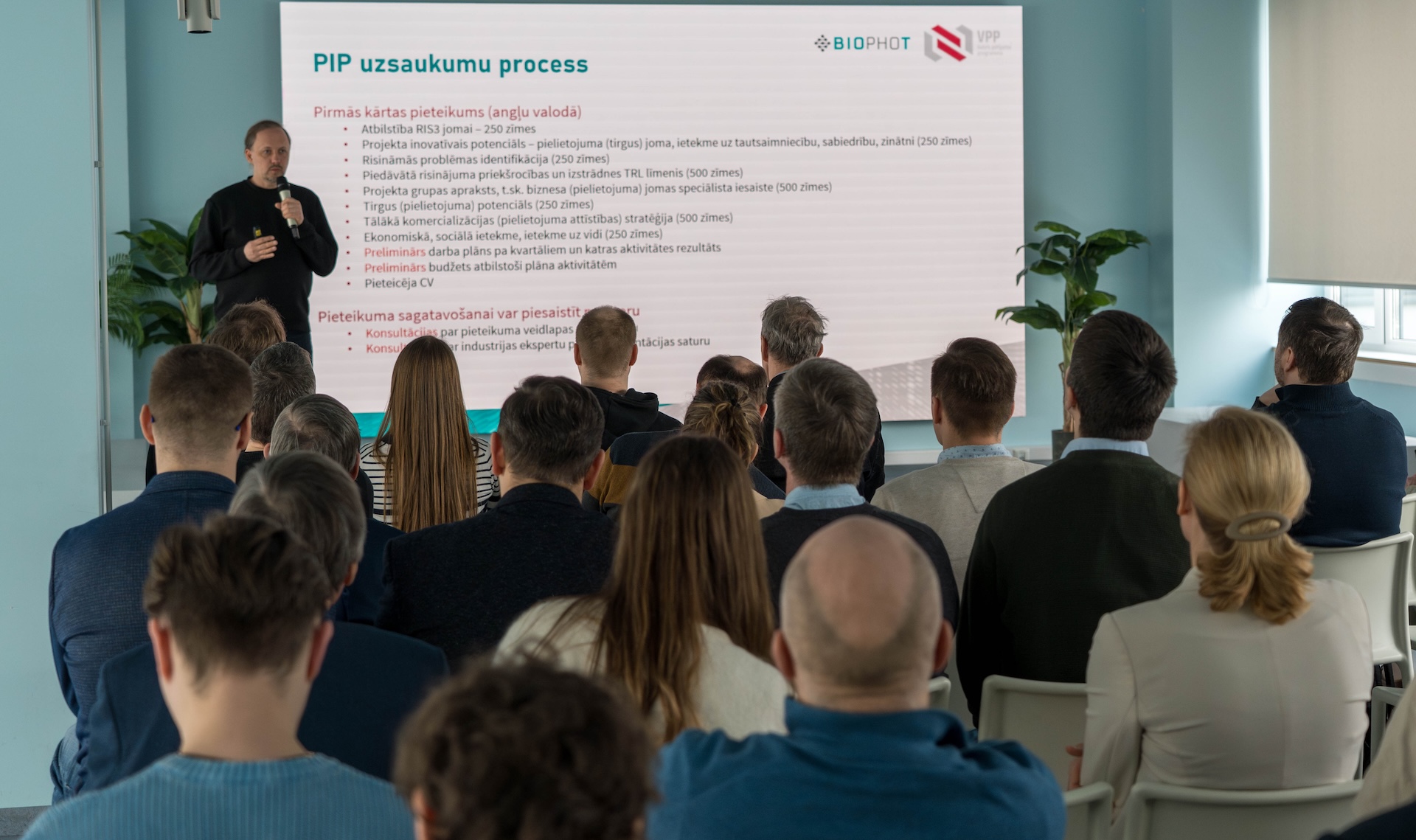
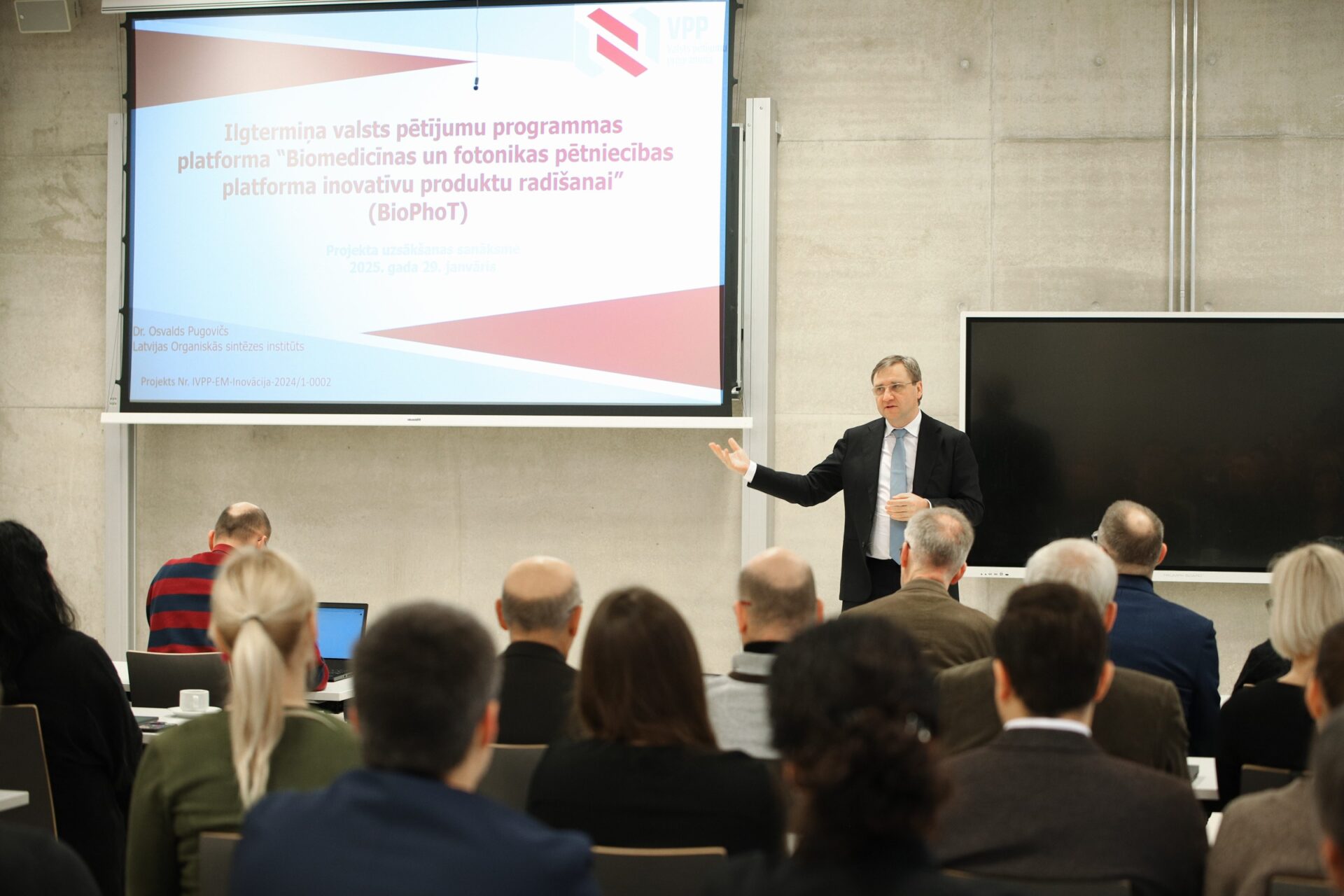
      The information seminar took place on 10 April in the conference room of the Institute of Electronics and Computer Science. During the seminar, the platform team informed about the application process, opportunities for cooperation with mentors, as well as frequently asked questions.

      Latvian scientists prepare for the first BioPhoT competition 

      More than 30 scientists in person participated in the BioPhoT Platform Info-day on 10 April, and around 20 online. The aim of the event was to help scientists prepare for the submission of their project proposals on 8 May. 

      "Given how different the objectives and criteria of BioPhoT are from traditional science funding competitions, our task is to help scientists orient themselves and prepare as much as possible for the selection process, where they will be judged not by scientists but by business people," said Osvalds Pugovičs, BioPhoT Platform Manager and Deputy Director of the Latvian Institute of Organic Synthesis

      "Under BioPhoT, the Ministry of Economics has tasked Latvian research organisations (scientists) with proposing, designing and developing research that will lead to projects that will benefit the economy for the next eight years. The overarching objective is to invest in science to boost Latvia's economic development and global competitiveness. 

      Research carried out by BioPhoT scientists should be able to provide new, competitive solutions in biomedicine, medicine, pharmaceuticals, photonics, smart materials, electronics and engineering systems. 

      After the submission of the project, the first selection round is the most important - a 5-minute presentation of the project followed by a discussion with the BioPhoT expert panel, an international team of professionals with experience in the commercial sector, business development and commercialisation of science. 

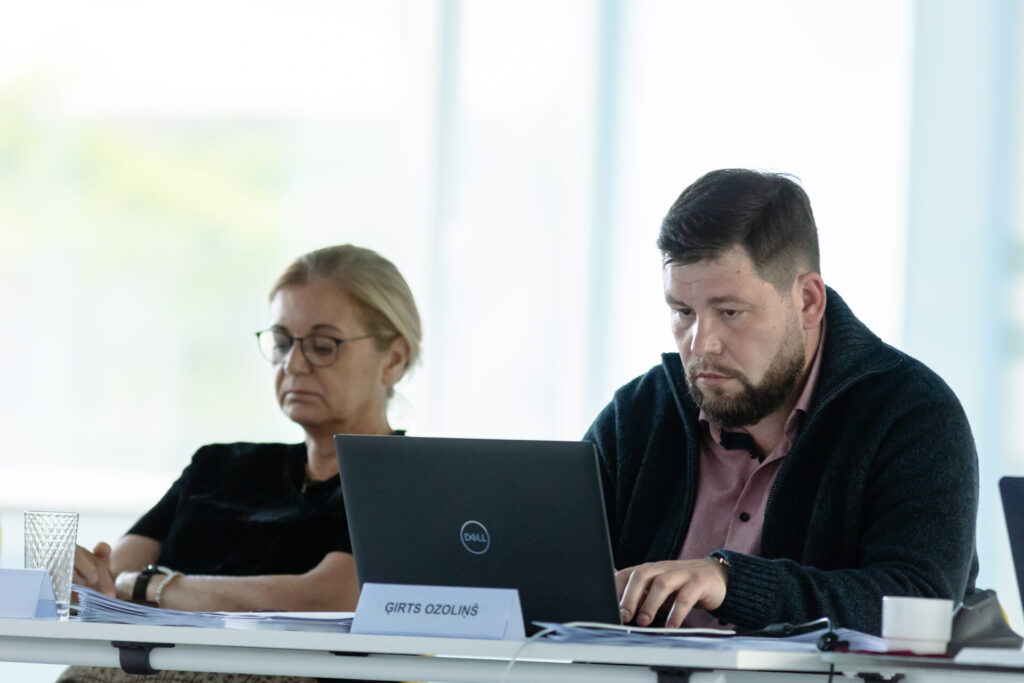
      "The first round will be open to those projects whose authors are able to concisely and clearly answer the questions: what specific problem in industry or the economy can be solved in this way, why it can be done with the proposed idea and how the scientist's solution is better than existing ones," the selection criteria relevant to the BioPhoT platform was pointed out by Ģirts Ozoliņš, one of the seven mentors of the platform, senior expert at the Institute of Solid State Physics.  

      The project teams that make it through the first selection round will go on to develop their applications in detail and will be assessed by a panel of experts from the Latvian Research Council, focusing on the scientific aspects of the idea. 

      €6 million is available for projects that pass this year's first funding call. Researchers will be able to receive up to €200,000 per project. A second call for BioPhoT projects is planned for autumn this year. 

      The BioPhoT Info-day provided participants with an overview of the application procedure, project selection criteria, the meaning of mentoring and the scope of assistance. Attendees had the opportunity to ask questions in public and to consult individually with BioPhoT mentors and experts who were there to support applicants. Through the platform's funding, mentoring support is available to project applicants already during the preparation period. 

      BIOR researchers learn about the BioPhoT platform and innovation opportunities at Mentoring Day

      On Monday, 7 April, the Mentoring Day of the BioPhoT platform took place at the State Scientific Institute "BIOR", during which the representative of the Institute of Solid State Physics Ģirts Ozoliņs introduced the BIOR researchers to the objectives of the project "Biomedical and Photonics Research Platform for Innovative Products" ("BioPhoT"), project submission opportunities and support to be provided.

      The event aimed to explain the BioPhoT project application procedure, funding conditions and the importance of the TRL level (Technology Readiness Level) in moving research results towards practical application. Researchers had the opportunity to ask questions and receive practical advice.

      "This collaboration will bring our researchers a step closer to innovations with practical applications and strengthen "BIOR's" engagement in science-intensive entrepreneurship," said "BIOR's", Chairman of the Scientific Council Aivars Bērziņš.

      The BioPhoT platform is an important support mechanism for the development of research and innovation in Latvia, fostering collaboration between scientists and industry, creating new opportunities in biomedical, photonics and other fields.

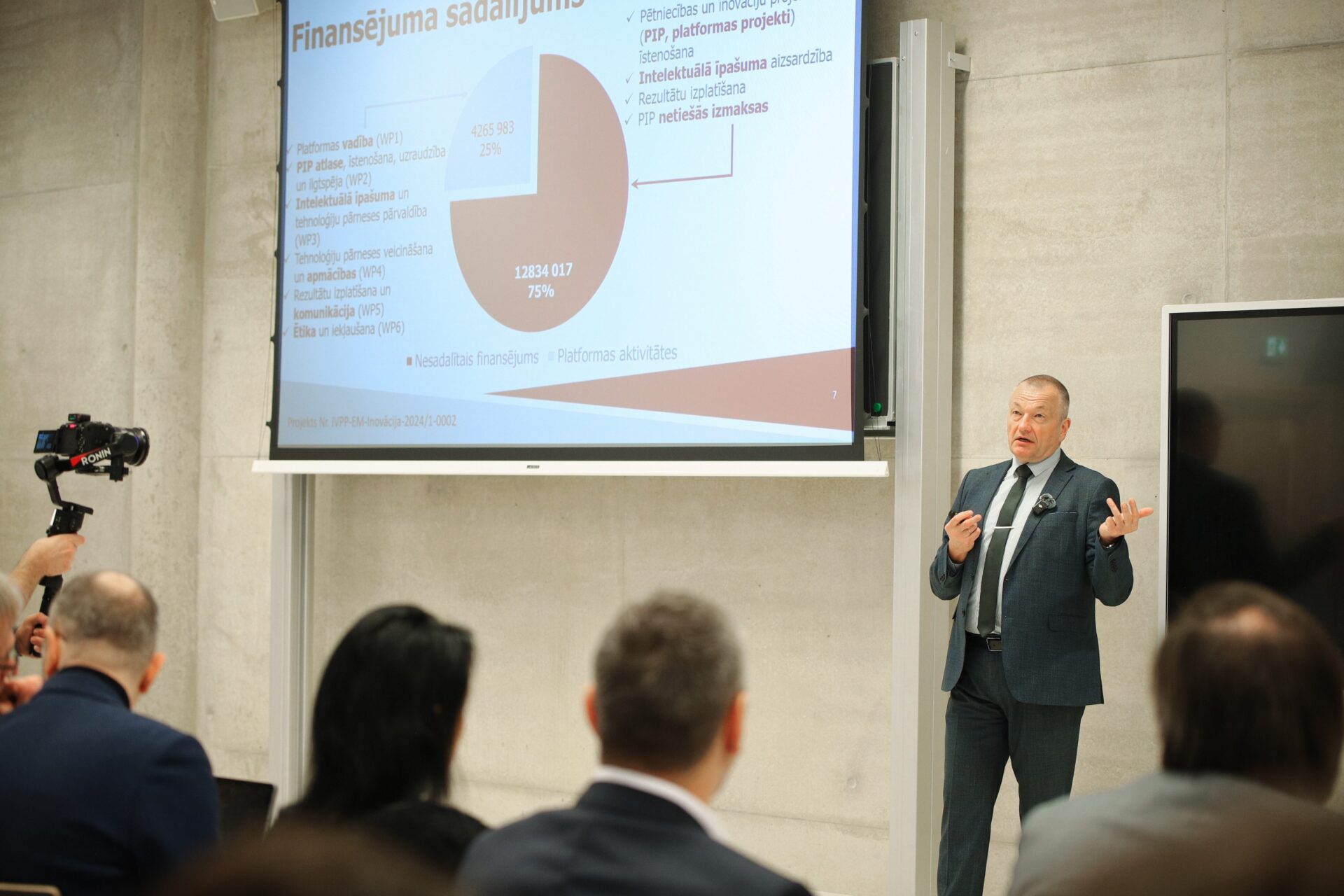
      The "Biomedical and Photonics Research Platform for Innovative Products" or "BioPhoT" is a long-term national research programme aimed at fostering collaboration between biomedical, photonics and smart materials sciences and the commercial sector to develop new technologies and products. The project has been awarded €12.8 million in public funding until the end of 2026.

      "BIOR" is one of the project partners and its researchers have the opportunity to participate in this innovation programme. The aim of the project is to strengthen Latvia's competitiveness in global markets and to foster innovation capacity in the biomedical and photonics sectors.

      Opportunities for researchers: €6 million for innovation in biomedicine and photonics 

      The research platform "Biomedical and Photonics Research Platform for Innovative Products" ("BioPhoT") launches the first call for Research and Innovation Projects (RIPs). A total of €6 million is available for this call for RIPs in the areas of Smart Specialisation Strategy or RIS3 - biomedicine, medical technologies, pharmaceuticals, photonics, smart materials and engineering systems. The deadline for applications is 8 May this year. An information seminar on preparing applications will be held on 10 April. 

      "The BioPhoT research platform is designed to bridge the gap between science and the commercial sector by making it easier for inventions to cross the so-called 'valley of death' on their way to development. We encourage scientists and industry to take advantage of this opportunity, both by participating in the RIP competition to promote the development and commercialisation of new technologies and by gaining new knowledge from the platform's training programme consultants, who not only have business development expertise but also scientific experience. This is our opportunity to lead Latvia to new achievements in high-tech industries and to significantly strengthen our competitiveness in the global market as well," Osvalds Pugovičs, Deputy Director of the Latvian Organic Synthesis Institute (OSI) comments

      The first call for projects has a total budget of €6 million, with up to €200 000 per project. The deadline for applications is 8 May 2025. Projects must be implemented within 12 months, with the possibility of a three-month extension without additional funding. In the event of a large number of highly rated RIP applications, the BioPhoT Platform Project Steering Committee may decide to increase the amount of funding available for project implementation to €8 million. The call rules and annexes can be found on the BioPhoT website www.biophot.lvand on the websites of all BioPhoT partners. 

      The evaluation of RIP applications will take place in two rounds. In the first round, a panel of independent scientific, industry and innovation experts will assess the innovative potential of the RIP idea and its relevance to market and/or end-user needs. Applicants will be required to prepare a five-minute presentation and after the presentation in front of the panel, a 10-minute question and answer session. The second round will consist of a full project submission and scientific peer review by experts selected by the Latvian Science Council.  

      The information seminar will take place on 10 April at 10.00 in the conference hall of the Institute of Electronics and Computer Science, Dzērbenes iela 14. During the seminar, the platform team will inform about applying for the competition, opportunities for cooperation with mentors, as well as discuss frequently asked questions. To register for the workshop, follow this link: https://lu.ma/2pgowzmy

      The BioPhoT platform will offer a free training programme covering a wide range of topics on technology transfer, commercialisation of scientific results and intellectual property protection. The full training programme is available on the platform's website www.biophot.lv.  

      This is the first of a total of three calls for proposals expected in the first phase of the Platform's operation by the end of 2026. A total of more than €12 million will be available for innovation projects during this period. Almost €5 million more will be earmarked for improving scientists' innovation skills, including training on IP protection. If the platform is effective, public funding will also be provided for the next two phases of the BioPhoT platform until 2032. 
      A total of 35 new technologies are expected to be developed by 2032, having reached either a proven technological basis (TRL 3) or technological validation in a laboratory setting (TRL 4). At least 23 of these technologies are expected to be developed to validation under realistic conditions (TRL 5) or demonstration under full-scale conditions (TRL 6), while at least four will enter the commercialisation phase of innovation. 

      First call for research and innovation projects has been announced

      The Organic Synthesis Institute of Latvia (OSI) in collaboration with leading Latvian scientific institutions announces the first Research and Innovation Project (RIP) call under the platform "Biomedical and Photonics Research Platform for Innovative Products" ("BioPhoT"). The deadline for submission of applications is 8 May 2025.

      A total of €6 million is available for research and innovation projects in the fields of RIS3 - biomedicine, medical technologies, pharmaceuticals, photonics, smart materials and engineering systems. In the event of a large number of highly ranked applications, the BioPhoT project evaluation panel may decide to award additional funding of up to €2 million.

      Each RIP can receive up to €200 000 in funding. Projects must be implemented within 12 months, with the possibility of a 3-month extension without additional funding.

      The applicant is a scientific institution. The rules and annexes can be found on the BioPhoT website www.biophot.lv, as well as on the websites of BioPhoT's lead partner OSI and collaborating partners.

      Mentoring is available for the preparation of RIP applications. To apply for mentoring, please fill in application form and send it to the following email address biophot@osi.lv.

      On 10 April at 10.00 in the conference hall of the Institute of Electronics and Computer Science, Dzērbenes iela 14 and online, an informative seminar on applying for the competition, opportunities for cooperation with mentors, as well as frequently asked questions will take place. More information and registration are available in the events section.

      BioPhoT Mentoring Day at the Latvian State Institute of Wood Chemistry

      On 1 April, the Latvian State Institute of Wood Chemistry hosted the BioPhoT Mentoring Day.

      During the event, the mentors of the platform gave a detailed insight into the practical aspects of BioPhoT, the role of mentors and the methodology. Scientists had the opportunity to ask questions and get answers on project development and application preparation.

      "BioPhoT - or "Biomedical and Photonics Research Platform for Innovative Products" is a long-term national research programme designed to foster collaboration between scientists and the commercial sector to develop new technologies with high commercialisation potential in the biomedical, photonics and related sectors. It is designed as a long-term initiative with specific objectives in technology development and commercialisation. The platform has a particular focus on the commercialisation of research results, with a mentoring support system, training and additional innovation education available to project authors. These features make BioPhoT an important initiative in the Latvian science and innovation ecosystem, fostering closer cooperation between research and business, and contributing to Latvia's international competitiveness," the organizers highlighted.

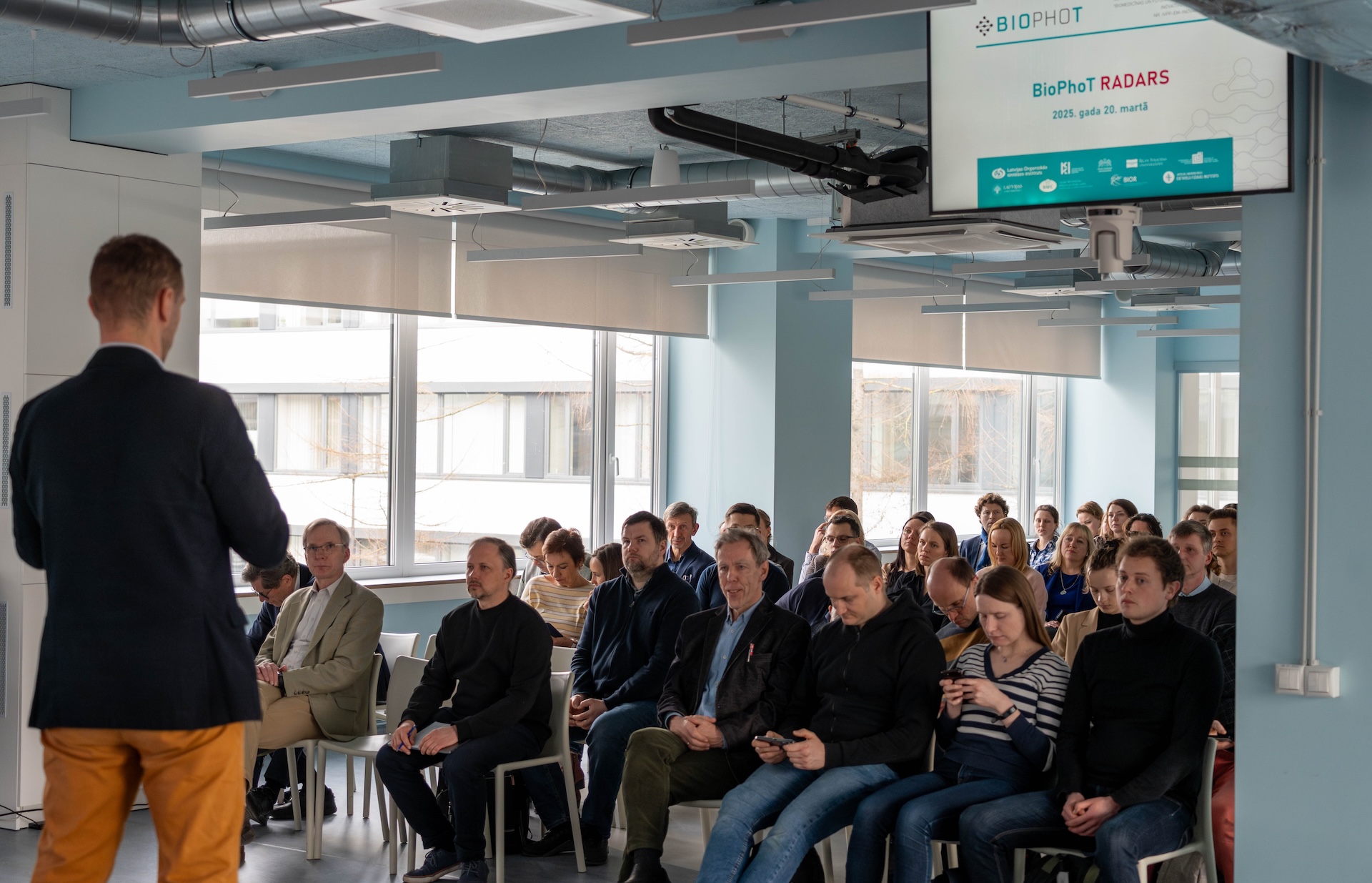
      BioPhoT Radar 20.03.2025.

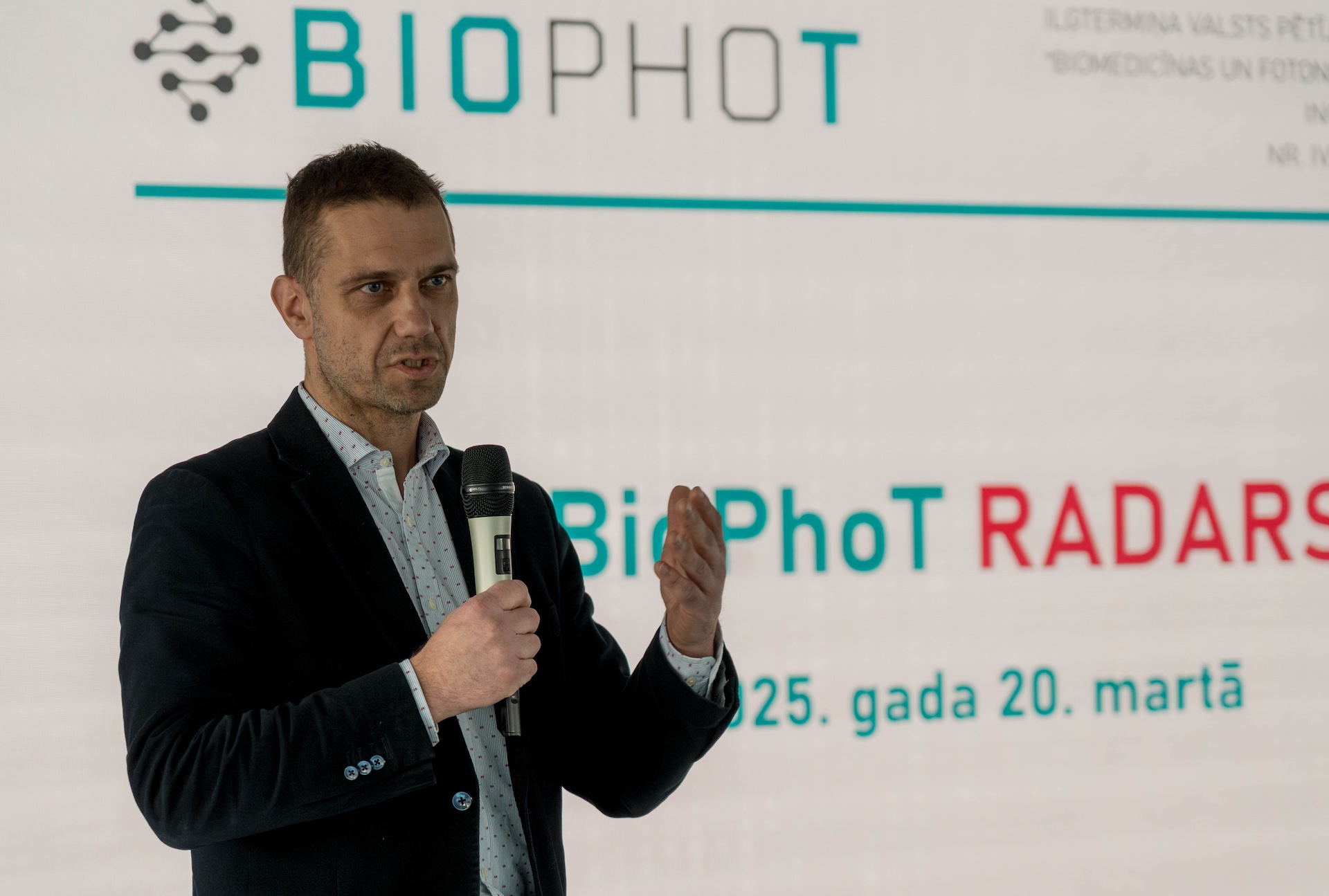
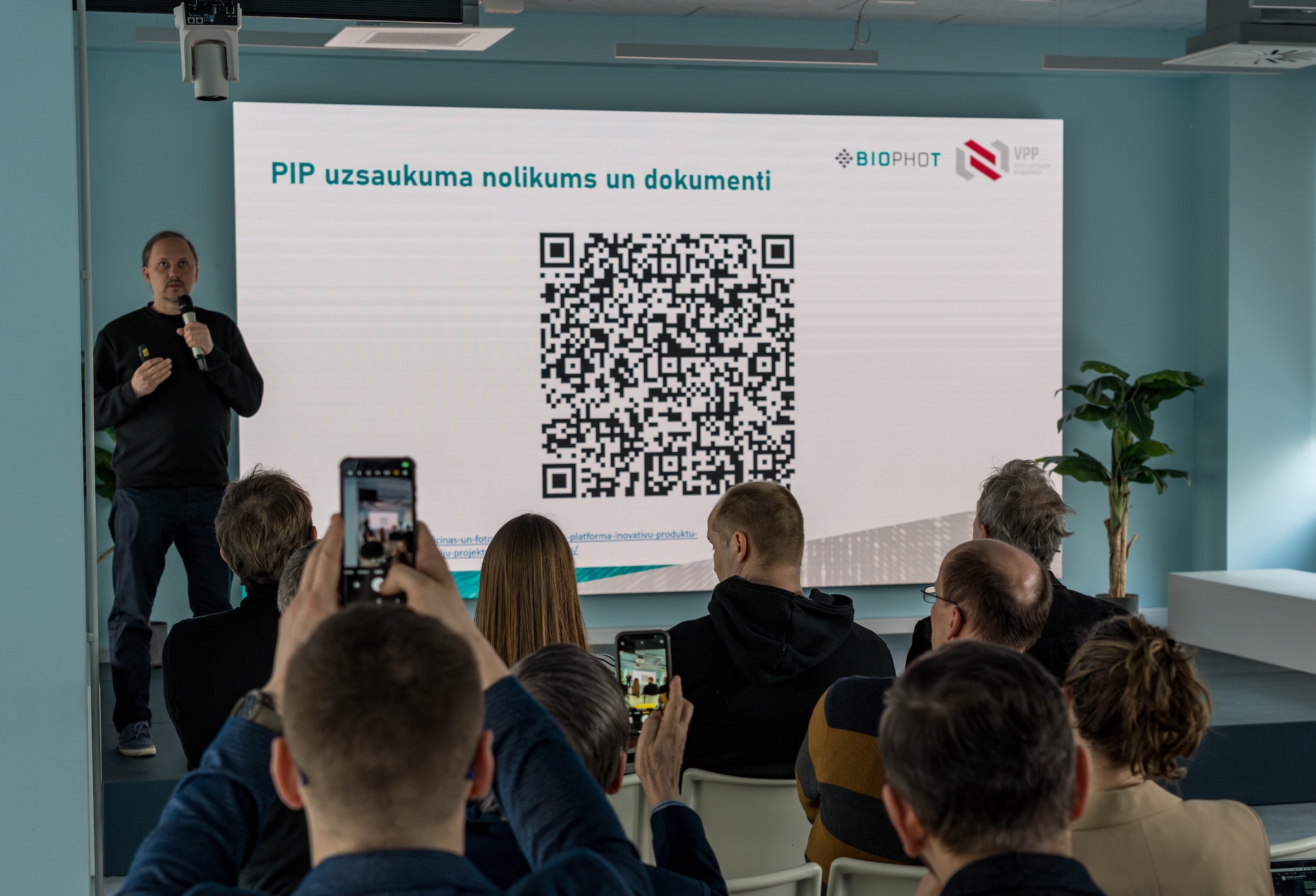
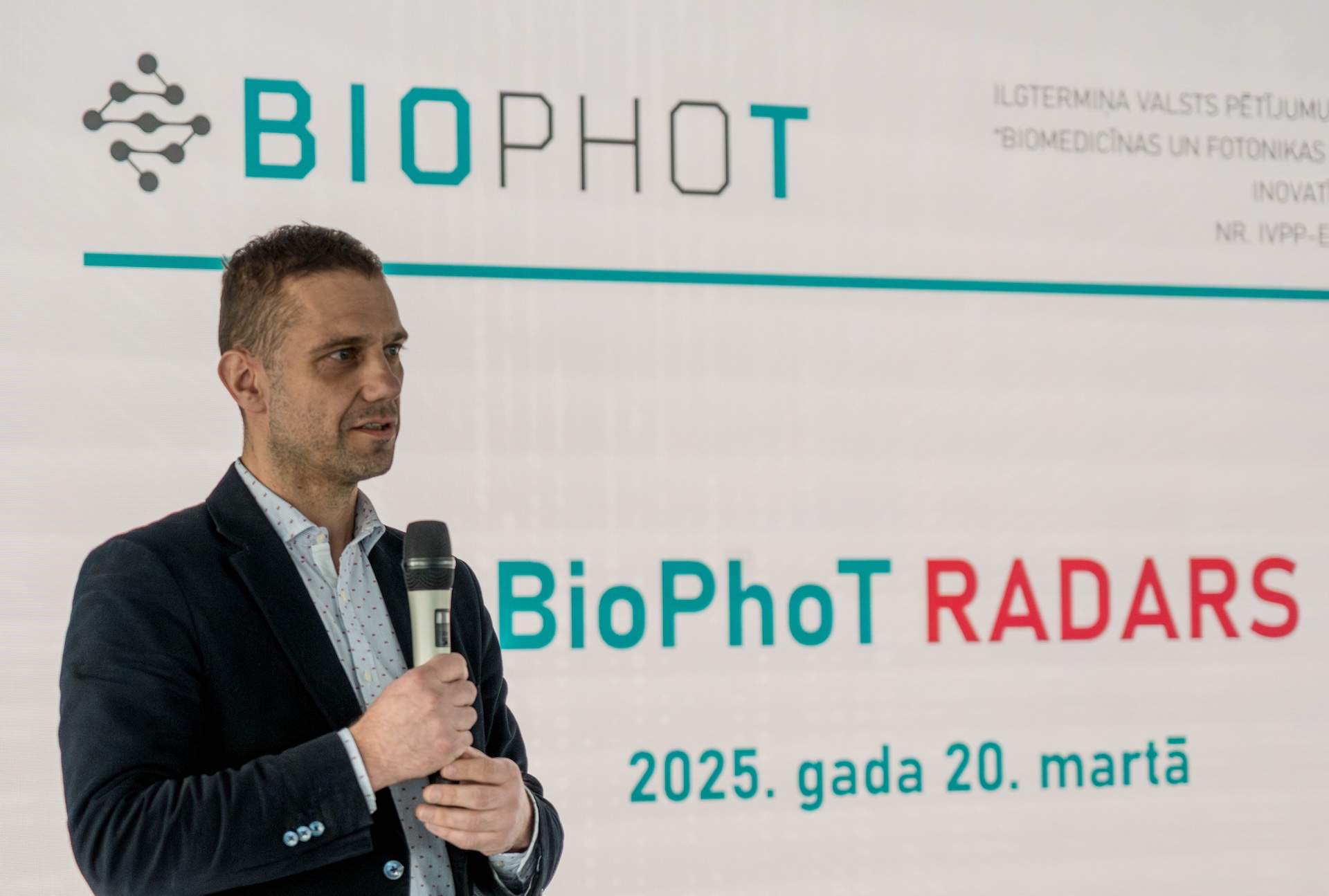
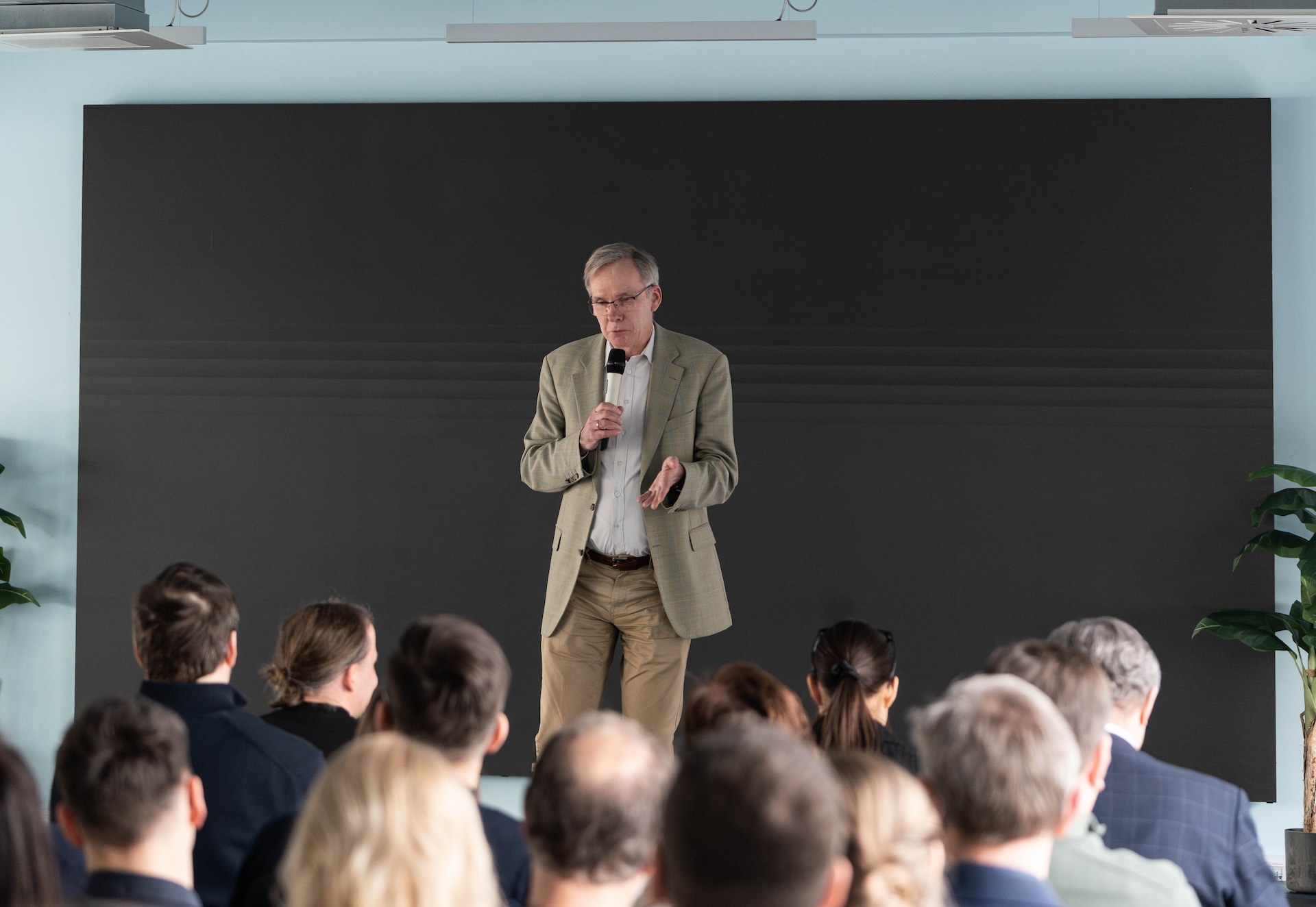
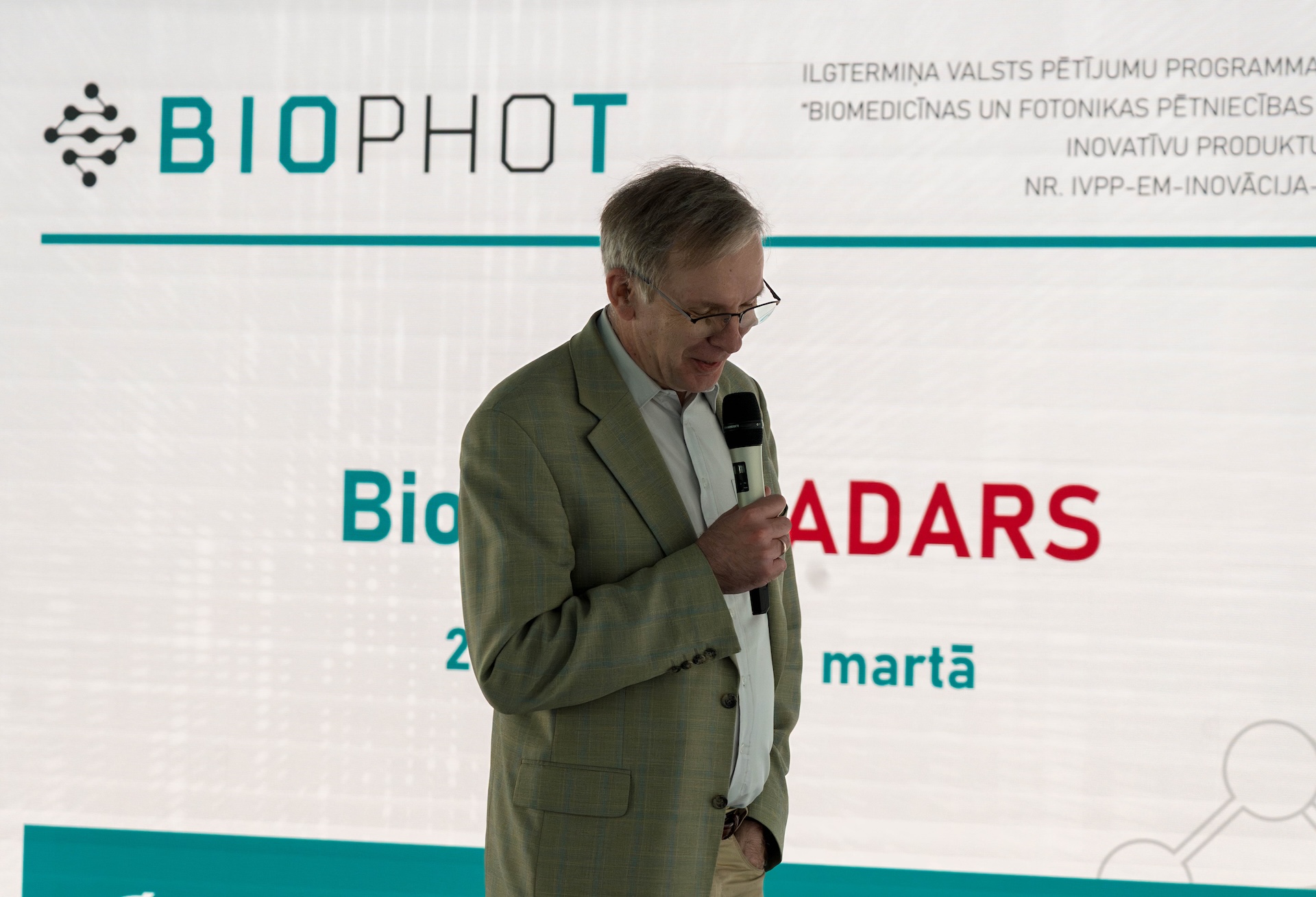
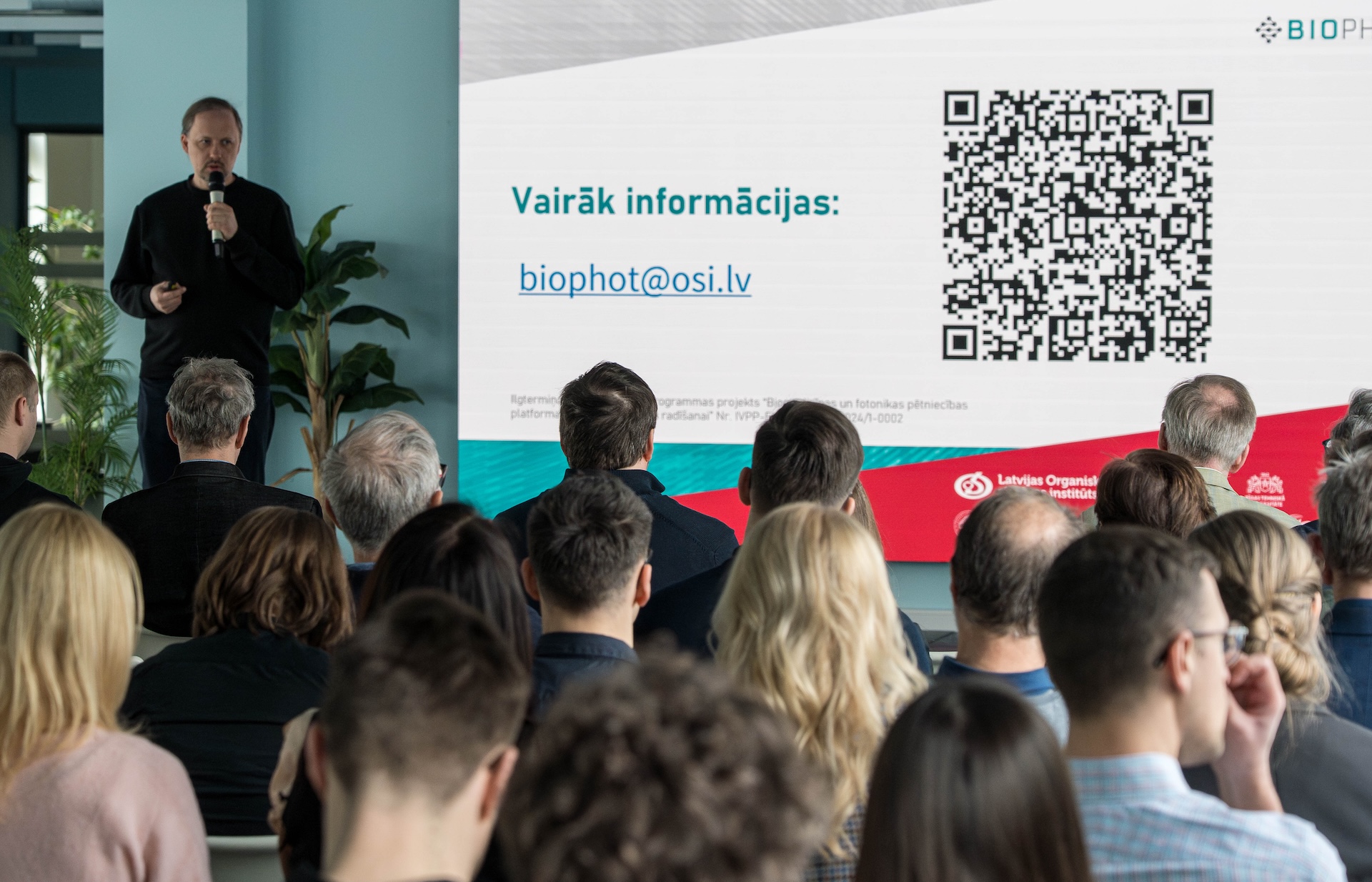
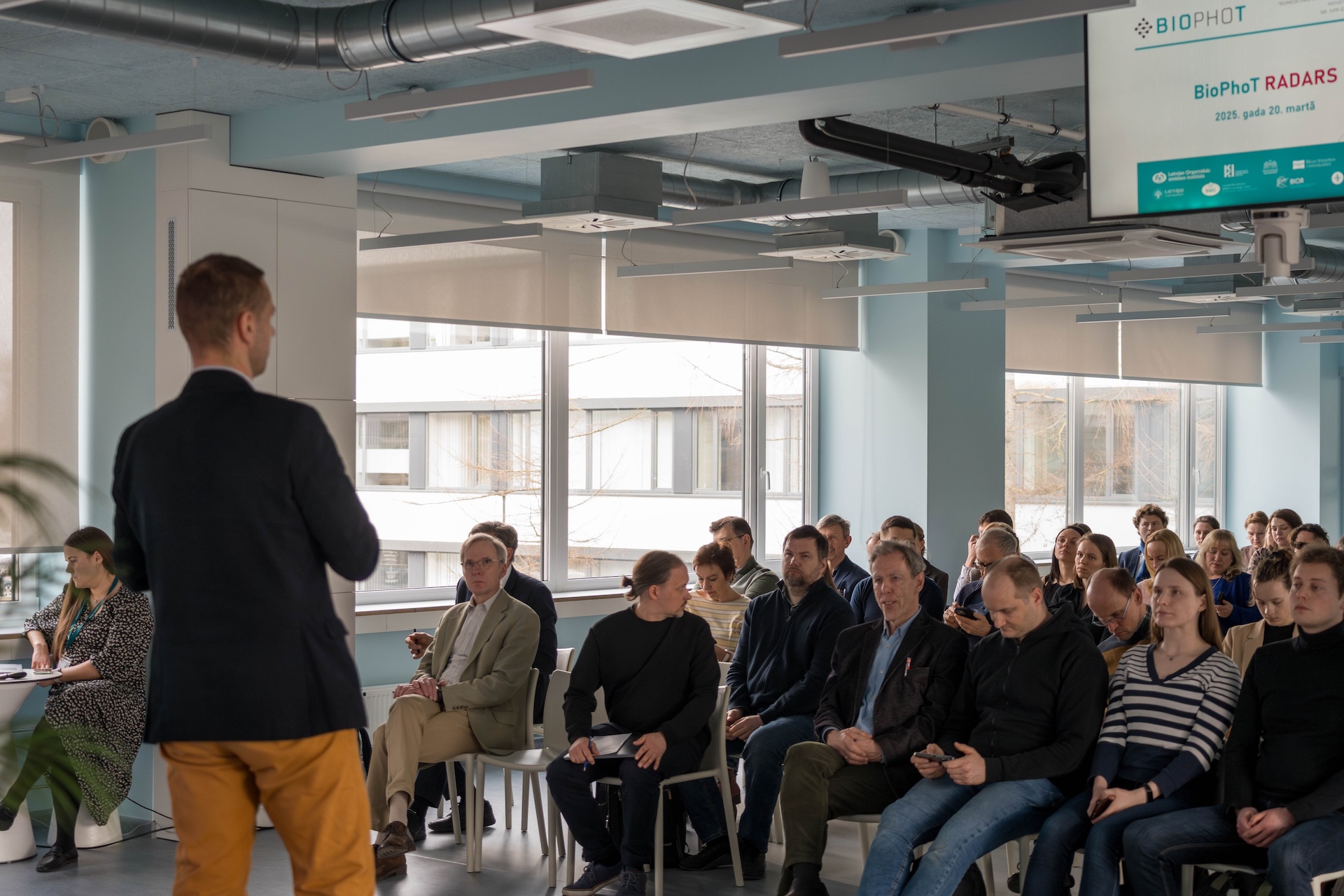
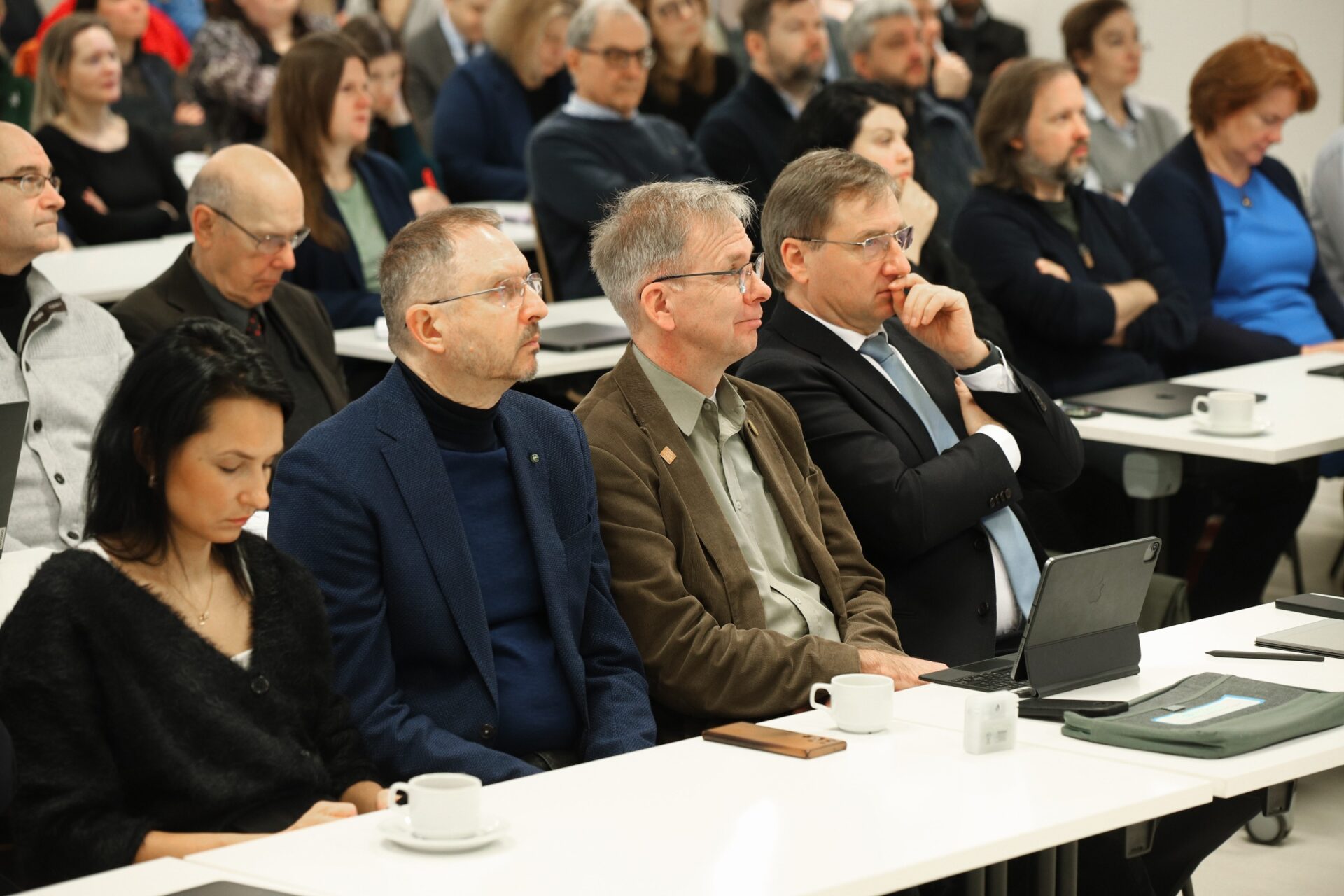
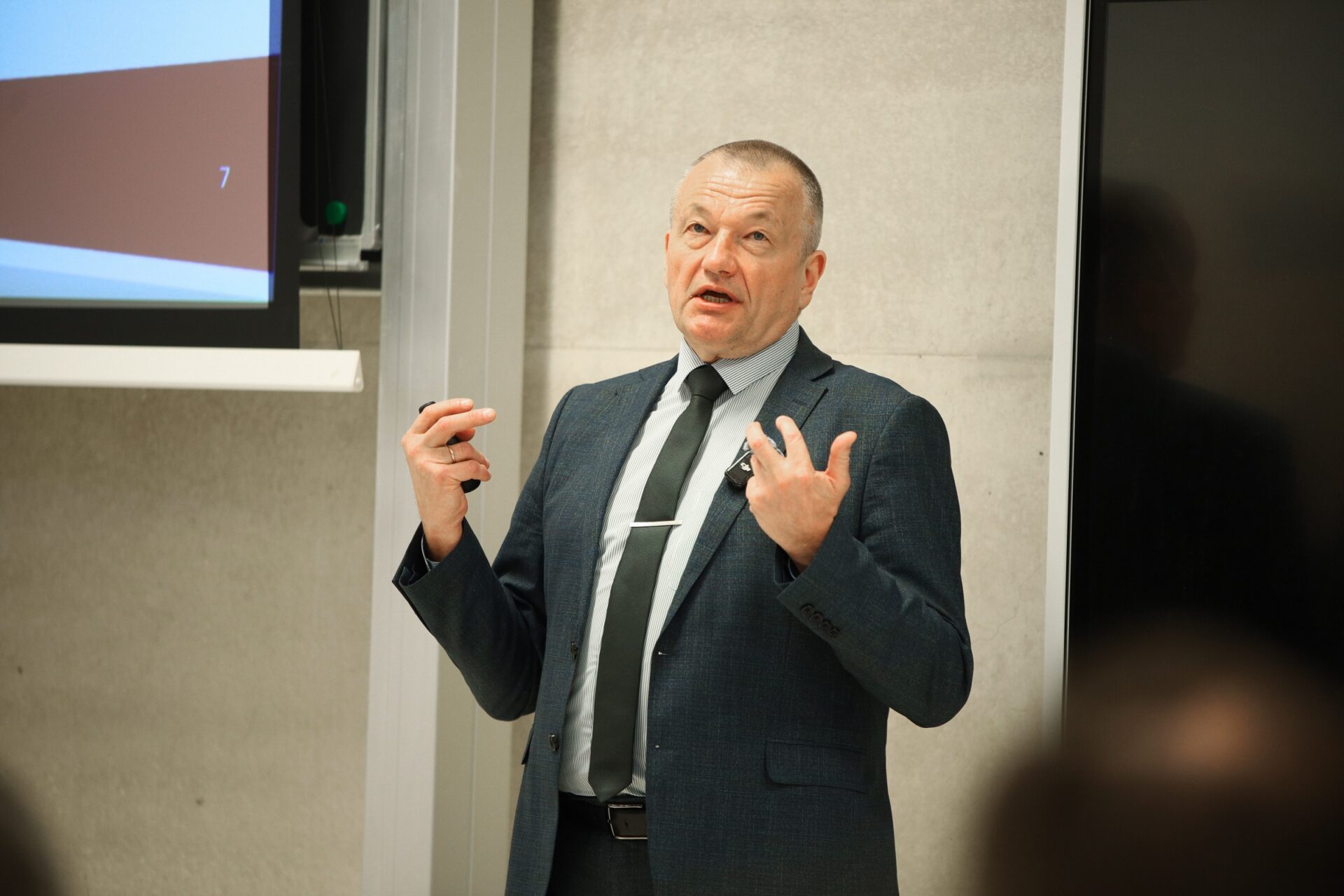
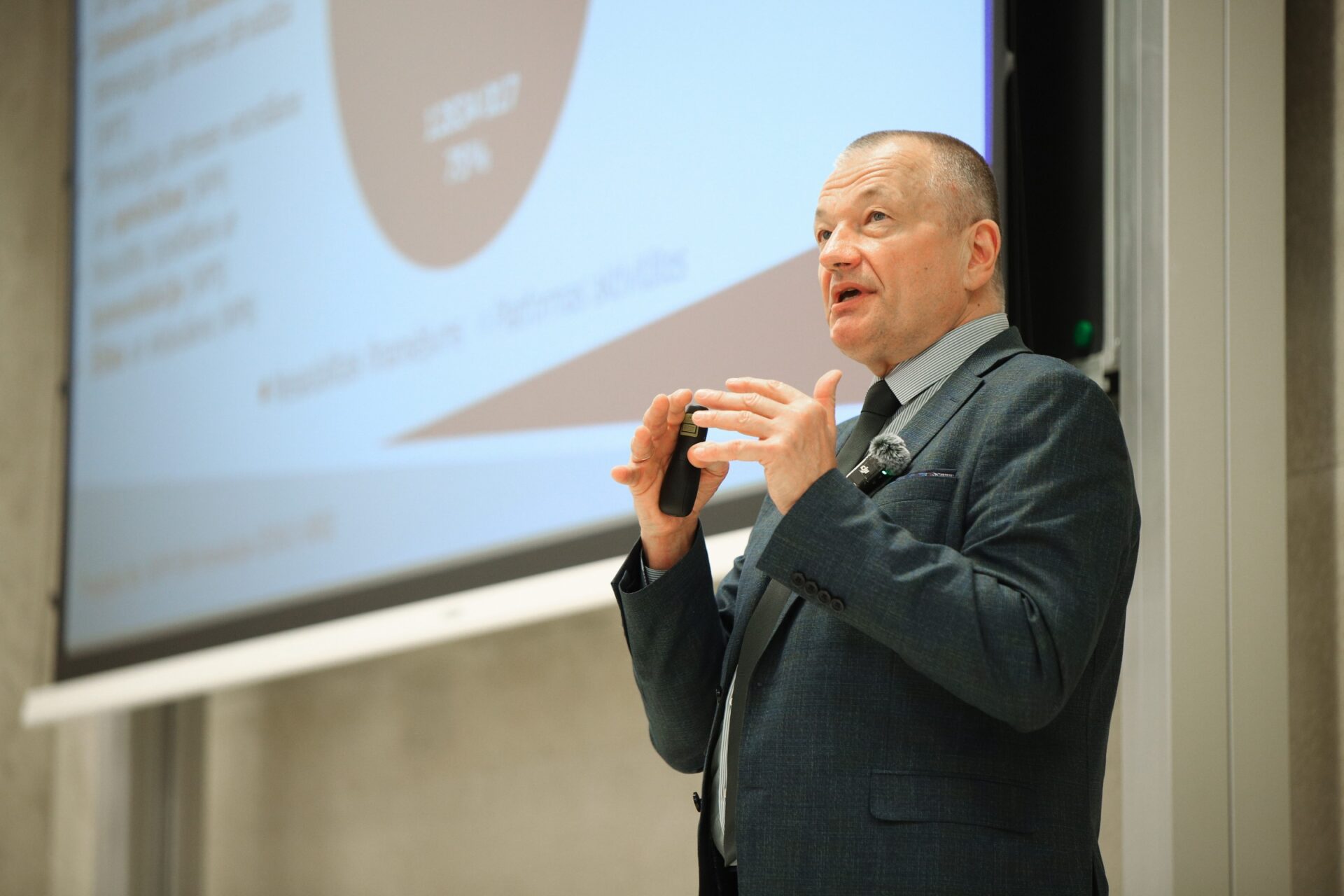
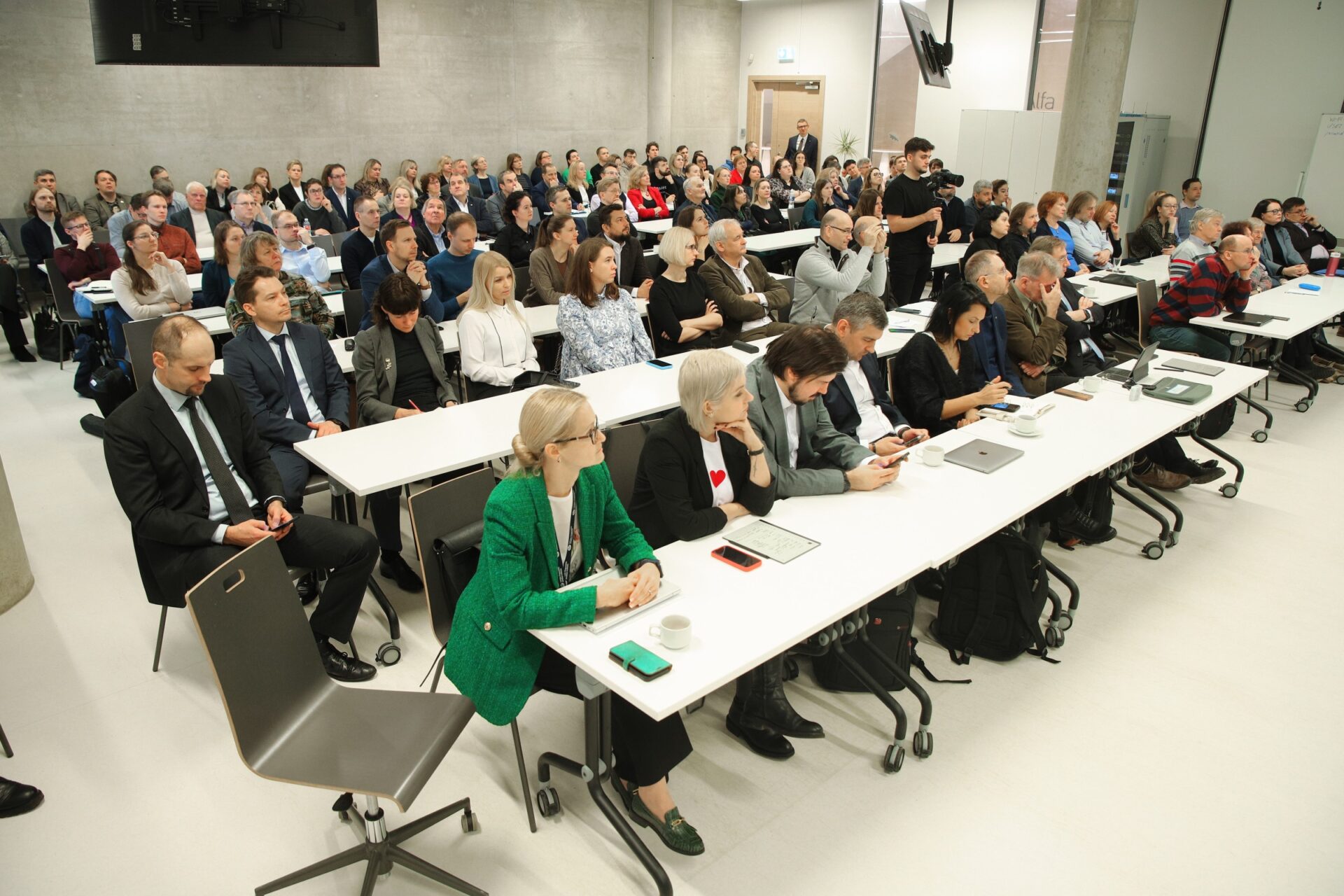
      On 20 March, the networking event BioPhoT Radar took place at the Science and Innovation Centre of Riga Technical University (RTU). It brought together more than 80 scientists and industry representatives to develop joint innovative projects and new cooperation opportunities to be further implemented through the National Research Programme (NRP) platform "Biomedical and Photonics Research Platform for Innovative Products" or "BioPhoT". 

      The BioPhoT Radar networking event aimed to foster collaboration between research organisations and companies to develop new and promising projects in the fields of biomedicine and photonics. Participants took part in an "idea sprint", where scientists presented their innovative ideas in a concise manner, while industry representatives shared their current topics and challenges. The interactive format of the meeting encouraged the generation of new ideas and active networking, which helped to identify new potential collaborative projects and strengthen established contacts. 

      BioPhoT radar brings together more than 80 scientists and industry representatives to create new innovations 

      On 20 March, the networking event BioPhoT Radar took place at the Science and Innovation Centre of Riga Technical University (RTU). It brought together more than 80 scientists and industry representatives to develop joint innovative projects and new cooperation opportunities to be further implemented through the National Research Programme (NRP) platform "Biomedical and Photonics Research Platform for Innovative Products" or "BioPhoT". 

      The BioPhoT Radar networking event aimed to foster collaboration between research organisations and companies to develop new and promising projects in the fields of biomedicine and photonics. Participants took part in an "idea sprint", where scientists presented their innovative ideas in a concise manner, while industry representatives shared their current topics and challenges. The interactive format of the meeting encouraged the generation of new ideas and active networking, which helped to identify new potential collaborative projects and strengthen established contacts. 

      The BioPhoT platform's Terms of Reference and the first call for proposals are expected soon. Researchers and science-intensive ideas from the biomedical, medical technology, pharmaceutical, photonics, smart materials, electronics, electrical engineering and technology and engineering systems sectors are invited to apply. 

      The BioPhoT platform represents a significant departure from the current approach to public funding, providing more targeted support for innovative projects in biomedical and photonics technologies. The funding process will specifically assess market demand for the technology developed, industry support and interest in its development. The selection process will start with a presentation to a panel of industry experts who will provide an initial assessment and help identify the most promising innovations. 

      There are a number of key requirements for project promoters: the timeframe for projects must not exceed 12 months and the maximum funding available for an idea is €200,000. Particular emphasis is placed on the level of technological readiness (TRL). In addition, participants are provided with regular mentoring support and are assessed not only on the TRL but also on the overall level of realisation of the innovation (IRL). 

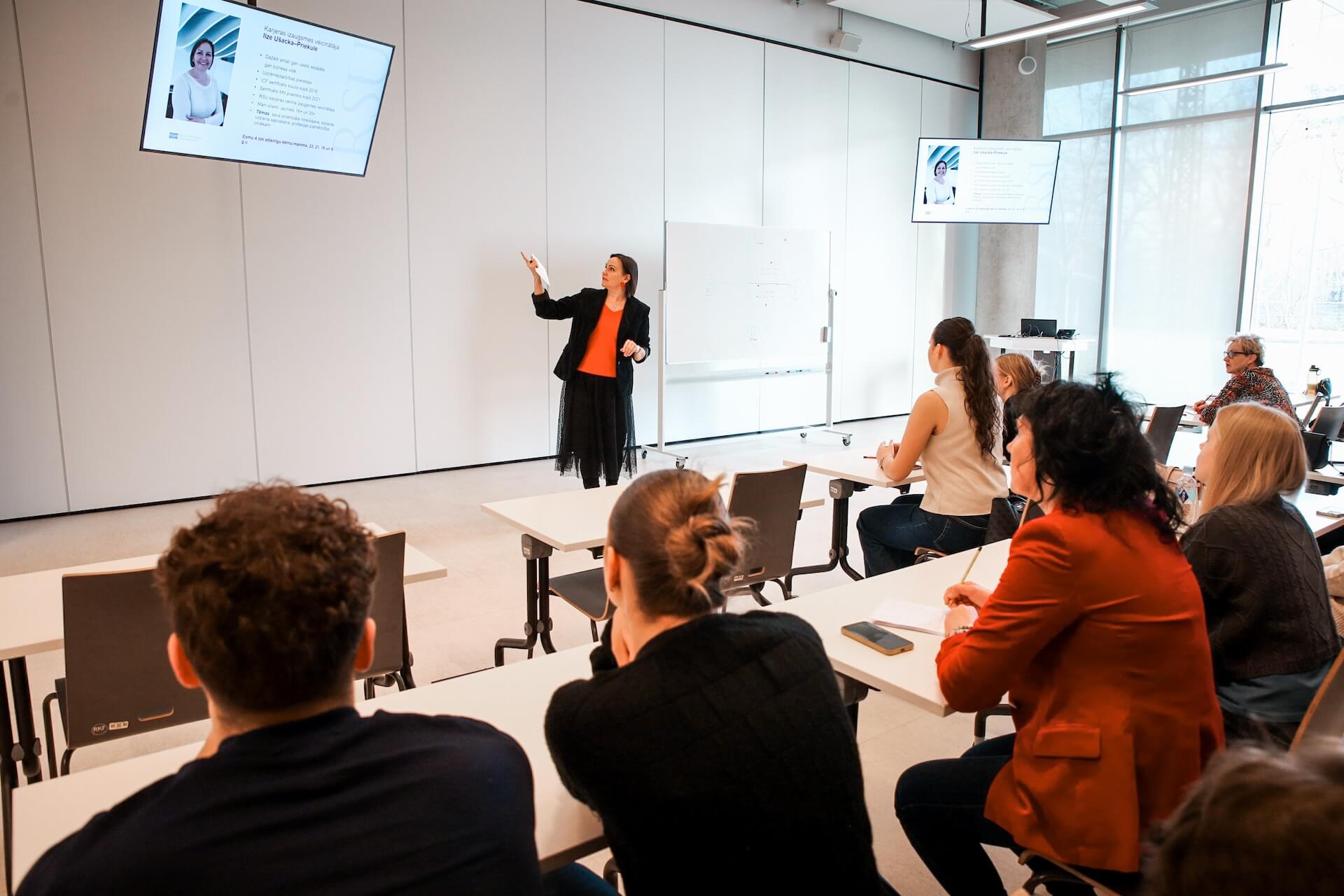
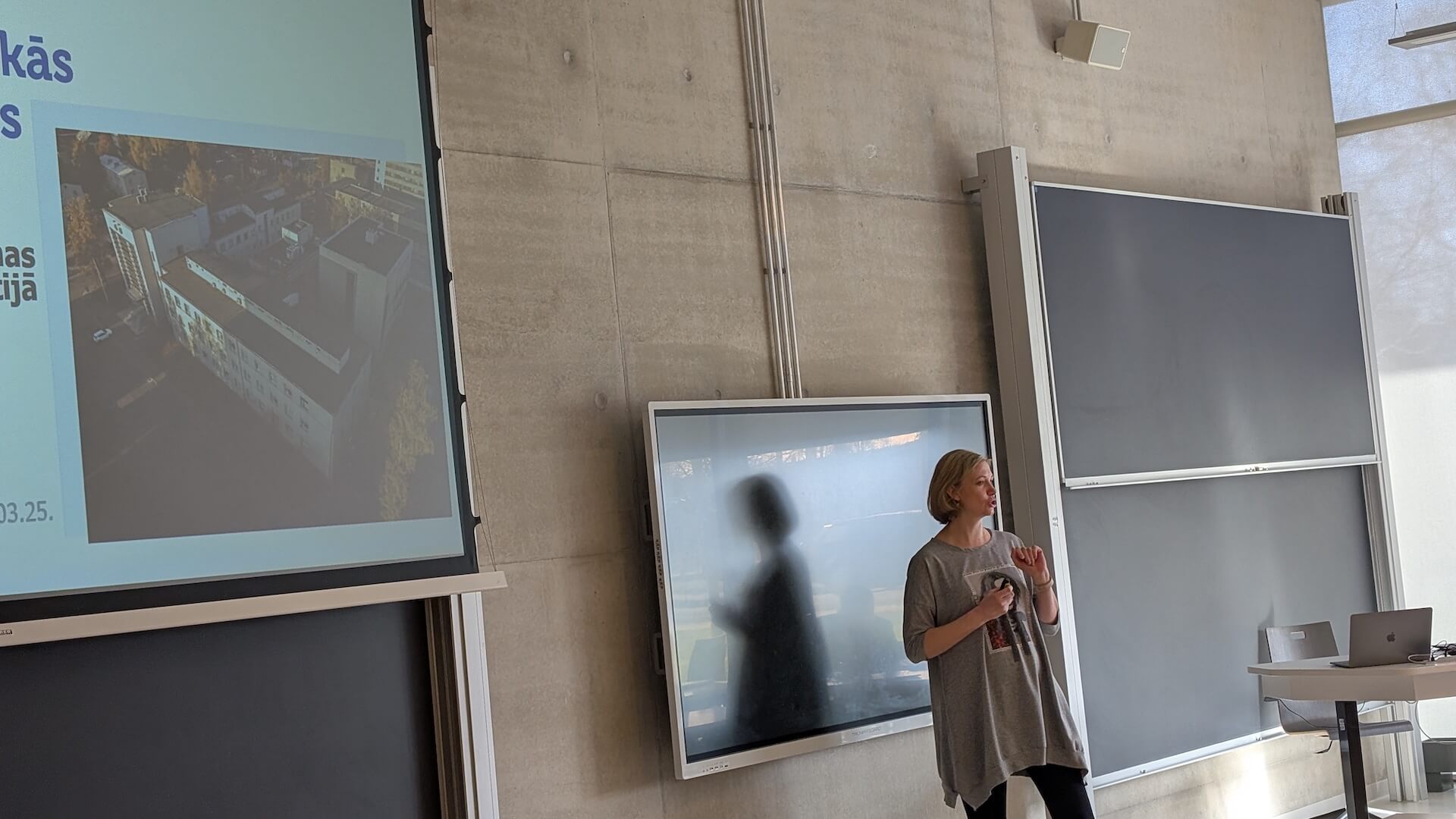
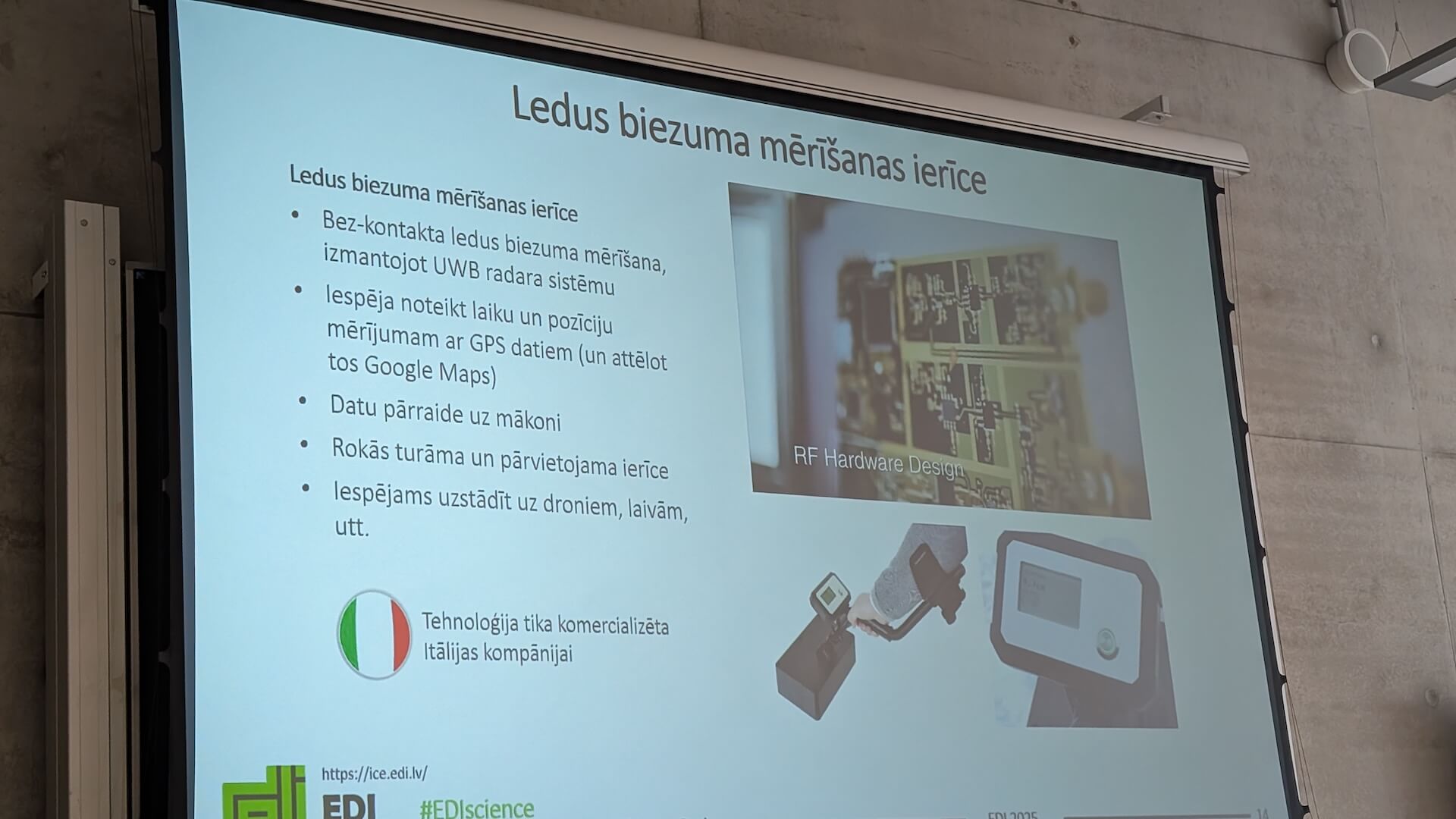
      Experience and role of BioPhoT platform partners in innovation and science commercialisation processes - Icebreakers'25 

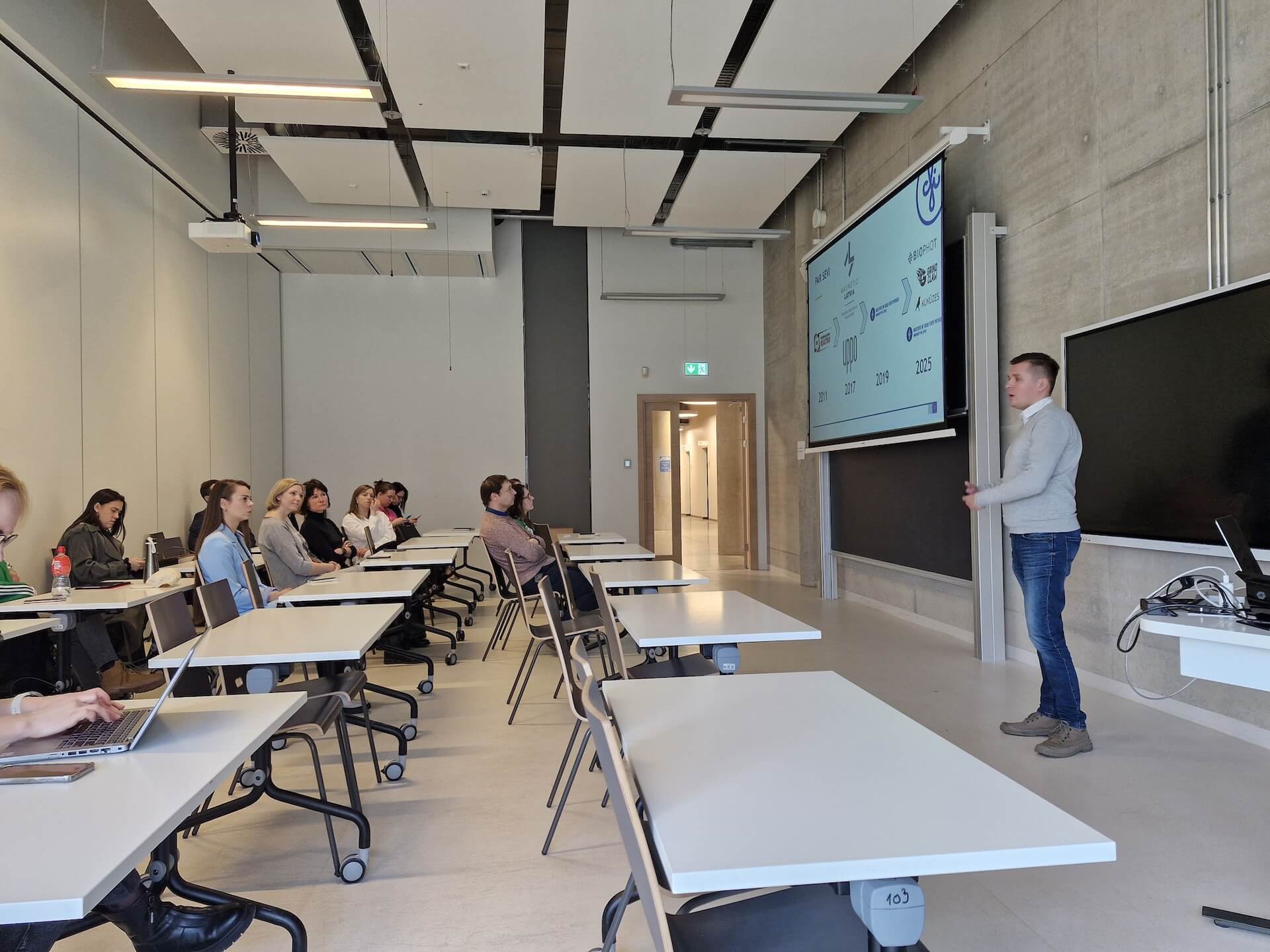
      On 6 March, the University of Latvia (UL) Business Opportunities Festival "Icebreakers 2025" took place at the UL House of Sciences. It also included a BioPhoT platform partner event, which looked at innovation and science commercialisation experiences in the biomedical and photonics fields.  

      The event brought together scientists, students and industry representatives to learn about commercialisation processes and opportunities for collaboration with research institutions. Participants learned how new ideas are turned into products and how research institutions can support start-ups and existing companies in developing innovation. 

      Speakers at the event talked about their experiences:  

      Dr. Kaspars Ozols (Institute of Electronics and Computer Science) - "EDI scientific excellence and expertise - innovation support for business"; 

      Dr. Chem. Dace Rasiņa (Latvian Institute of Organic Synthesis) - "When science and industry synthesize together"; 

      Ph.D. Daniela Godiņa (Latvian State Institute of Wood Chemistry) - "Green Innovation: How the Latvian State Institute of Wood Chemistry is changing the future"; 

      Laura Ansone (Latvian Biomedical Research and Study Centre) - "Data, algorithms and business: lessons from the commercialisation of microbiome analysis"; 

      Ģirts Ozoliņš (Institute of Solid State Physics, University of Latvia) - "Commercialisation experience in practice: from space exploration to biotechnology". 

      Discussions and presentations highlighted Latvia's scientific potential for innovation and stressed the importance of interdisciplinary cooperation. Speakers shared practical experiences of how scientific discoveries are turned into marketable products. 

      Institute of Solid State Physics Scientists' Breakfast in January: funding innovation projects in 2025 - opportunities of the BioPhoT platform

      On 30 January, the first Scientists' Breakfast of the year took place at the Institute of Solid State Physics of the University of Latvia. A networking event for academics and researchers, discussing current research trends and practical tools for getting involved in projects at different levels. The first meeting of the year was dedicated to financing innovation in 2025. The BioPhoT platform, which offers support for the development of new technologies and innovative ideas, was a particular focus. 

      The event was addressed by Dr. chem. Osvalds Pugovičs, who explained the platform's activities and opportunities for scientific institutions. The event was also attended by representatives of the platform's partners - scientific institutions, who shared concrete project ideas where they see the possible involvement of CFI scientists. 

      "The BioPhoT platform was set up under the national research programme "Innovation Fund - Long-term Research Programme" to develop new technologies and innovations with commercial potential. It promotes cooperation with the biomedical, medical technology, pharmaceutical, photonics, smart materials, electronics, electrical engineering and engineering systems sectors in Latvia and abroad. 

      The Platform will allow research institutions to submit projects with a maximum duration of 12 months and funding of up to €200,000, with the first call for projects expected in the first half of 2025. 

      12.8 million available for researchers to develop innovative biomedical and photonics technologies 

      Research and innovation projects in biomedicine, medical technologies, pharmaceuticals, photonics, smart materials, electronics, electrical engineering, technology and engineering systems will benefit from €12.8 million of state budget funding by the end of 2026. This will be provided by the implementation of the National Research Programme (NRP) platform "Biomedical and Photonics Research Platform for Innovative Products" or "BioPhoT".  

      Minister for Economic Affairs Viktors Valainis says: "It is essential to design and develop targeted support mechanisms to encourage the development of innovative technologies. The biomedical and photonics sectors have significant export potential based on innovation and the creation of new, competitive products. With financial support, their ideas can be transformed into marketable and high added value products. In the long term, this approach will strengthen Latvia's competitiveness in global markets, while fostering the development and innovation capacity of the biomedical and photonics industries." 

      BioPhoT will foster collaboration and technology development between the biomedical and photonics sciences and the commercial sector. Its strategic approach is to identify research with low technological readiness (Technology Readiness Level or TRL), but with high commercialisation potential. The financial support will contribute to the development of these ideas and to the long-term creation of competitive, marketable technologies and products based on scientific research in the biomedical and photonics fields.  

       "This approach will bridge the gap between science and the commercial sector, making it easier for inventions to cross the so-called 'valley of death' on their way to development. The creation of such a platform is an essential step in promoting excellence in Latvian technological innovation and increasing competitiveness in the global market, and will also serve as a basis for the development of future innovations," explains Project leader, Deputy Director of the Latvian Organic Synthesis Institute (OSI) Osvalds Pugovičs

      The platform is expected to be operational until 2032. Support for researchers' initiatives and responses to science-intensive challenges identified by the commercial sector is planned in three phases, the first of which - until 30 November 2026 - will see more than €12 million made available by Cabinet of Ministers specifically for innovation projects. Almost €5 million will be earmarked for improving scientists' innovation skills, including training on intellectual property protection. If the work is successful, public funding will also be made available for the next phases up to 2032. 
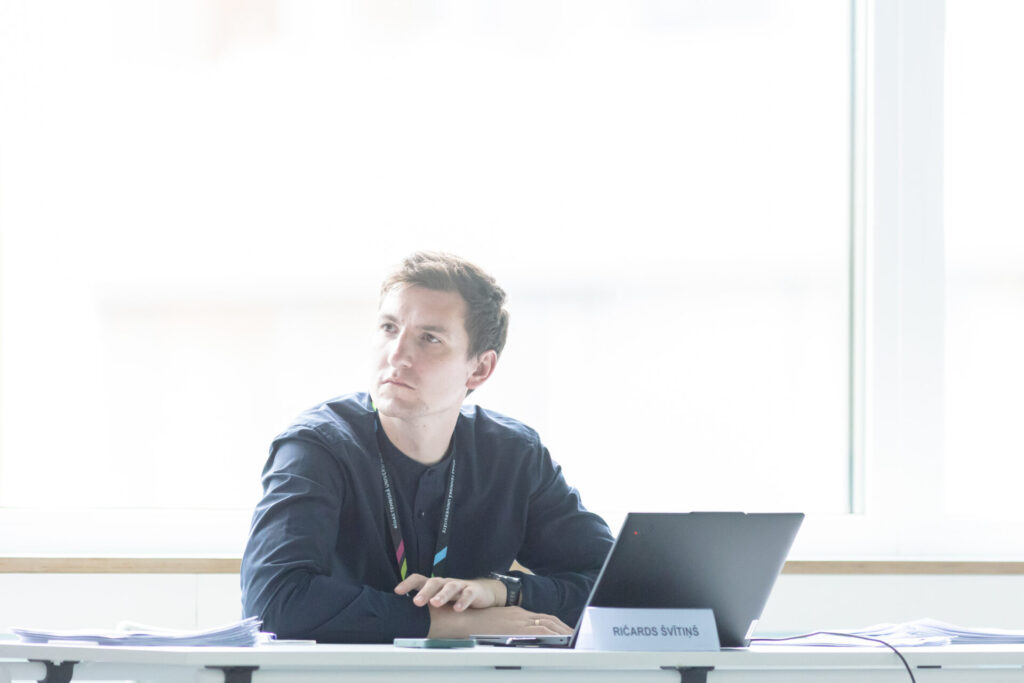
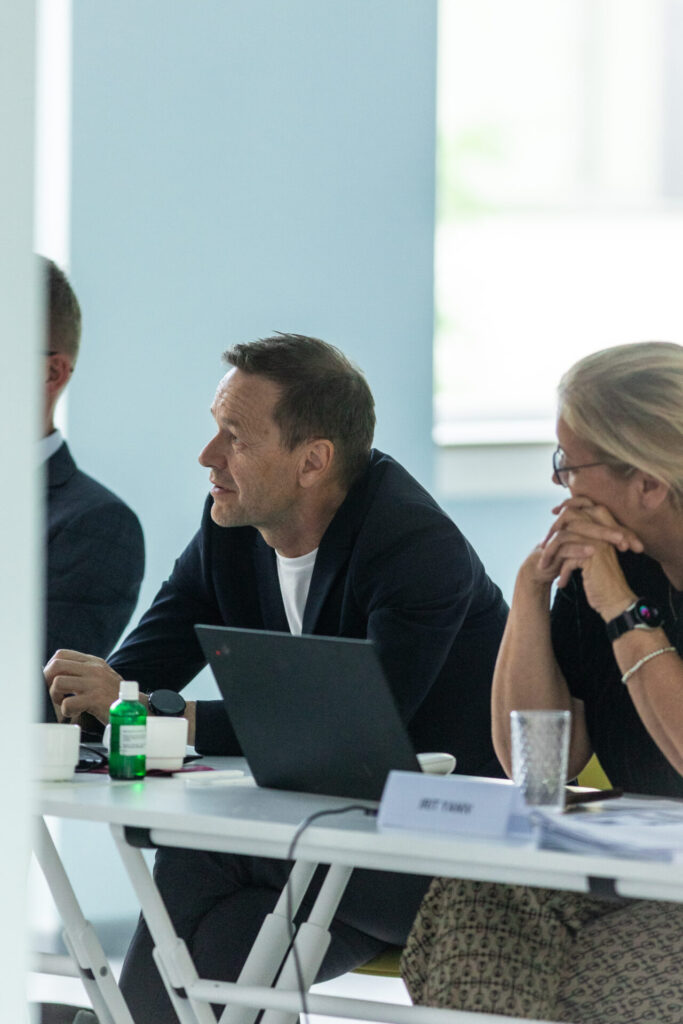
      By 2032, 35 new technologies are expected to have reached a proven technological basis (TRL 3 level) or technological validation under laboratory conditions (TRL 4 level). At least 23 of these technologies are expected to be developed to validation in real-life conditions (TRL 5 level) or for full-scale demonstration (TRL 6 level), while at least four will enter the commercialisation phase.  

      The first phase of the Platform will run until the end of 2026 and will include four calls for innovation projects. The first call is expected in February this year and is open to researchers developing new technologies and innovative ideas in the fields of biomedicine, medical technology, pharmaceuticals, photonics, smart materials, electronics, electrical engineering and technology and engineering systems. The maximum funding available per idea will be €200,000, with a 12-month timeframe.  

      BioPhoT is coordinated by OSI and implemented by the Institute of Electronics and Computer Science, the Latvian Biomedical Research and Study Centre, the University of Latvia, the Institute of Solid State Physics, the Latvian State Institute of Wood Chemistry, the Food Safety, Animal Health and Environment Research Institute "BIOR", Riga Stradins University and Riga Technical University. 

      Announcement of a new public funding platform for researchers

      On 29 January, 9.00 - 10.30 a new research and innovation programme will be launched at the University of Latvia (UL) Academic Centre, Science House (Jelgavas iela 3), rooms 103 and 104. The programme will provide €12.8 million in state funding for scientists to create new technologies by the end of 2026. 

      The funding will be made available under the national research programme "Innovation Fund - Long-Term Research Programme" for the project "Biomedical and Photonics Research Platform for Innovative Products" or "BioPhoT". The aim is to foster cooperation and technology development between the biomedical, photonics and smart materials sciences and the commercial sector. 

      The programme runs until 2032. During this period, 35 new and competitive technologies in biomedicine, medical technologies, pharmaceuticals, photonics, smart materials, electronics, technology and engineering systems are planned. 

      The event will provide information on the objectives and benefits of the project, application deadlines, conditions and process, as well as clarify any questions. 

      Read more in the project summary.

      Participants: 

      • Project leader, Head of the Latvian Organic Synthesis Institute (OSI) Osvalds Pugovičs 
      • Deputy State Secretary for Economic Affairs, Ministry of Economy Raivis Bremšmits 
      • Deputy State Secretary for Human Capital, Science and Innovation Development, Ministry of Education and Science Jānis Paiders 
      • Director of the Latvian Research Council Lauma Muižniece 
      • Rector of the University of Latvia prof. Gundars Bērziņš 

      To participate in the event, please fill in the registration form: https://ej.uz/biophotatklāšana 

      The project, under the leadership of the Latvian Institute of Organic Synthesis, is being implemented by the Latvian Institute of Electronics and Computer Science, the Latvian Biomedical Research and Study Centre, the University of Latvia, the Institute of Solid State Physics, the Latvian State Institute of Wood Chemistry, the Scientific Institute of Food Safety, Animal Health and Environment "BIOR", Riga Stradins University and Riga Technical University.